
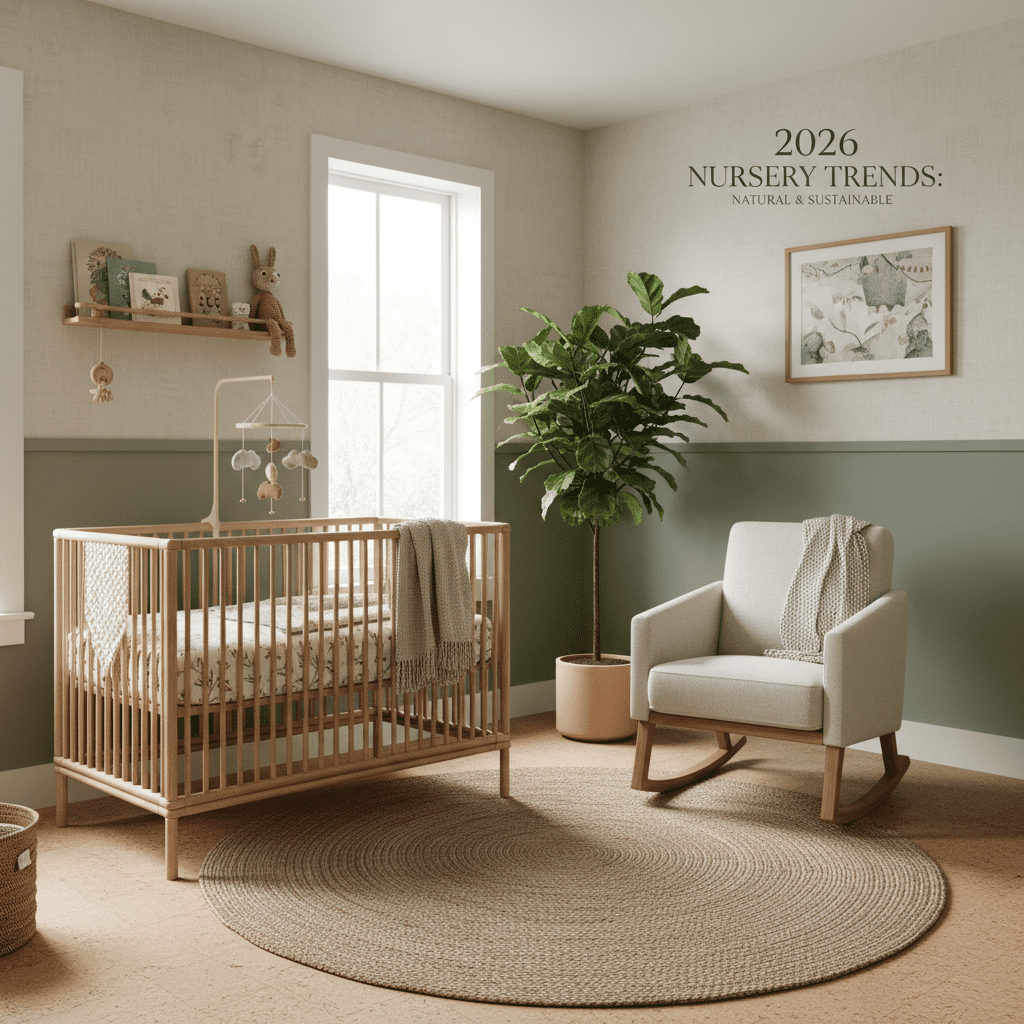
Earthy palettes, smart storage, and spaces designed for actual humans. Welcome to the nursery of 2026.
Can we talk about how far nursery design has come? Not long ago, a baby’s room meant one of two options: a pastel pink cloud of tulle or a navy-and-grey “nautical explorer” setup with anchors on everything. Bless. We’ve moved on.
The nursery trends set to dominate 2026 are smarter, warmer, and honestly more beautiful than anything that’s come before. We’re talking rooms that grow with your child, palettes that feel intentional instead of just “baby-coded,” and storage solutions that don’t make you want to cry every time you open a drawer.
Whether you’re designing from scratch or refreshing an existing space, these nursery trends will give you everything you need — plus a healthy dose of design envy. Let’s get into it.
1. Earthy, Moody Palettes Are Replacing Pastels
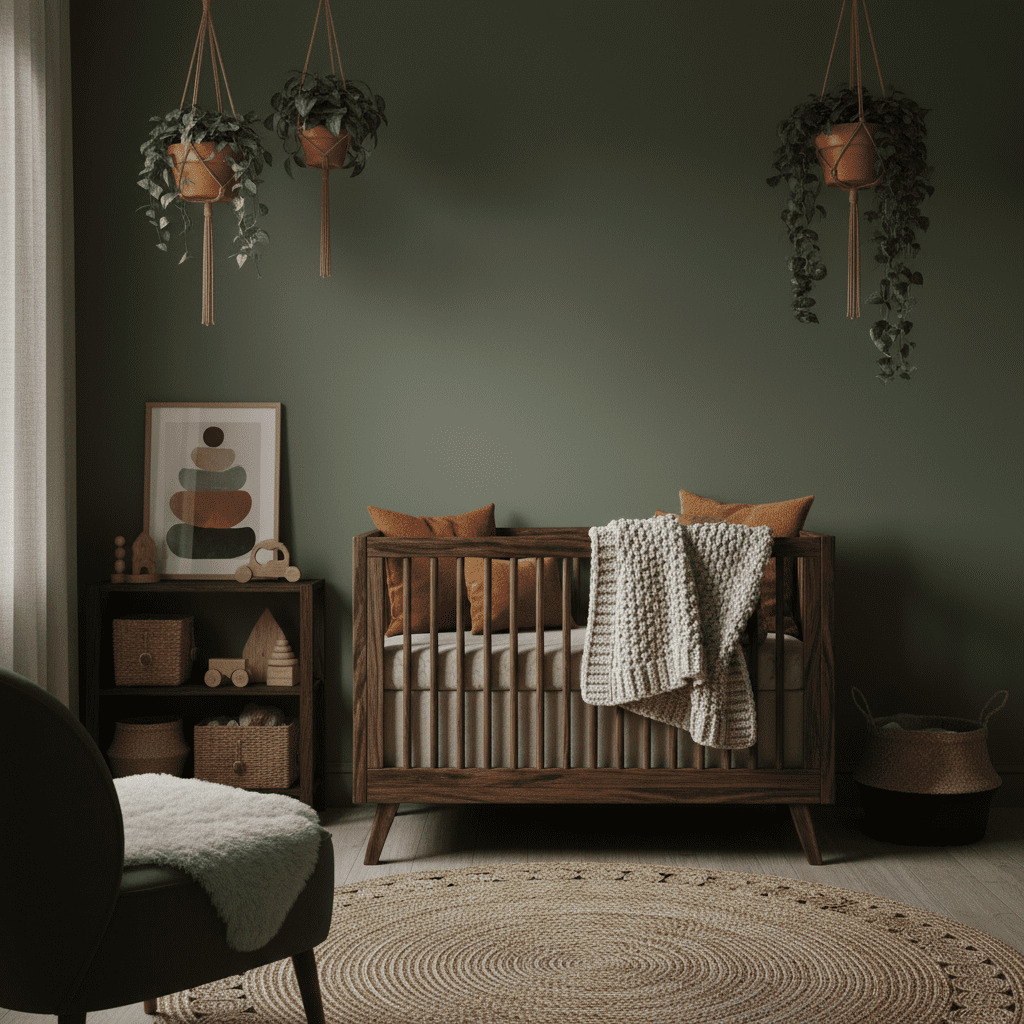
Goodbye, mint green. Hello, warm mushroom, deep clay, and aged linen.
What’s the Trend?
The pastel nursery had a good run — a very long run — but 2026 is officially the year of the earthy, nature-inspired palette. Think warm taupes, dusty terracottas, sage greens, and deep moss tones that feel grounded and serene rather than sugary sweet.
These colours work because they’re calming for babies (who, let’s be honest, have enough sensory stimulation already), they photograph beautifully, and — crucially — they don’t look wildly out of place when your child decides they’re too old for a “baby room” and wants a big-kid space. Transitional design. Genius.
Palette Combos to Try
- Warm mushroom + aged ivory + brushed brass hardware
- Deep clay + cream + natural rattan accents
- Forest sage + warm white + raw linen textures
- Dusty mauve + oatmeal + matte black details
I repainted a nursery last year in a warm taupe and the reaction from every visitor was “this feels so calm in here.” That’s the goal. A room that soothes everyone who enters it — including the exhausted parent doing the 3am feed. 🙂
2. Biophilic Design — Bringing the Outside In
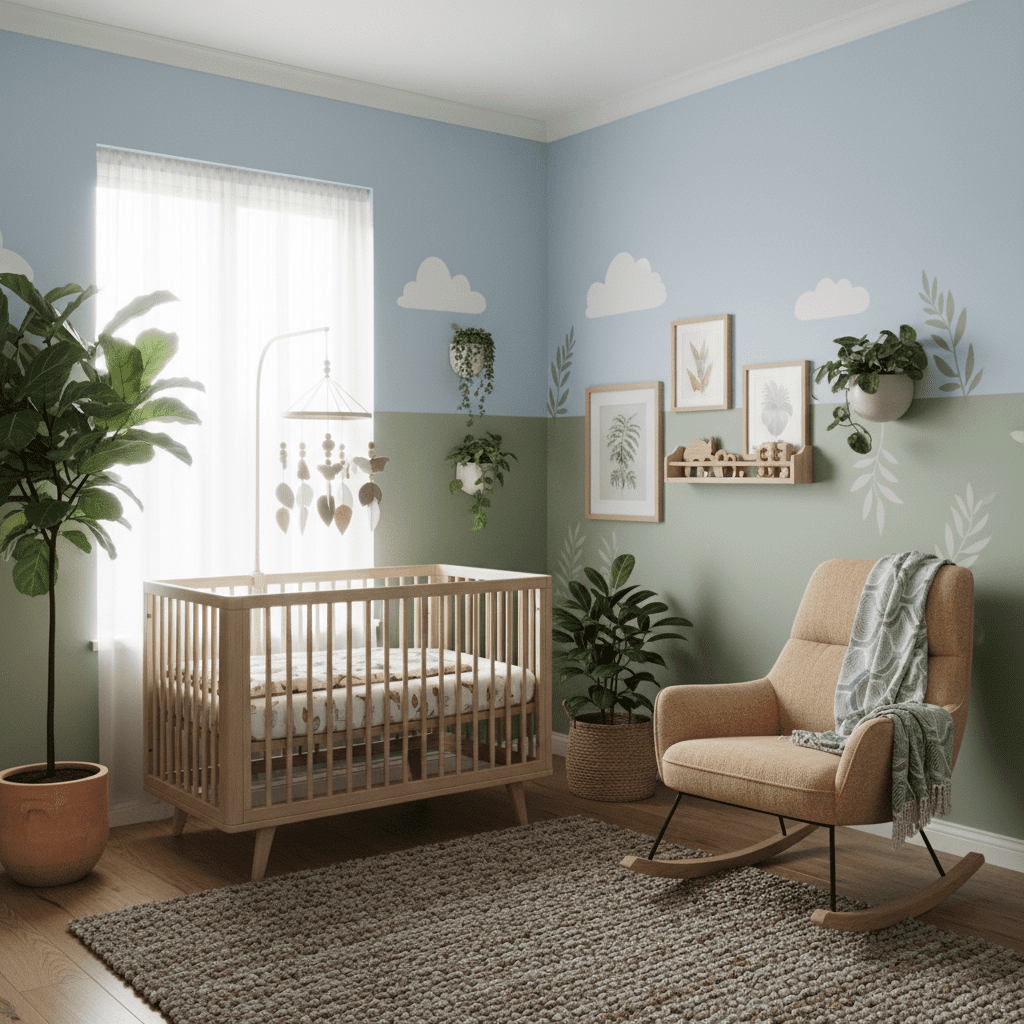
Plants, natural materials, and organic shapes. Because babies deserve to grow up surrounded by beauty.
What’s the Trend?
Biophilic design — the practice of connecting interior spaces to the natural world — is one of the biggest nursery trends for 2026. It goes beyond just sticking a plant in the corner. We’re talking textured natural walls, wooden elements with visible grain, woven rattan furniture, pebble-shaped rugs, and wallpapers featuring botanical prints done in a sophisticated, non-cheesy way.
Research consistently shows that exposure to natural elements reduces stress and supports healthy development in children. So this trend is actually backed by science. IMO, that makes it a very easy yes.
How to Incorporate It
- Low-maintenance plants like pothos or snake plants (non-toxic varieties only — check your list).
- A solid wood crib with visible natural grain instead of painted MDF.
- Woven grass or seagrass rug for texture underfoot.
- Botanical wallpaper — opt for oversized prints in muted tones, not primary-coloured cartoon leaves.
- Stone or clay decorative objects on shelves.
The combination of natural textures and earthy colours creates a room that feels genuinely alive. There’s a warmth to biophilic nurseries that no amount of character-themed bedding can replicate. Once you see it, you can’t unsee it.
3. Convertible & Grow-With-Me Furniture
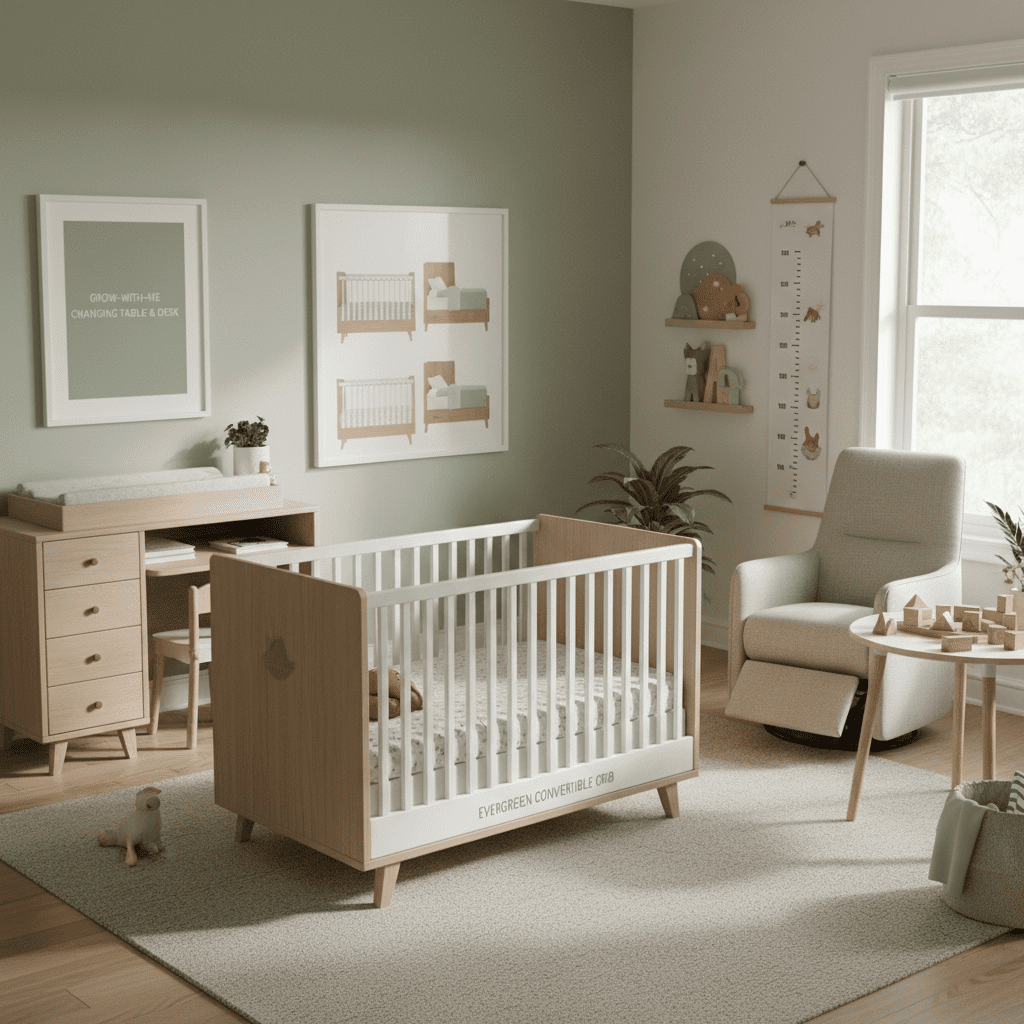
The smartest furniture investment you’ll ever make — a crib that becomes a toddler bed, a dresser that becomes a desk. Yes, really.
What’s the Trend?
Parents in 2026 are thinking long-term about nursery furniture. The convertible furniture movement means investing in pieces that genuinely adapt as your child grows — cribs that convert to toddler beds and then full-size beds, changing tables that become standard dressers, and modular shelving that reconfigures as storage needs evolve.
It’s smarter for your wallet and far better for the environment. Buying quality convertible pieces means you’re not landfilling a crib every two years.
Key Pieces to Look For
- 4-in-1 convertible crib — crib → toddler bed → daybed → full-size bed frame.
- Changing dresser combo with removable topper.
- Modular bookshelf system — low and accessible now, vertical later.
- A good quality upholstered glider that looks like regular living room furniture (because eventually it will be).
I know a family who bought a convertible crib that their eldest used from birth to age seven. Seven. That’s the kind of value that makes a slightly higher upfront price feel absolutely worth it. Buy once, buy well.
4. Intentional Reading Nooks
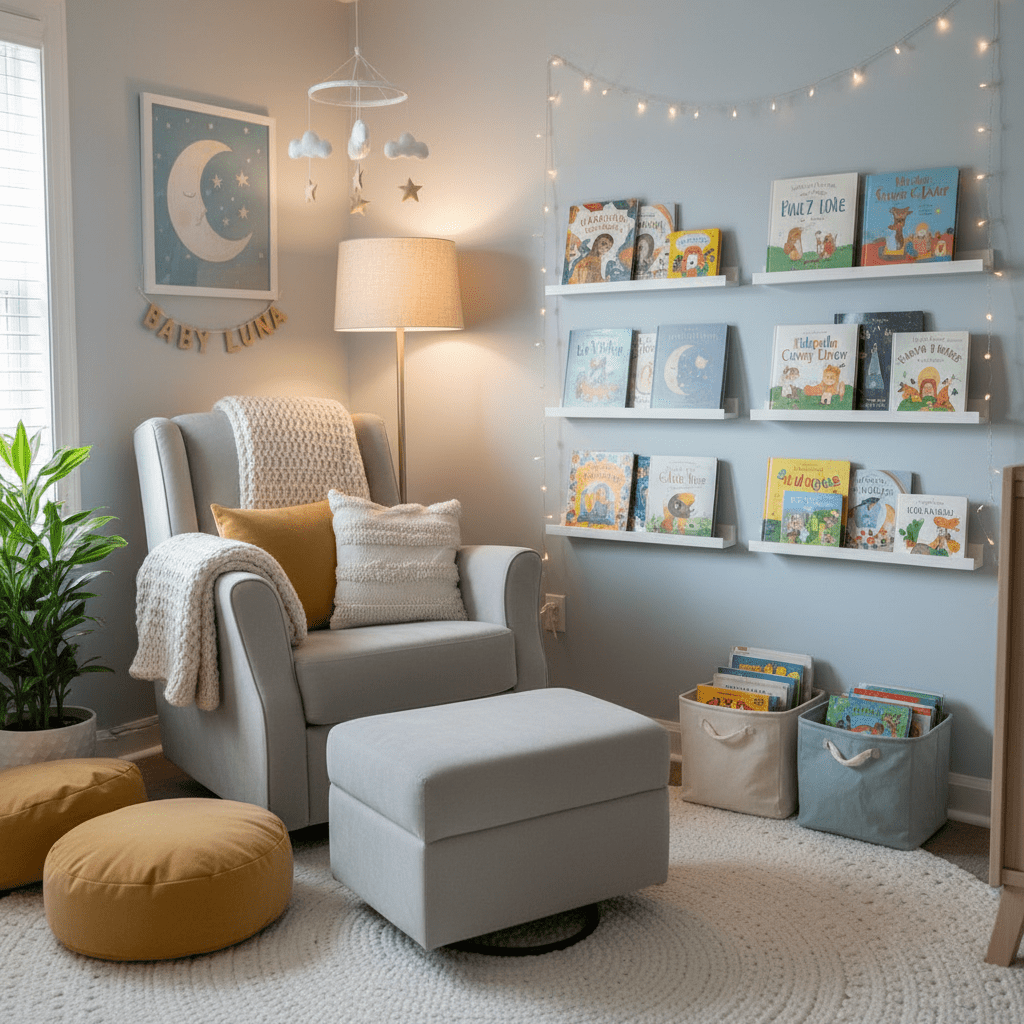
A tiny dedicated reading corner is the nursery feature everyone secretly wants for themselves.
What’s the Trend?
The nursery reading nook has evolved from a basic bookshelf into a fully considered micro-environment. Think a low canopy or draped fabric overhead, a floor cushion or small beanbag, a forward-facing bookshelf at child height, and soft, warm lighting. It’s a sensory invitation to slow down and read.
Paediatric experts are constantly banging on about the importance of reading from birth, and honestly, when you create a beautiful dedicated space for it, it becomes a ritual the whole family looks forward to. Who doesn’t want a tiny cosy cave to disappear into with a picture book?
Nook Must-Haves
- Forward-facing bookshelf — children choose books by the cover, not the spine.
- A low canopy, macramé curtain, or draped muslin for cosiness.
- A floor cushion or small pouffe in a washable fabric (essential).
- A plug-in or battery reading lamp at child height.
- A small basket of tactile objects or sensory toys nearby.
Reading nooks also double as a calm-down corner as children get older — a low-stimulation space where they can regulate. The design payoff is enormous for something that takes up about four square feet.
5. Textured Walls — Limewash, Plaster & Grasscloth
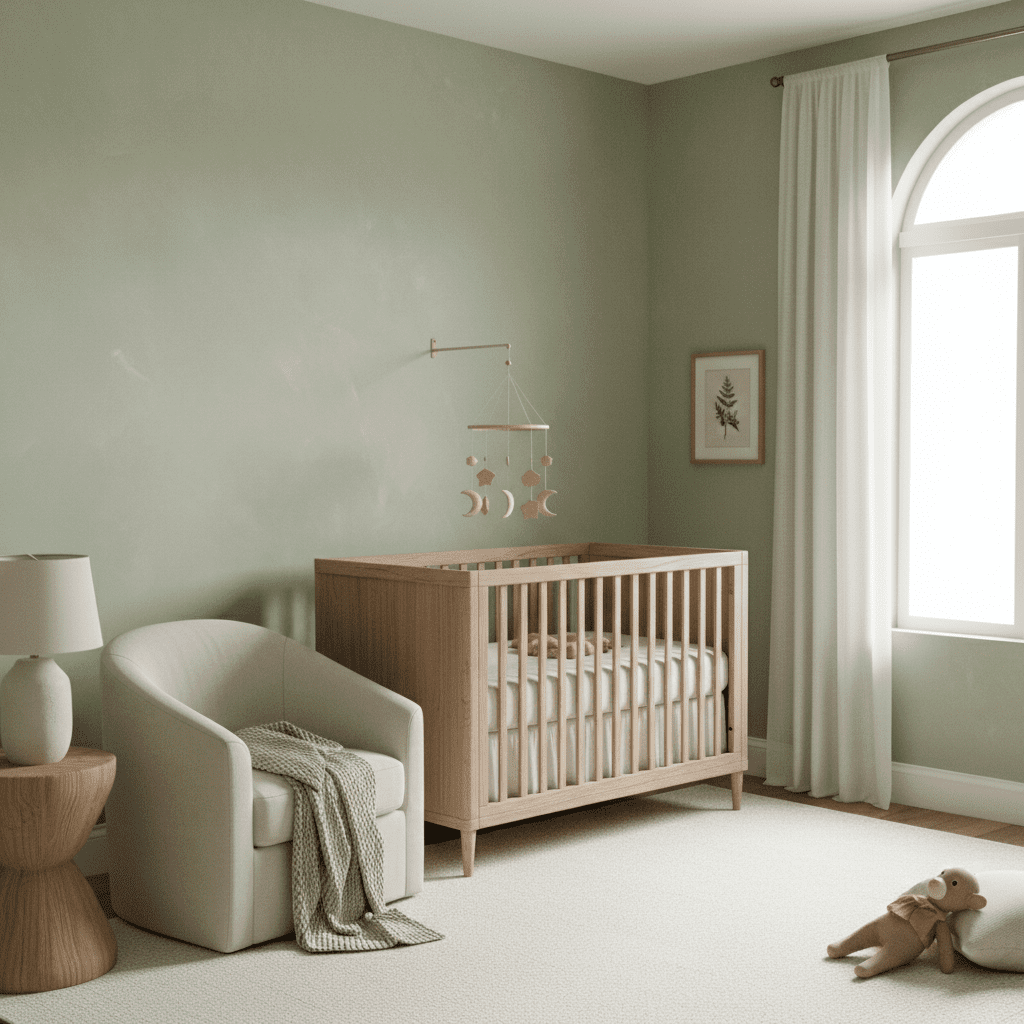
Flat paint is boring. Textured walls are a whole personality.
What’s the Trend?
One of the most striking nursery trends for 2026 is the rise of textured wall treatments. Limewash paint, Venetian plaster, grasscloth wallpaper, and even DIY plaster techniques are replacing the standard flat-emulsion nursery wall — and the effect is genuinely stunning.
Limewash in particular has had an enormous moment. The way it catches light and creates depth gives a room a warmth that flat paint simply cannot achieve. It’s also far more forgiving on imperfect walls, which is a very underrated selling point for older homes :/
Options at Every Budget
- Limewash paint — DIY-friendly, widely available, transformative. Brands like Portola or Classico do excellent versions.
- Venetian plaster — hire a professional for best results. Worth every penny.
- Grasscloth or linen wallpaper — adds texture without committing to plaster.
- Textured paint techniques like sponging or rag-rolling in a tonal palette for a budget-friendly alternative.
FYI — limewash in a warm mushroom or clay tone over one feature wall is the single highest-impact, lowest-effort upgrade you can make to a nursery. I’ve seen it completely transform a basic white box of a room.
6. Montessori-Inspired Floor Beds & Low Furniture
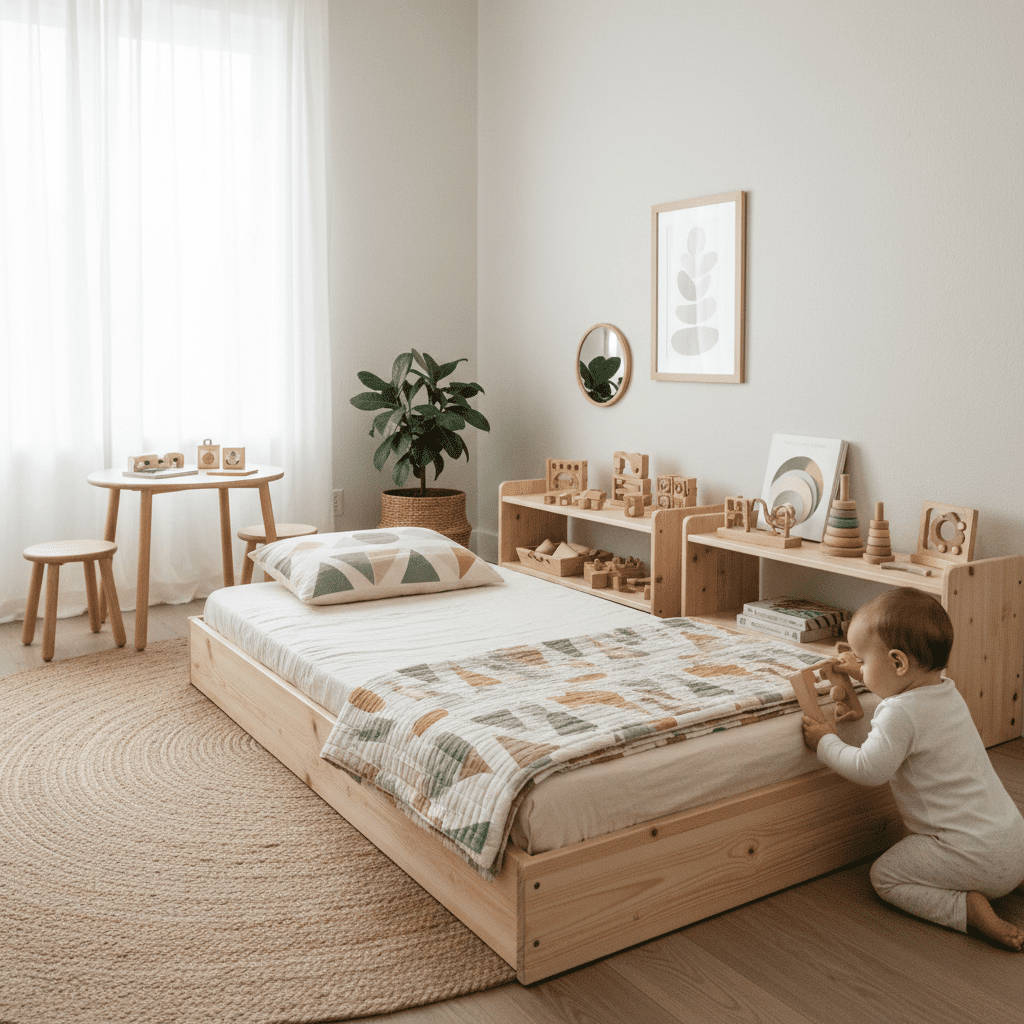
Ground-level living isn’t just for babies who roll off things. It’s a whole design philosophy.
What’s the Trend?
The Montessori floor bed — essentially a mattress or low platform bed at ground level — continues to gain serious traction in 2026. The philosophy is simple: when a child’s space is built at their scale, they develop independence, spatial awareness, and confidence much faster.
But beyond the floor bed, Montessori-inspired nursery design means low shelving, accessible toy storage, child-height mirrors, and an environment the child can genuinely navigate on their own terms. The aesthetic effect, when done well, is stunning — it creates a room that feels intentional and calm.
Montessori Design Principles
- Floor bed or low platform frame (not a crib on stilts).
- Open, low shelving with limited toys rotated regularly.
- A full-length, unbreakable mirror at floor level.
- A low art table and small stool — child-sized, not miniature adult furniture.
- Natural, open-ended toys stored in simple baskets, not plastic bins.
The toy rotation principle is the unsung hero of Montessori design — fewer toys accessible at once means children engage more deeply with what they have. Less clutter, more focus. More calm for everyone. Revolutionary? No. Effective? Absolutely.
7. Sustainable & Secondhand First
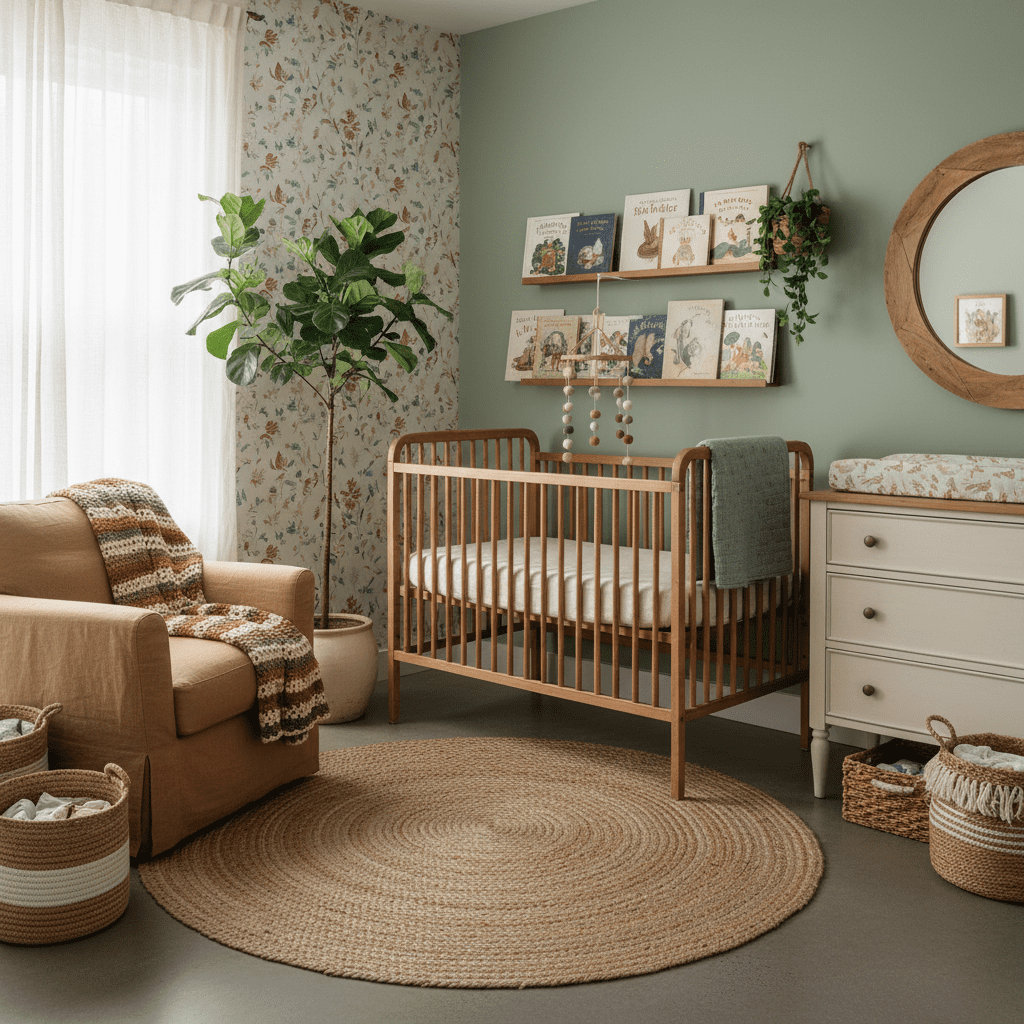
Vintage, pre-loved, and sustainably made nursery pieces are no longer the budget option — they’re the aspirational choice.
What’s the Trend?
The sustainable nursery movement is one of the most values-driven trends on this list. Parents in 2026 are thinking carefully about what their nursery communicates — and a room full of fast-furniture from a big-box store isn’t cutting it anymore.
Vintage and secondhand furniture, organic certified textiles, sustainably sourced wood, and low-VOC or natural paints are all trending strongly. And honestly, vintage nursery furniture — a sanded and repainted solid wood dresser from a charity shop, a brass vintage lamp — looks infinitely more characterful than anything fresh off a flat-pack truck.
Sustainable Swap Ideas
- Source a solid wood vintage dresser and repaint it instead of buying new.
- Choose GOTS-certified organic cotton for all bedding and fabrics near the baby.
- Low-VOC or natural clay paints — important for a room where a small person breathes all night.
- Rent or borrow items you’ll only use briefly (bouncers, swings, moses baskets).
A vintage wooden rocking chair sanded back and oiled, next to a handmade linen curtain and a pre-loved brass lamp, tells a story. New fast-furniture doesn’t. Character matters — even in a nursery.
8. Soft Lighting Done Right
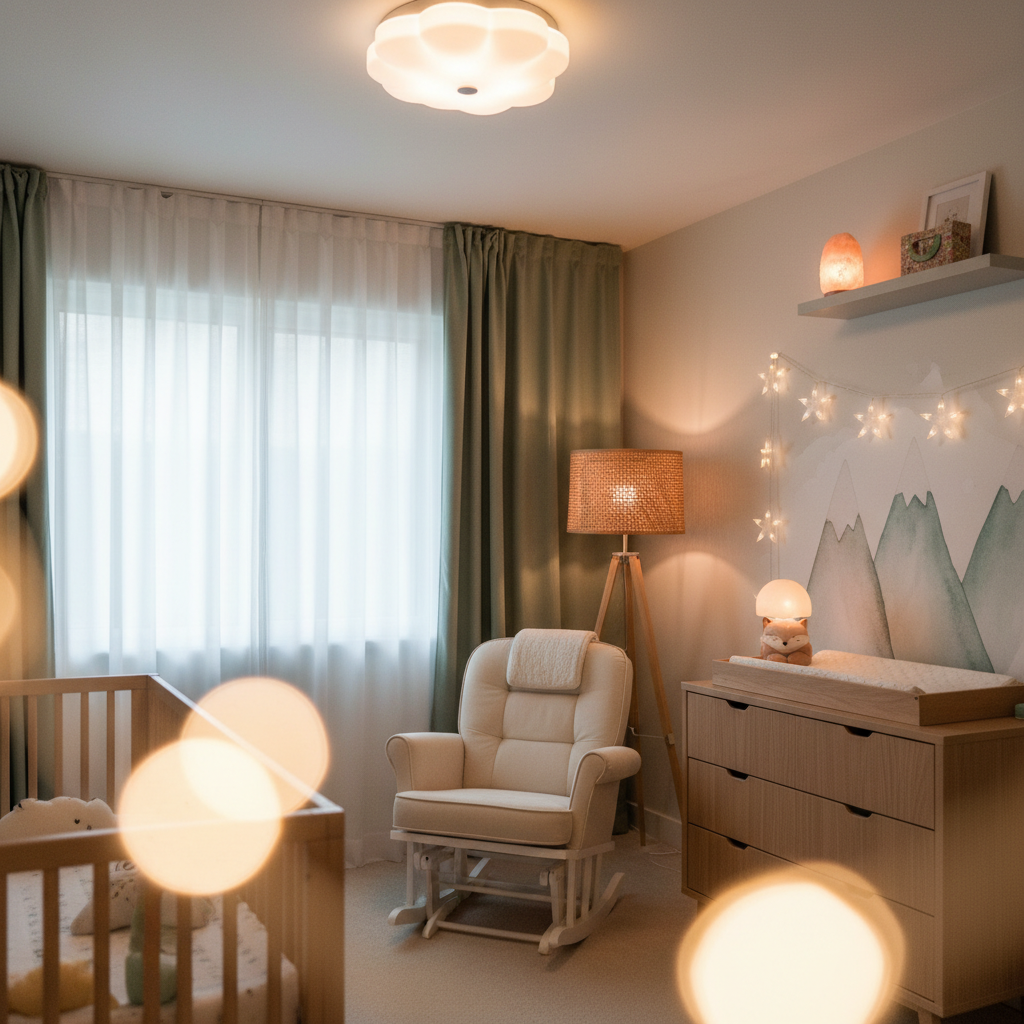
Overhead lighting in a nursery is basically a crime. Soft, layered lighting is the law.
What’s the Trend?
Lighting is the most underestimated element of nursery design, and 2026 is finally giving it the attention it deserves. The trend is moving decisively away from bright overhead lighting and toward layered, warm, dimmable light sources — wall sconces, rattan pendant shades, colour-changing nightlights, and floor lamps with warm-toned bulbs.
Smart lighting that responds to voice commands or app controls is also growing fast. Being able to dim the lights to near-nothing without fumbling for a switch while holding a sleeping baby? Genuinely life-changing.
Lighting Layers to Include
- Ceiling pendant with rattan or linen shade — diffuses light softly, looks beautiful.
- A dimmable wall sconce above the feeding chair.
- Smart colour-changing nightlight — red tones for night feeds (preserves melatonin).
- A small table or floor lamp with a warm 2700K bulb for evening wind-down.
Red-toned light for night feeds is the tip I give every new parent and it consistently blows their minds when they try it. It keeps everyone calmer, helps the baby understand it’s still night-time, and means you’re not blind from a blast of white light at 2am. Science and design, working together.
9. Personalised Heirloom Art & Custom Pieces
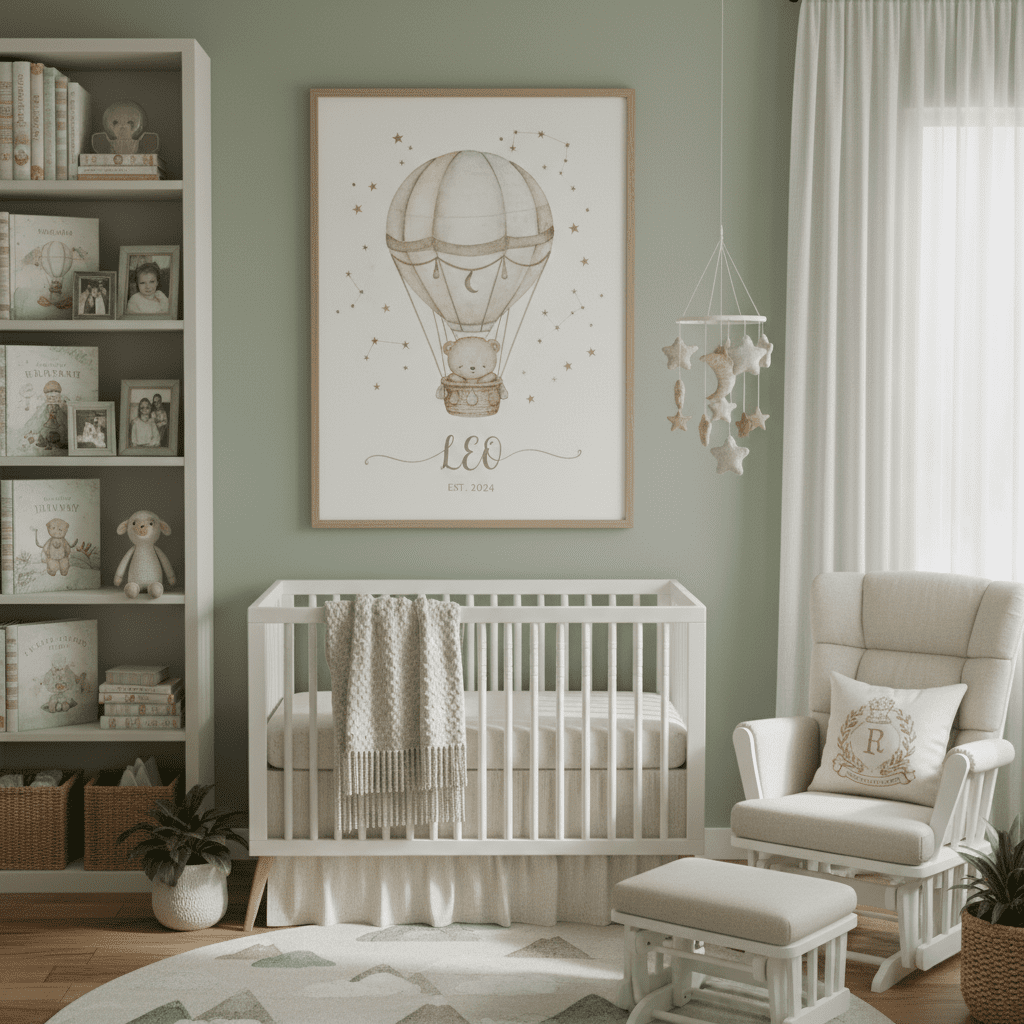
Generic cloud prints from a home goods chain are out. Art with meaning is very much in.
What’s the Trend?
The 2026 nursery trend in art and décor leans heavily toward personalised and heirloom-quality pieces — things made specifically for this child, this family, this story. Custom star maps of the baby’s birth night, illustrated name prints, hand-painted portraits, botanical watercolours in family-meaningful colours, and hand-embroidered birth announcement hoops.
The goal is a room that couldn’t belong to any other child. Generic mass-produced wall art has its place, but when paired with even one or two truly personal pieces, the whole room shifts emotionally.
Personalised Art Ideas
- Custom star map — the exact night sky on the baby’s birth date and location.
- A hand-lettered name print in a font that matches the room’s aesthetic.
- Custom family portrait illustration — commission an artist on Etsy whose style you love.
- A birth details print with height, weight, time, and name in a beautiful typographic layout.
- A hand-embroidered hoop featuring the baby’s name and birth flowers.
I once walked into a nursery that had a small watercolour of the house the baby would grow up in, painted by the grandmother. I nearly cried. That is the energy we’re going for. Objects with stories beat objects with price tags every single time.
10. Smart, Hidden Storage That Doesn’t Look Like Storage
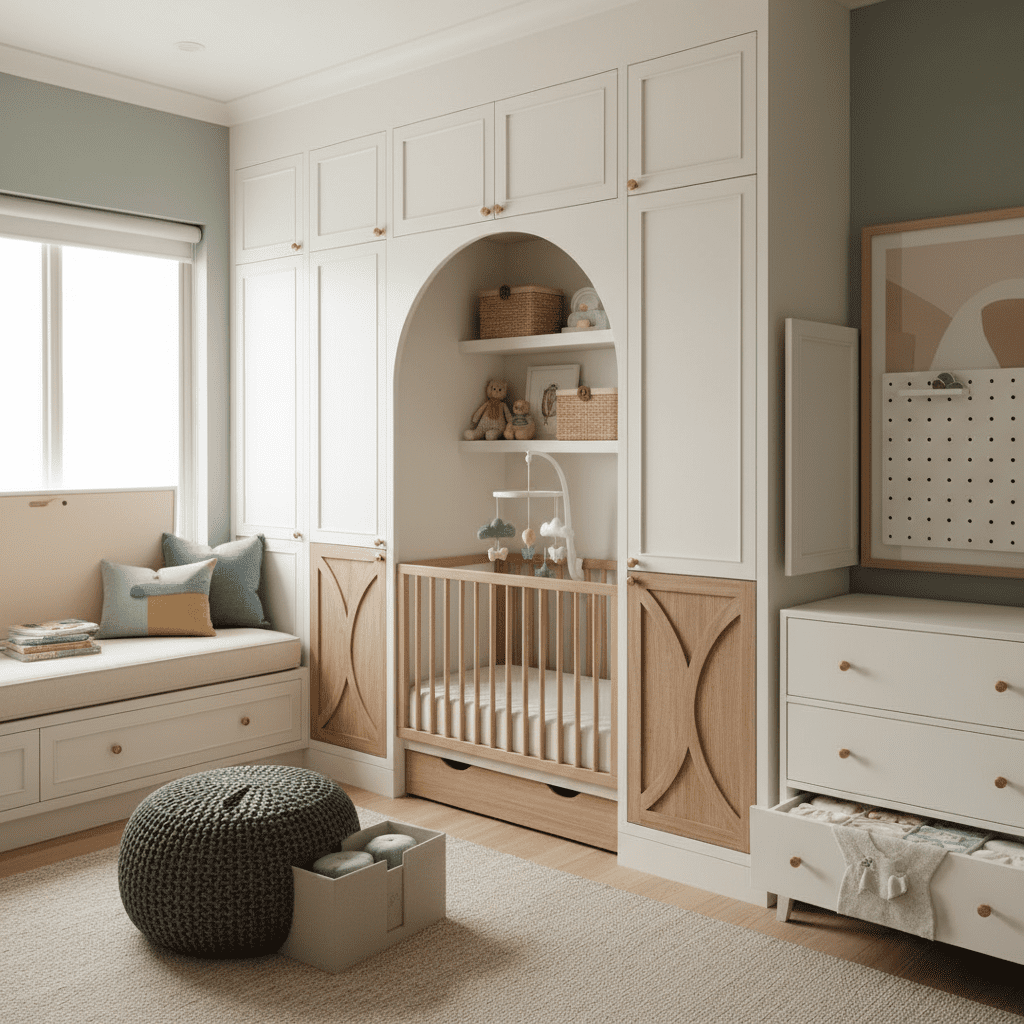
Because nobody wants their design-forward nursery to look like a Kmart clearance aisle.
What’s the Trend?
One of the most practical nursery trends for 2026 is the emphasis on thoughtful, concealed storage — furniture and built-ins that store an enormous amount of baby stuff without broadcasting that fact to every visitor. Ottoman storage benches, built-in window seats with lift-up lids, under-crib drawers, and cabinets that look like furniture rather than filing systems.
The principle is simple: every item that needs to be stored should have a home that’s easy to access but invisible when not in use. Baby chaos is inevitable. The storage system fights back.
Smart Storage Solutions
- Under-crib drawer unit — fitted drawers on casters that disappear underneath.
- A built-in window seat or bench with lift-up storage beneath.
- Closed-door wardrobes rather than open rails — the visual calm is worth it.
- Labelled linen baskets inside the wardrobe for categories (sleepwear, next-size clothes, seasonal items).
- A changing dresser with deep drawers rather than shelves — things don’t fall out.
The single biggest design tip I give anyone planning a nursery is this: double your storage estimate and then add more. Babies come with a shocking volume of stuff, and a room that can contain it all gracefully is a room that stays beautiful.
11. The “Parent Corner” — Designing for the Grown-Up Too
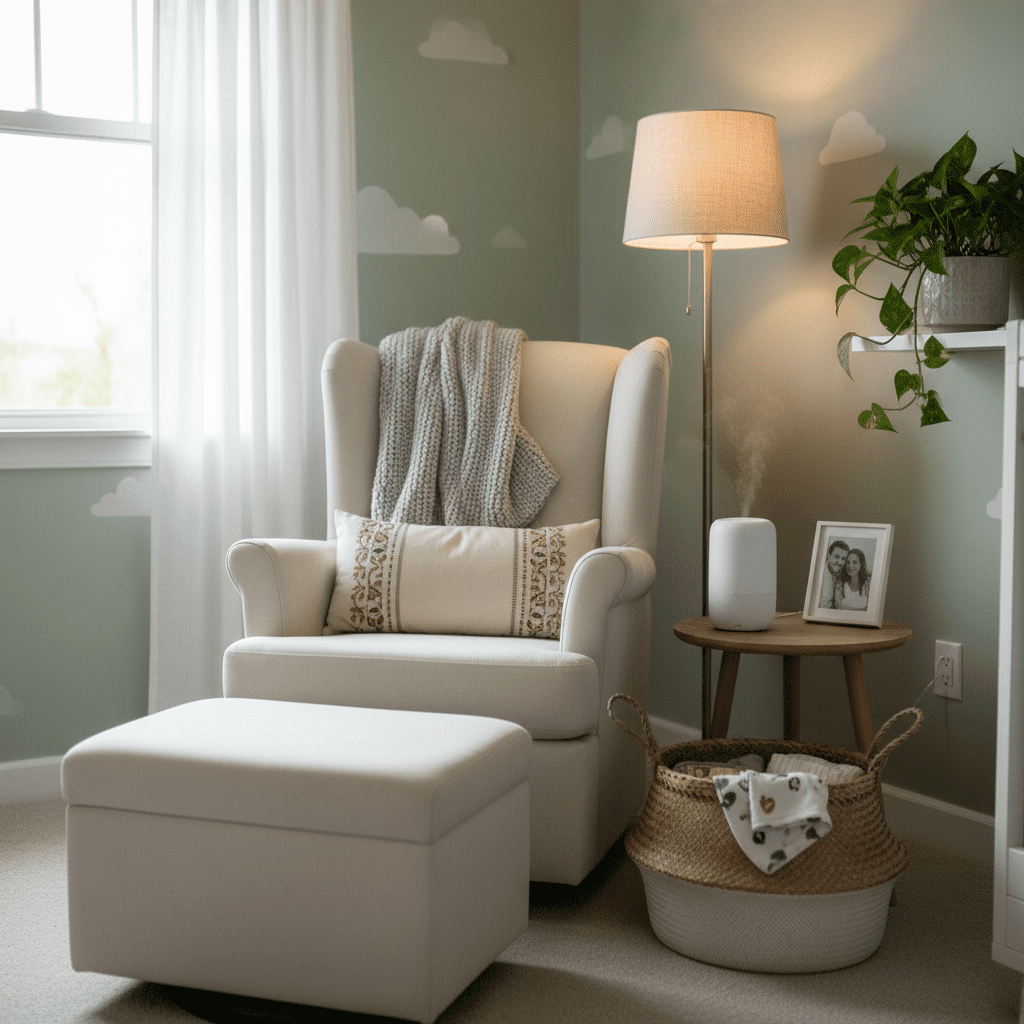
You’re going to spend approximately one thousand hours in this room. You deserve a good chair.
What’s the Trend?
The most quietly revolutionary nursery trend for 2026 is the acknowledgement that the nursery needs to work for parents as much as it does for the baby. Enter the “parent corner” — a deliberately designed zone within the nursery for the adult who lives there during feeding, settling, and those endless middle-of-the-night sit-and-stare sessions.
This means investing in a genuinely comfortable, beautiful nursing chair rather than a functional-but-ugly glider. It means a side table at the right height for a water glass and a phone charger. It means a footstool, a throw, and a small lamp. A corner that says “you matter in this space too.”
Parent Corner Must-Haves
- A high-quality nursing chair or rocker — this is not the place to cut the budget. Your back will thank you.
- A side table with a built-in USB port or charging pad.
- A small footstool or ottoman to elevate your feet during feeds.
- Soft throw blanket — for you, for warmth, for sanity.
- A small tray with whatever gets you through the night: hand cream, lip balm, a small notebook.
Every parent I’ve ever spoken to says the same thing: they wish they’d bought a better nursing chair. It’s the one piece of furniture you use at your most exhausted, your most emotional, your most human. It should hold you well. Non-negotiable.
The 2026 Nursery Is Designed With Intention — and It Shows
Step back and look at these nursery trends for 2026 as a whole and the message is clear: we’re done designing nurseries that feel like a cartoon of babyhood. The spaces dominating 2026 are warm, grounded, sustainable, and built to last — not just until your child outgrows a crib, but until they head off to school.
The best part? You don’t need to implement every trend on this list. Pick two or three that resonate with your space, your budget, and your aesthetic — and execute them beautifully. A thoughtful limewash feature wall, a dedicated reading nook, and a genuinely comfortable nursing chair will outperform a room stuffed with trend pieces every single time.
Design for the child who’ll grow up in this room, for the parents who’ll spend countless hours in it, and for the memories that will be made within those walls. Get that right and you can’t go wrong.