
This post contains affiliate links. If you purchase through these links, I earn a small commission at no extra cost to you. I only recommend products we actually use and love.
It was a Tuesday. One of those long, sticky summer Tuesdays where the hours stretch out like taffy and your toddler has already had two meltdowns before 10 AM.
I was standing in my kitchen, reheating the same cup of coffee for the third time, when I looked over and saw my two-year-old completely zoned out in front of the iPad. Again. Paw Patrol was playing. She was not blinking. And I felt that familiar wave of mom guilt wash over me — the kind that sits in your chest and whispers, “You should be doing better.”
So I did what any sleep-deprived, guilt-ridden American mom does at 10 PM that night. I opened Amazon and started scrolling.
Sixty-seven dollars and a Prime delivery later, I had a pile of toys on my living room floor. Some were amazing. Some were played with for exactly four minutes. And a few — a magical, golden few — actually kept my daughter busy long enough for me to drink an entire cup of coffee while it was still hot.
That was two years ago. Since then, I have tested more screen-free toys than I can count. I have asked every mom in my playgroup, my pediatrician’s waiting room, and my neighborhood Facebook group what actually works. And I have narrowed it down to these 15.
These are not Pinterest-perfect, aspirational toys. These are the toys that survive real life — the ones covered in peanut butter fingerprints, scattered across living room floors in Ohio and Texas and California, and pulled out at 5 PM when you are counting down the minutes until bedtime.
If you are tired of the screen time guilt spiral, this list is for you.
How I Picked These Toys
Before we get into the list, here is what I looked for in every single product:
- Actually holds attention for 15+ minutes. If it only entertains for 3 minutes, it does not make the cut.
- No batteries or screens required. The whole point is getting away from screens, not replacing one screen with another.
- Safe and age-appropriate. Everything here works for ages 1-5 with appropriate supervision.
- Available on Amazon with solid reviews. No obscure boutique toys that take 6 weeks to ship from Sweden.
- Survived my house. If it broke in a week, it is not on this list.
Now let us get into it.
1. Yoto Mini — The Screen-Free Audio Player
Best for: Ages 2-8 | Replacing iPad time with stories and music
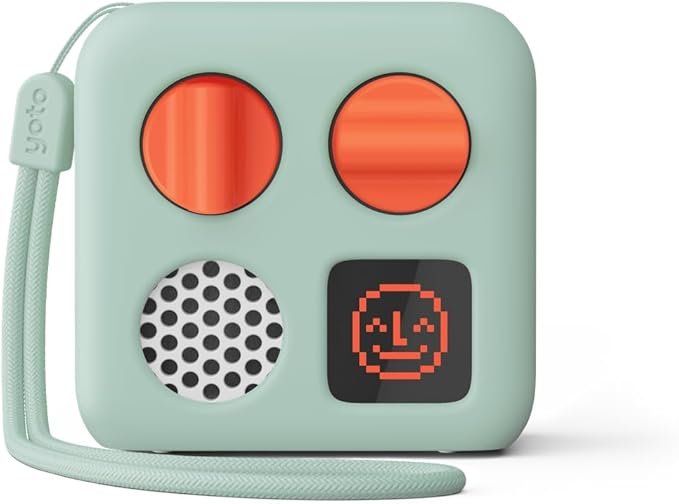
If I could only recommend one product from this entire list, it would be the Yoto Mini.
Here is the thing nobody tells you about screen time — it is not really the content that is the problem. It is the passivity. Your kid sits there like a little zombie, absorbing whatever flashes in front of their face.
The Yoto Mini flips that completely. It is a small, beautiful audio player that plays stories, music, podcasts, and sound effects using physical cards your child inserts themselves. No screen. No WiFi once it is set up. No ads. Your child picks a card, pops it in, and listens.
My daughter uses hers every single night at bedtime. She picks her own story card (she is obsessed with Julia Donaldson right now), crawls into bed, and listens until she falls asleep. It replaced our nightly “one more episode” battle entirely.
Why toddlers love it: They feel in control. They pick the card. They decide the story. That independence is huge at this age.
Why parents love it: You control the content library. No algorithm. No surprise YouTube recommendations. Just stories and music you have approved.
What to know: The player itself comes with a few starter cards, but you will want to add more. The card library is massive — Disney, Roald Dahl, Sesame Street, classical music, bedtime meditations. Each card runs about $7-12.
Price: Around $50-70 for the bundle
👉 Check current price on Amazon
2. MAGNA-TILES Classic 32-Piece Set — The Toy Every Family Needs
Best for: Ages 3-8 | STEM learning + creative building
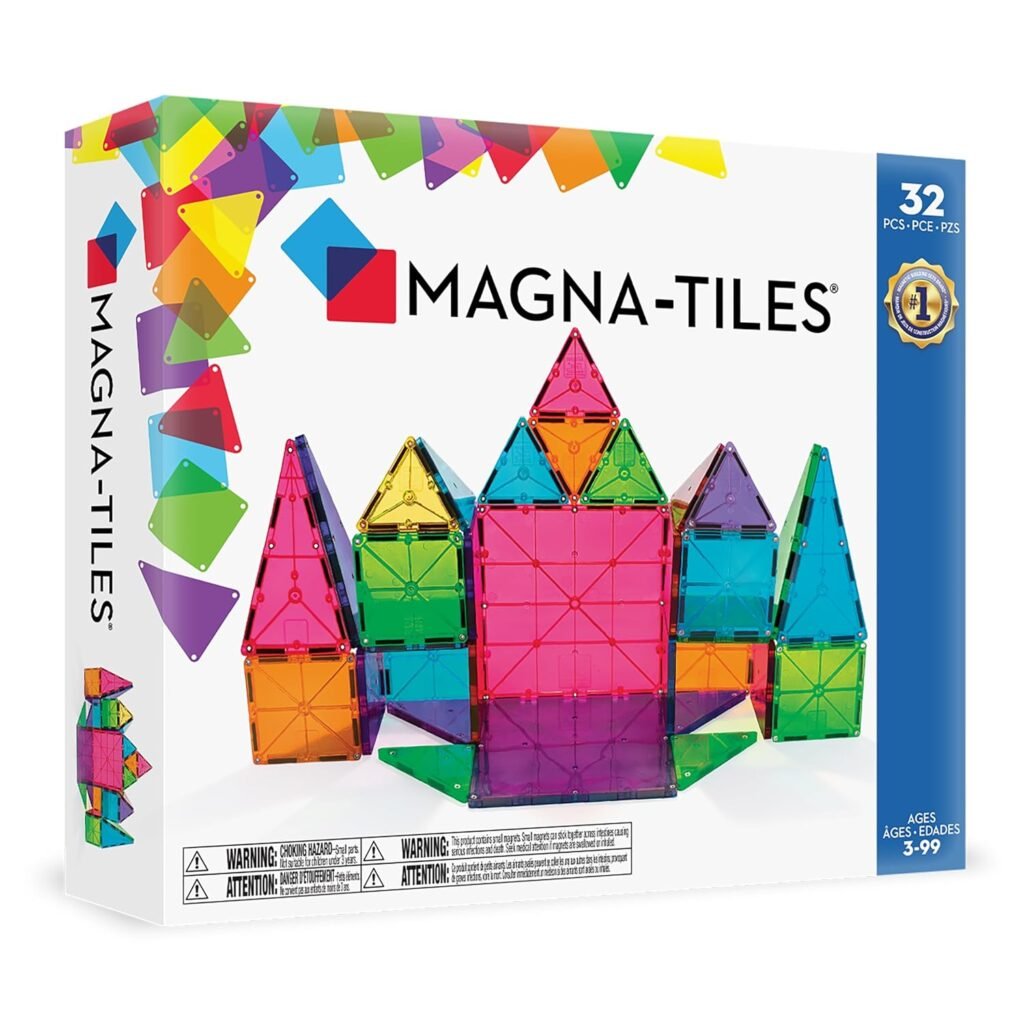
I am going to say something bold: if you have kids between 3 and 8 years old and you do not own Magna-Tiles, you are missing out on the single best toy investment you will ever make.
These translucent magnetic tiles connect on every edge, and kids can build towers, castles, houses, and shapes that actually stay together. The satisfying click when two tiles snap together is borderline addictive — for kids AND adults, honestly.
Here is what happened in our house: I bought the 32-piece starter set thinking it would be a “nice addition” to our toy rotation. Within a month, my daughter was building every single day. Her 5-year-old cousin came over and they built together for TWO HOURS without fighting. Two hours. No screens. No “I’m bored.” Just building.
Why this beats other magnetic tiles: Yes, there are cheaper knockoff brands. I have tried three of them. The magnets are weaker, the tiles crack faster, and they do not connect well with each other. Magna-Tiles has a 4.9 rating on Amazon for a reason — they last for years.
Pro tip: Start with the 32-piece set. If your kids love them (they will), you can always add expansion packs later. They all connect together.
Price: $40-50
👉 Get the Magna-Tiles 32pc Starter Set
3. Melissa & Doug Scoop & Serve Ice Cream Counter
Best for: Ages 3-6 | Imaginative play + social skills
“What flavor would you like today, Mommy?”
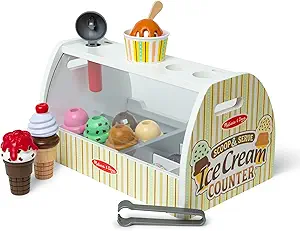
If you have not been served imaginary ice cream by a very serious toddler, you have not lived. The Melissa & Doug Ice Cream Counter turned my daughter into a tiny entrepreneur who runs a very exclusive ice cream shop from our living room.
This set comes with 8 wooden scoops of different flavors, 6 toppings, cones, a cup, a scooper, and play money. It is beautifully made — the wooden pieces feel substantial and the ice cream scoops actually stack on the cones.
But here is why it really works: it is a role-play toy. Your child is not just playing — they are learning to take turns, practice social interactions, count money, and use their imagination. My daughter makes up menus, sets prices, and gets genuinely upset if I try to order a flavor she has “sold out” of.
Why it keeps them busy: Role play toys have staying power because kids create their own stories. Every play session is different.
Price: $25-35
4. Crayola Color Wonder Mess-Free Activity Set
Best for: Ages 2-5 | Mess-free coloring at home or on the go
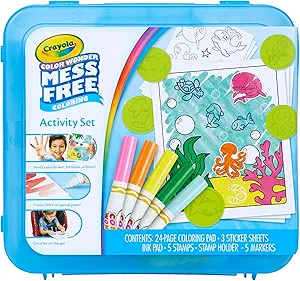
Let me describe a nightmare scenario every parent knows: your toddler gets a marker, disappears for 90 seconds, and when you find them, your white couch has a new mural.
The Crayola Color Wonder set eliminates this nightmare entirely. The markers ONLY show color on the special Color Wonder paper. On walls? Nothing. On furniture? Nothing. On your toddler’s face? Still nothing.
This activity set comes with a 24-page coloring pad, sticker sheets, stamps, and markers — all in a portable carrying case. I keep one in the car, one in the diaper bag, and one at home. It is the toy I grab when I need 20 minutes to make a phone call or start dinner.
The honest truth: Is it as exciting as regular painting? No. But the trade-off — zero mess, zero stress, zero “PLEASE DO NOT COLOR ON THE WALLS” — makes it one of the most practical toys I own.
Price: $8-12
👉 Get the Mess-Free Activity Set
5. Melissa & Doug Water Wow! Reusable Water-Reveal Pads
Best for: Ages 3+ | Travel + mess-free coloring
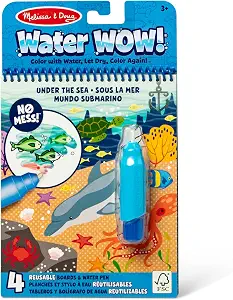
Water Wow pads are the unsung hero of every American parent’s diaper bag. You fill the pen with water, color on the page, and vibrant pictures appear. When it dries, the colors disappear and you can do it all over again.
No ink. No mess. No refills to buy. Just water.
I have used these on airplanes, in restaurant waiting areas, at the pediatrician’s office, and in the car on a 6-hour drive to my in-laws’ house in Pennsylvania. They work every single time.
The genius part: Because the “magic” is in revealing a hidden picture, toddlers are fascinated by it in a way they are not with regular coloring books. My daughter will sit and paint the same page 4-5 times, watching the colors appear and disappear.
Pro tip: Buy a multi-pack with different themes. “Under the Sea” has been our favorite, but the animal and alphabet versions are great too.
Price: $5-8 per pad (or $15-20 for a multi-pack)
👉 Check out the Water Wow Multi-Pack
6. Clixo Magnetic Building Toy — Tropical Birds Bundle
Best for: Ages 4-10 | Calm, creative building
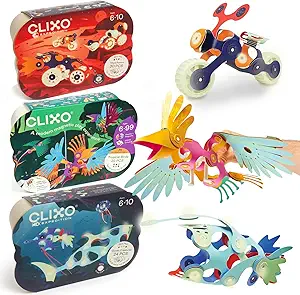
Clixo is one of those toys that I bought on a whim and ended up being shocked by how much my kids loved it.
These are flexible, magnetic pieces that snap together, but unlike rigid magnetic tiles, Clixo pieces bend and curve. Kids can build 3D animals, vehicles, wearable creations, and abstract sculptures that actually look cool. The Tropical Birds bundle comes with enough pieces to build three different bird designs — or whatever your kid’s imagination comes up with.
What surprised me most was how CALM this toy is. There is something meditative about snapping the pieces together. My daughter builds with Clixo when she is overstimulated or needs to wind down. It is the opposite of the high-energy, noisy toys that dominate our playroom.
Why it is worth the price: Clixo pieces are extremely durable. We have had ours for over a year and nothing has broken, cracked, or lost its magnetism. And unlike some building toys with tiny pieces, these are large enough that I do not panic about choking hazards.
Price: $35-45
👉 Get the Clixo Tropical Birds Bundle
7. Play-Doh Starter Set with Storage Tote
Best for: Ages 2-5 | Sensory play + fine motor skills
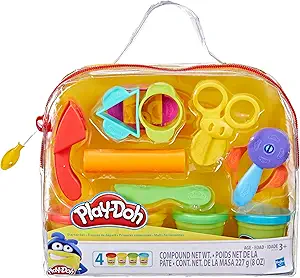
I almost did not include Play-Doh on this list because, honestly, does anyone need me to tell them about Play-Doh? But then I realized — it is on this list BECAUSE it works. After all the trendy toys and Instagram-famous products, Play-Doh still keeps my toddler busier than almost anything else.
This starter set comes with a storage tote (which is clutch for cleanup), 4 cans of compound, and basic tools like cutters, rollers, and molds. It is everything you need to set up a Play-Doh station at your kitchen table and buy yourself 30 minutes.
The real reason Play-Doh works: It is truly open-ended. There is no “right way” to play with it. A toddler can squish it in their fists while a preschooler can sculpt elaborate birthday cakes. It grows with your child in a way that most toys do not.
Pro tip for sanity: Keep Play-Doh at the kitchen table only. It stays contained, and cleanup is one swipe of a damp cloth. The storage tote in this set makes it easy to pack everything up when you are done.
Price: $10-15
👉 Grab the Play-Doh Starter Set
8. Lovevery The Babbler Play Kit
Best for: Ages 13-15 months | Developmental milestones
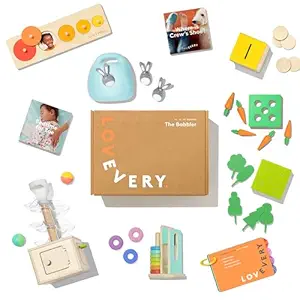
If you are a first-time parent and feeling overwhelmed by the sheer number of toy options, Lovevery takes the guesswork completely out of it.
The Babbler Play Kit is designed by child development experts for the 13-15 month stage specifically. It includes multiple toys that target the exact skills your baby is working on — object permanence, spatial awareness, early language, and fine motor control. It even comes with a play guide that explains WHY each toy matters and HOW to introduce it.
I will be transparent — Lovevery is not cheap. But here is how I think about it: instead of buying 10 random toys from Amazon and hoping something sticks, you are getting 5-6 expertly chosen toys that are specifically designed for your child’s developmental stage. Every single piece gets used.
The bonus book: This kit includes “Where is Crew’s Shoe” — a board book that pairs with one of the activities. My daughter asked me to read it approximately 847 times.
Who this is for: First-time parents, parents who want Montessori-aligned toys, or anyone who just wants someone else to curate the toy selection so they do not have to.
Price: Around $80 per kit
👉 See what is in the Babbler Kit
9. Little Tikes Story Dream Machine
Best for: Ages 3-8 | Screen-free visual storytelling
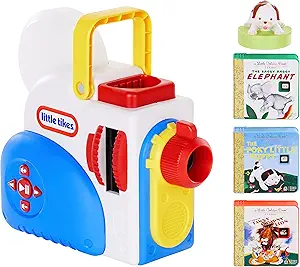
The Story Dream Machine is for kids who love the visual element of screens but need a screen-free alternative. It is basically a kid-friendly projector — your child inserts a story cartridge, and the machine projects illustrations onto the wall or ceiling while narrating the story.
My daughter calls it her “movie maker,” and she uses it every night during her wind-down routine. The starter set comes with three stories, and the projection is gentle enough to use in a dimly lit bedroom without being overstimulating.
Why it works as a screen replacement: It scratches the same itch — visual storytelling, engaging content, something to watch — but without the blue light, the algorithm, or the autoplay rabbit hole. It is a one-story experience with a clear beginning and end.
What parents should know: The projection works best in a darker room. During bright daytime hours, it is not as impressive. But at bedtime? It is genuinely magical.
Price: $40-50
👉 Check out the Story Dream Machine
10. Melissa & Doug Wooden Building Blocks (100 Pieces)
Best for: Ages 2-6 | Classic open-ended building
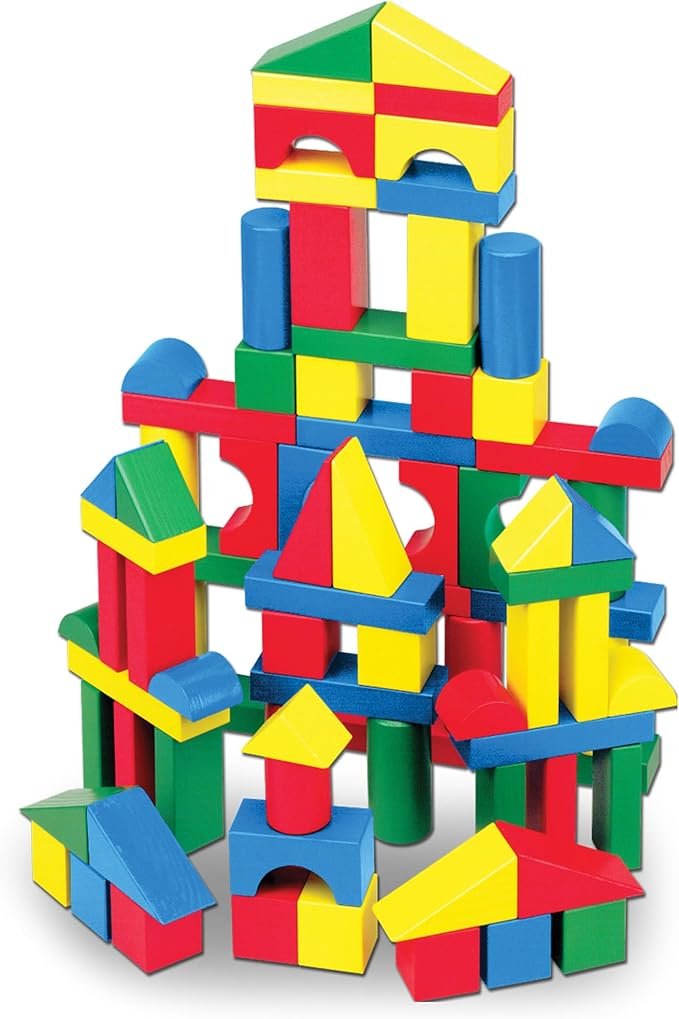
In a world of tech toys and subscription boxes, there is something beautifully simple about a giant set of wooden blocks.
This set includes 100 blocks in 4 colors and 9 shapes. No instructions. No “right way” to build. Just blocks, a floor, and your child’s imagination.
I bought these when my daughter was two, and at almost four, she still plays with them every single week. The play has evolved — from simple stacking to building “houses” and “zoos” and elaborate towers that she deliberately knocks over with gleeful destruction — but the blocks themselves are exactly the same.
Why blocks still matter in 2026: Child development research consistently shows that open-ended block play builds spatial reasoning, early math skills, problem-solving, and creativity more effectively than most structured toys. There is a reason blocks have been in classrooms for over a century.
The practical bonus: These blocks are virtually indestructible. They do not need batteries, they do not break, and they do not have small pieces. They are the cockroach of the toy world — they will outlast everything.
Price: $20-25
11. Kinetic Sand Construction Site Folding Sandbox
Best for: Ages 3-6 | Indoor sensory play
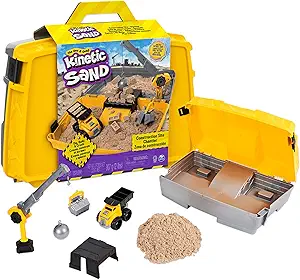
If you have never touched Kinetic Sand, go to your nearest Target and find the display. Squeeze it. You will understand immediately why kids are obsessed.
This construction-themed set comes with 2 lbs of Kinetic Sand, mini construction vehicles, molds, and a folding sandbox that contains the mess. The sand itself is the real star — it feels wet and moldable but is actually dry. It sticks to itself, not to your hands, your carpet, or your couch.
My daughter asks for her “beach” almost daily. She scoops, builds, demolishes with the trucks, and starts over. It is the closest thing to outdoor sandbox play that you can do inside your house in January.
Mess reality check: Is it truly mess-free? No. Small amounts will end up on your table. But it is about 95% contained, and it vacuums up easily. Compared to real sand, Play-Doh crumbles, or (God forbid) glitter, Kinetic Sand is remarkably tidy.
Price: $10-15
👉 Shop the Construction Site Sandbox
12. Fat Brain Toys Dimpl — Sensory Toy for Babies
Best for: Ages 10 months – 3 years | Sensory exploration
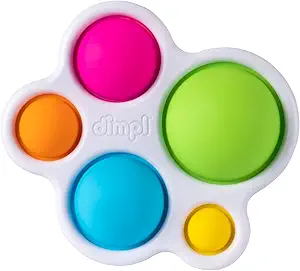
The Dimpl is so simple it almost seems like it should not work. It is five silicone bubbles in different sizes and colors set into a plastic frame. You push them in. They pop out the other side. That is it.
And yet my 14-month-old was MESMERIZED by this thing. She would sit in her high chair pushing the bubbles back and forth for 10-15 minutes, which in baby time is basically an eternity.
Why it works for young toddlers: At this age, babies are learning about cause and effect. Push a bubble → it pops out. Flip it over → push it again. The tactile feedback is satisfying, the colors are engaging, and the size is perfect for small hands.
The honest take: This is not a toy your 4-year-old will play with. It is specifically great for babies and young toddlers (10 months to about 2.5 years). But during that window, it is one of the best sensory toys available.
Price: $12-15
13. Learning Resources Spike the Fine Motor Hedgehog
Best for: Ages 18 months – 4 years | Fine motor skills + color learning
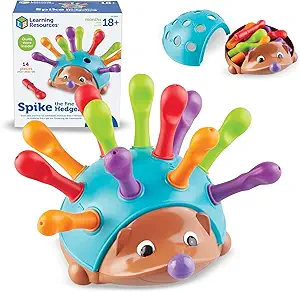
Spike the Hedgehog is one of those toys that pediatric occupational therapists recommend all the time — and for good reason.
The concept is simple: your toddler picks up colorful quills and pushes them into Spike’s back. Pull them out, sort by color, put them back in. The chunky pegs are perfectly sized for toddler hands, and the resistance is just enough to build fine motor strength without being frustrating.
My daughter’s preschool has three of these in their classroom. When I asked her teacher which toy gets the most consistent use, she pointed straight at Spike. “The kids come back to this one every single day,” she said.
The educational bonus: You can use Spike to teach colors (“Can you find all the blue quills?”), counting (“Let’s put in five quills”), and patterns (“Blue, red, blue, red…”). It is a toy that naturally invites learning without feeling like a lesson.
Price: $12-15
14. Crayola Inspiration Art Case (140 Pieces, Tie-Dye Edition)
Best for: Ages 5-10 | Art studio in a case
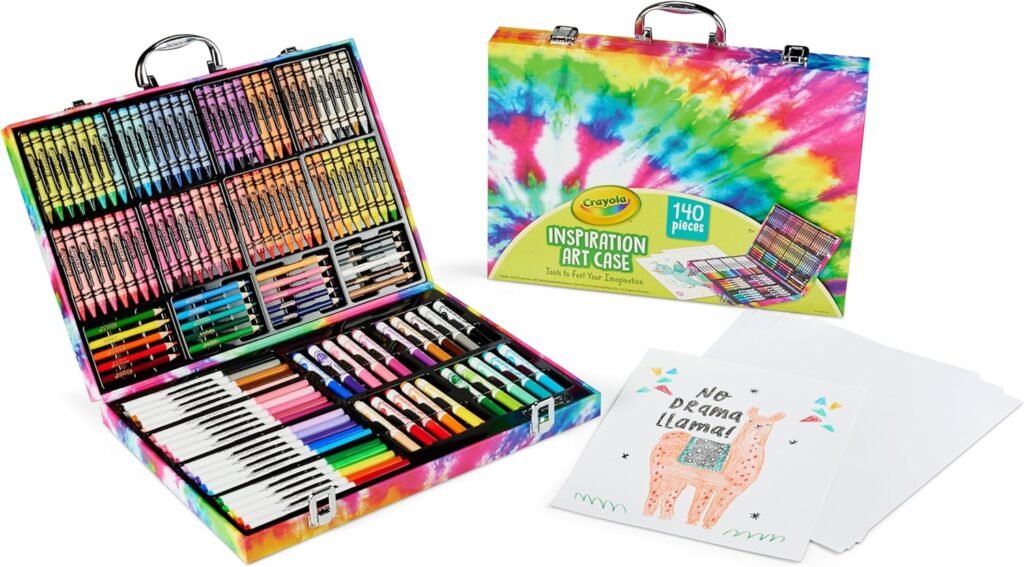
When your kid outgrows toddler toys and starts asking for “real art stuff,” the Crayola Inspiration Art Case is the perfect answer.
This tie-dye case opens up to reveal 140 pieces: 64 crayons, 40 washable markers, 20 colored pencils, and 15 paper sheets. It is organized beautifully (a rarity in kids’ art supplies), portable with a carrying handle, and sturdy enough to survive being carted to grandma’s house, the car, and back again.
Why I recommend this over buying supplies separately: I used to buy individual packs of markers, crayons, and pencils. They ended up scattered in three different drawers, half of them lost their caps, and I could never find what we needed when we needed it. This case keeps everything together. When art time is over, everything goes back in the case. Done.
Who this is really for: Kids ages 5 and up who are ready for a wider range of art materials. For younger toddlers, stick with the Color Wonder set (#4 on this list).
Price: $25-30
👉 Get the Inspiration Art Case
15. Stomp Rocket Dueling Rockets
Best for: Ages 5+ | Outdoor active play
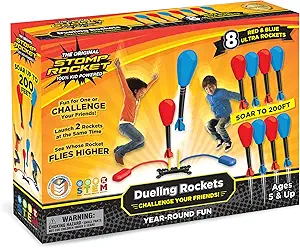
I saved Stomp Rocket for last because it is the toy that gets my kids off the couch, out of the house, and running around the backyard faster than anything else we own.
The concept is pure kid genius: you stomp on an air pad, and a foam rocket flies up to 200 feet in the air. This dueling version comes with two launchers and 8 rockets, so two kids can compete to see whose rocket goes higher. No batteries. No screens. Just stomping and laughing.
The backyard game-changer: Every single time we have friends over with kids, the Stomp Rockets come out. Every time. It does not matter if the kids are 4 or 10 — they all want to stomp rockets. It has become our default outdoor activity.
Weather note: These work best on calm days. Wind will send the rockets sideways into your neighbor’s yard. Ask me how I know.
Price: $15-20
👉 Launch into fun with Stomp Rocket
Quick Comparison: All 15 Screen-Free Toys at a Glance
| Toy | Best Age | Price | Play Type | Keeps Busy For |
|---|---|---|---|---|
| Yoto Mini | 2-8 yrs | $50-70 | Audio stories | 30-60 min |
| Magna-Tiles 32pc | 3-8 yrs | $40-50 | Building | 30-60 min |
| M&D Ice Cream Counter | 3-6 yrs | $25-35 | Role play | 20-45 min |
| Color Wonder Set | 2-5 yrs | $8-12 | Art (mess-free) | 15-30 min |
| Water Wow Pads | 3+ yrs | $5-8 | Art (mess-free) | 15-25 min |
| Clixo Tropical Birds | 4-10 yrs | $35-45 | Building | 20-40 min |
| Play-Doh Starter Set | 2-5 yrs | $10-15 | Sensory/creative | 20-45 min |
| Lovevery Babbler Kit | 13-15 mo | $80 | Developmental | 15-30 min |
| Story Dream Machine | 3-8 yrs | $40-50 | Storytelling | 15-25 min |
| Wooden Blocks 100pc | 2-6 yrs | $20-25 | Building | 20-45 min |
| Kinetic Sand | 3-6 yrs | $10-15 | Sensory | 20-40 min |
| Fat Brain Dimpl | 10mo-3yr | $12-15 | Sensory | 10-20 min |
| Spike Hedgehog | 18mo-4yr | $12-15 | Fine motor | 15-25 min |
| Crayola Art Case | 5-10 yrs | $25-30 | Art | 30-60 min |
| Stomp Rocket | 5+ yrs | $15-20 | Outdoor active | 20-45 min |
Tips for Making Screen-Free Play Actually Work
Getting kids to play without screens is not just about buying the right toys. Here are the strategies that actually worked in our house:
Rotate your toys. Put out 4-5 toys at a time and store the rest. When you rotate them back in every 2-3 weeks, they feel “new” again. This single strategy doubled the amount of time my daughter played independently.
Set up an invitation to play. Instead of handing your child a toy, set it up on their play table before they wake up. When my daughter comes downstairs and sees her Kinetic Sand already set up with the trucks, she runs straight to it. The setup is the invitation.
Start small with screen-free time. If your toddler is used to 3 hours of screen time, do not go cold turkey. Replace one 20-minute block with a screen-free toy. Then another. Gradual changes stick better than dramatic ones.
Be present at first. Most toddlers need you to play WITH them for the first 5-10 minutes before they can play independently. Sit with them, build one tower together, then gradually step back. That initial investment of your attention pays off in 30+ minutes of independent play.
Keep expectations realistic. A toddler playing independently for 15 minutes is a WIN. You do not need an hour of silence. You need enough time to drink your coffee or switch the laundry. Start there.
Frequently Asked Questions
What age is best for screen-free toys?
Every age benefits from screen-free play, but the products on this list are designed for children between 10 months and 10 years. For babies under one, start with sensory toys like the Fat Brain Dimpl. For toddlers 1-3, try Spike the Hedgehog, Play-Doh, or the Lovevery Play Kit. For ages 3 and up, Magna-Tiles, Kinetic Sand, and the Yoto Mini are excellent choices.
How do I get my toddler to play without screens?
Start by replacing one screen time block per day with a screen-free activity. Set up the toy in advance so it is ready and inviting. Play alongside your child for the first 5-10 minutes to get them engaged, then gradually step back. Rotating toys every 2-3 weeks also helps keep things feeling fresh.
Are screen-free toys worth the investment?
Yes. Toys that encourage hands-on play, creativity, and problem-solving build skills that screens cannot replicate — fine motor development, spatial awareness, social skills, and independent thinking. Many of the toys on this list, like Magna-Tiles and wooden blocks, last for years and can be used by multiple children.
What is the best screen-free toy for a 2-year-old?
For a 2-year-old, the best screen-free toys are the Fat Brain Dimpl for sensory play, Play-Doh for creative exploration, Melissa & Doug Water Wow pads for mess-free art, and the Crayola Color Wonder set for coloring. These all target the developmental needs of this age group — sensory exploration, fine motor skills, and creative expression.
How long should a toddler play independently without screens?
Most toddlers between 18 months and 3 years can play independently for 10-20 minutes with engaging toys. By age 3-4, many children can sustain independent play for 20-40 minutes. If your child is new to screen-free play, start with shorter periods and gradually build up.
The Bottom Line
You do not need to eliminate screens entirely. You do not need to feel guilty about the episodes of Bluey your kid watched this morning. You are doing a great job.
But if you want more tools in your toolkit — more options for those long afternoons when the screen is the easy answer but not the answer you want — these 15 toys are a good place to start.
Start with one or two that match your child’s age and interests. See what clicks. And the next time you are standing in your kitchen reheating that same cup of coffee, maybe — just maybe — you will hear the sound of your child playing independently in the other room.
And your coffee will still be hot.
Which screen-free toy is your family’s favorite? Drop a comment below — I would love to hear what works in YOUR house!