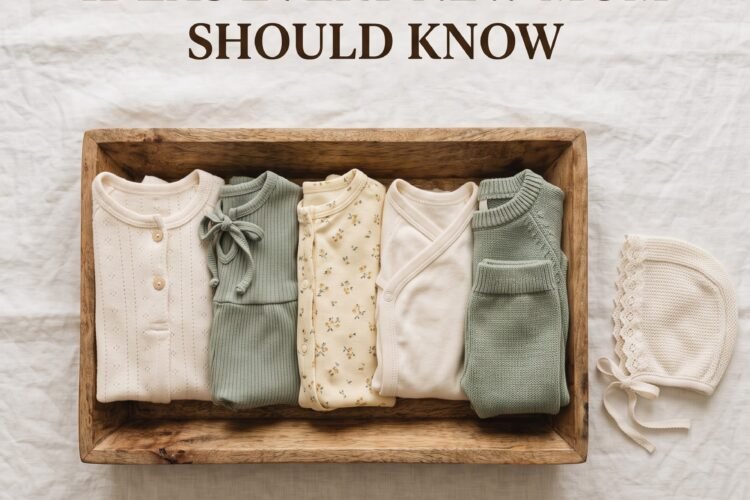
Why Newborn Outfits Deserve Thought Before the Baby Shower
You will own more tiny clothes than you ever imagined. The hospital sends you home with a stack. Aunt Linda sends a hand-me-down box. A stranger from your partner’s office anonymously drops off a soft yellow hoodie at your door. Within the first week, your drawers overflow with two-ounce socks and three-inch hats.
And somehow, on day three of newborn life, you’ll stand in front of that mountain of clothes, bleary-eyed, holding a screaming baby, and have no idea what to put on them next.
That’s exactly why outfits deserve thought before they ever deserve a register scan. You’ll likely wear most outfits only once or twice. Babies grow. Spit-up happens. Blowouts change everything. The 20 outfits below are the ones real parents reach for over and over, sized for real bodies, built around safety, and chosen with Pinterest’s aesthetic standards while still working on a 3 AM Tuesday.
Read once. Screenshot. Then go to the drawer with confidence.
Safety Basics Every New Mom Should Know First
A small handful of safety rules protect your baby better than any outfit choice.
Sleepwear & Sleep Safety
The American Academy of Pediatrics recommends keeping soft objects and loose bedding — including loose blankets — out of the infant sleep area. They specifically advise that infant sleep clothing such as a wearable blanket (a sleep sack) is preferable to loose blankets. (HealthyChildren.org, AAP Safe Sleep Missouri summary)
That means:
- Skip loose baby blankets in the crib or bassinet
- Use a sleep sack or swaddle sized to current weight
- Stop swaddling once baby shows signs of rolling (often 8–12 weeks)
- Transition to a sleeveless sleep sack from that point on
TOG Ratings — Why the Number Matters
TOG stands for Thermal Overall Grade, an industry measurement that tells you how warm a sleep sack is. (Nest Designs, ergoPouch guide, HALO Sleep chart)
In practice:
- 0.5 TOG — light layer for warm rooms (75°F+)
- 1.0 TOG — standard room temperature (~70–73°F)
- 2.5 TOG — cooler rooms (~65–69°F)
- 3.5 TOG — coldest nursery, layered with a onesie underneath
A higher TOG is thicker; dress baby lighter underneath when the TOG is high. Avoid overheating in any season.
Hood & Drawstring Hazards
The U.S. Consumer Product Safety Commission has determined that hood and neck drawstrings on children’s upper outerwear (sizes 2T–12) present a strangulation hazard. Their guidance applies broadly to infant layers too — skip hood drawstrings, neck ties, and long cords entirely in newborn sleepwear and outerwear. (CPSC guidance on drawstrings)
Choose:
- No hoods in sleepwear (overheating risk + strangulation)
- No cords around the neck (pacifier clip cords kept short, under 7 inches)
- Elasticated cuffs instead of ties
Car Seat & Bulky Coats
NHTSA specifically warns that bulky clothing including winter coats and snowsuits should not be worn underneath the harness of a car seat, because in a crash the puff compresses and leaves the harness too loose to protect the child. (NHTSA car seat winter guidance, Consumer Reports)
Practical advice:
- Dress baby in thin, snug layers inside the car seat (onesie + fleece sweater)
- Buckle first, then add a blanket over the harness, or use a car seat cover that goes over — not behind — baby
- Never place a puffy coat between baby and the harness
- Save the cute puffer jacket for the destination, not the drive
General Sizing Notes
- Newborn size typically fits 5–8 lbs
- 0–3 month size usually fits 8–12 lbs
- Babies grow in unpredictable bursts — keep both sizes on hand
- Wash every new outfit before first wear (separately or in a fragrance-free baby detergent)
20 Newborn Outfit Ideas (Grouped by Occasion)
Hospital & Going-Home (Ideas 1–4)
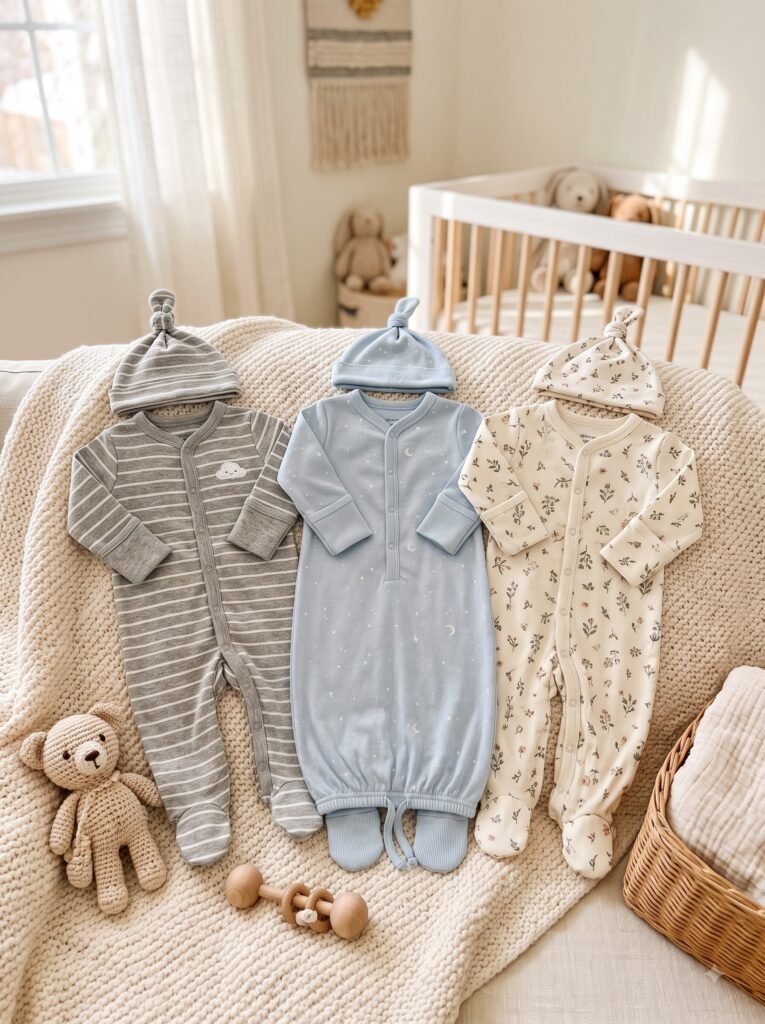
1. Soft Cotton Footed Sleeper (Gown-Style)
- Why it works: Gown-style sleepers snap at the shoulder, so middle-of-the-night diaper changes don’t require pulling anything over baby’s head.
- Sizing note: Choose newborn for babies under 8 lbs; 0–3 month if baby is on the larger side.
- Fabric/closure detail: 100% cotton knit, shoulder snaps, no hood, no drawstring. Skip the decorative bow.
2. Long-Sleeve Kimono-Style Onesie + Pull-On Pants
- Why it works: The kimono-style wrap front slides on without going over the head — gentler for brand-new umbilical cords.
- Sizing note: Newborn or preemie.
- Fabric/closure detail: Cotton, side-tie closure (no cords at the neck), pull-on pants with covered elastic waistband.
3. Receiving Blanket Swaddle + Cotton Cap
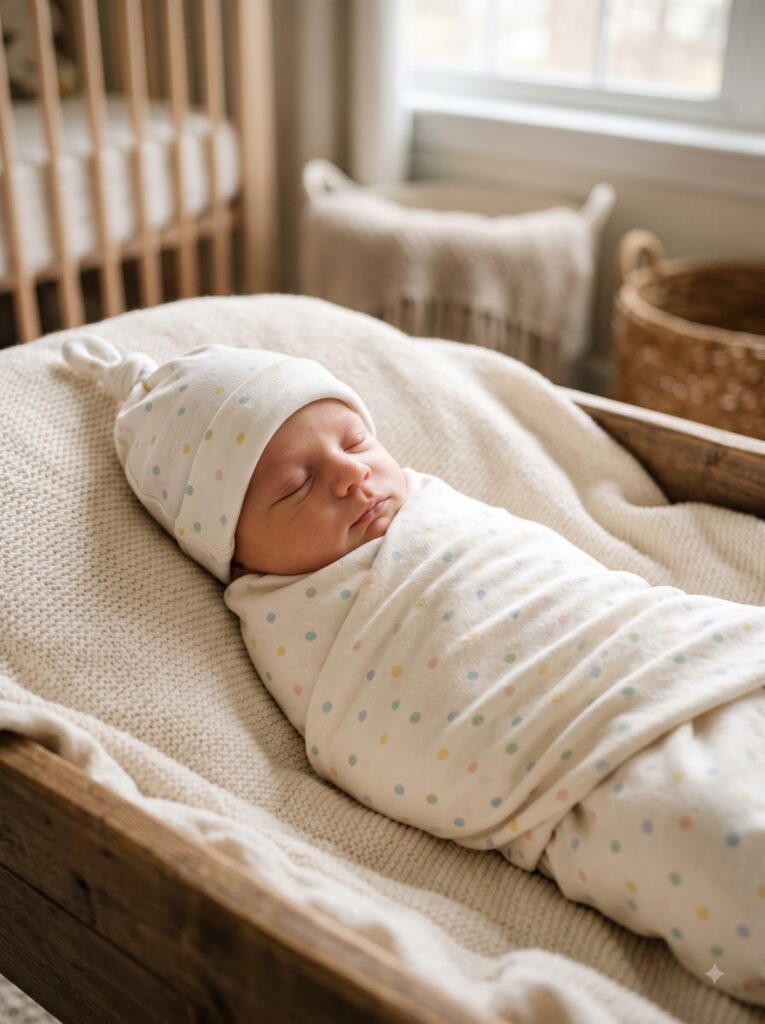
- Why it works: The hospital often hands you a flannel swaddle for the very first photo. If using at home, choose a single thin layer and stop swaddling at first signs of rolling.
- Sizing note: Newborn swaddle blankets are typically 30×30 to 40×40 inches.
- Fabric/closure detail: Lightweight cotton or muslin. The cap is for the first 24 hours only, per most hospital discharge guidance — remove it once baby is in a temperature-controlled room.
- Safety note: Don’t combine with a loose blanket in the sleep space. Use a sleep sack instead after the first day home. (HealthyChildren.org safe sleep)
4. Going-Home Footie + Knit Cardigan (No Buttons)
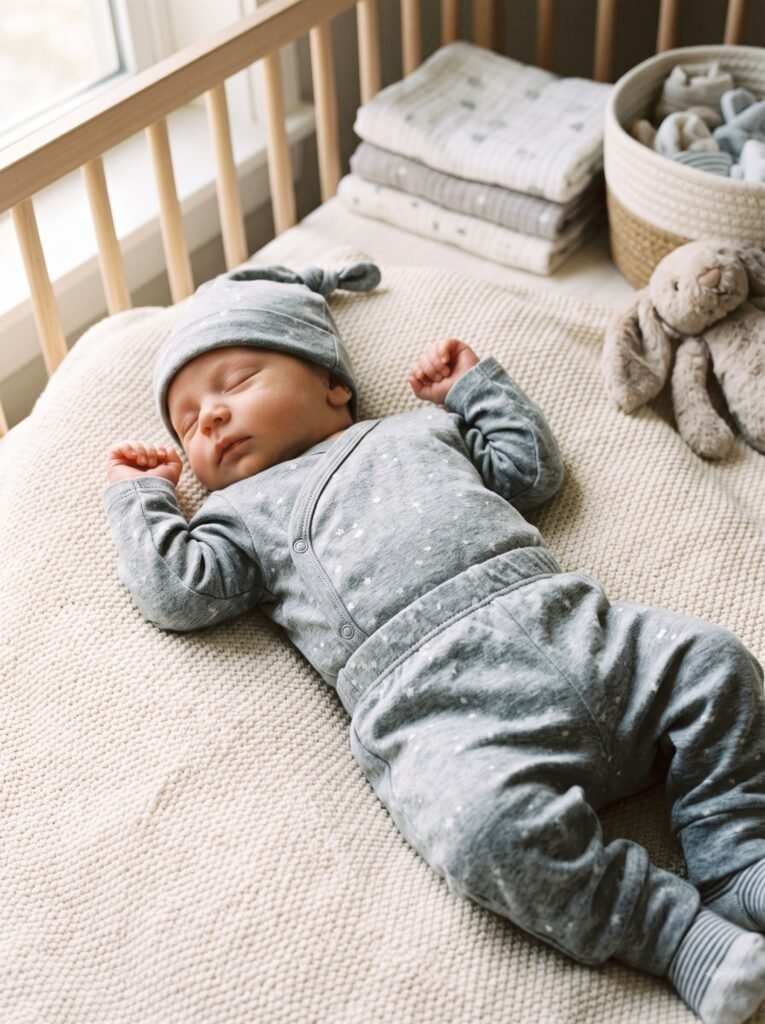
- Why it works: The two-piece setup reads “going-home outfit” for photos without sacrificing one-second diaper access.
- Sizing note: 0–3 month works for most babies born at term.
- Fabric/closure detail: Footed sleeper in cotton + lightweight open-front cardigan with snap closure (no ribbon ties).
Everyday at Home (Ideas 5–9)
5. Snap-Front Onesie + Soft Leggings
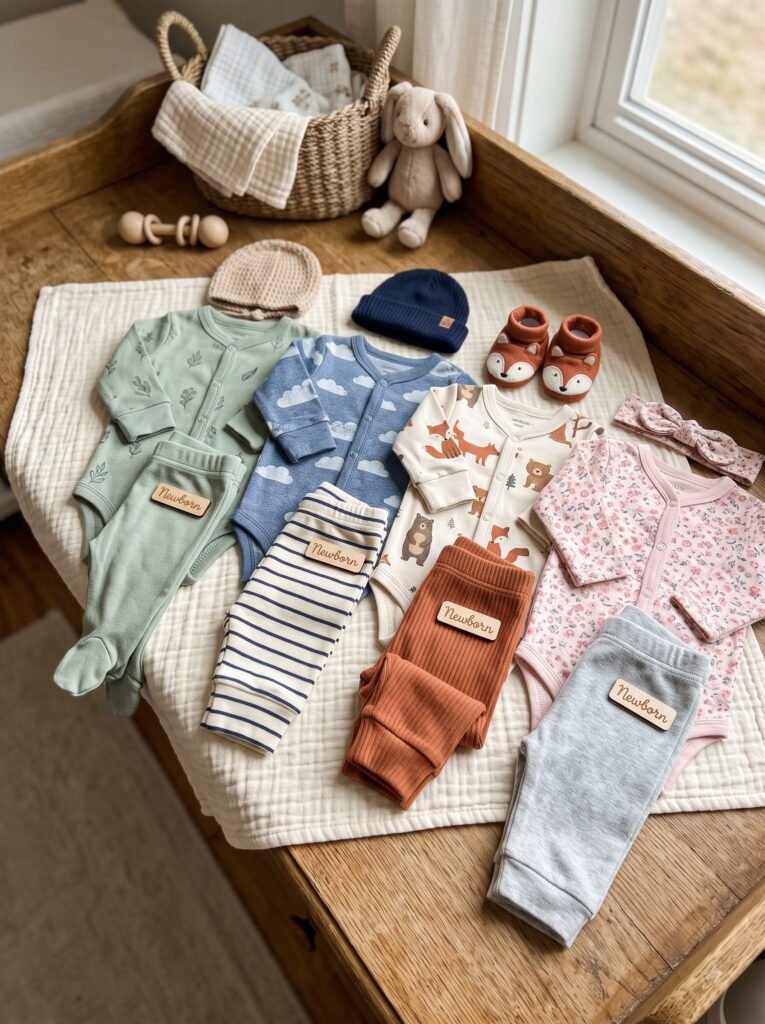
- Why it works: Two pieces mean fewer outfit changes when spit-up strikes the top half only.
- Sizing note: Newborn set.
- Fabric/closure detail: Side-snap onesie (kimono style) + cotton leggings with a covered waistband.
6. One-Piece Footed Pajamas (Long Sleeve, Mid-Weight)
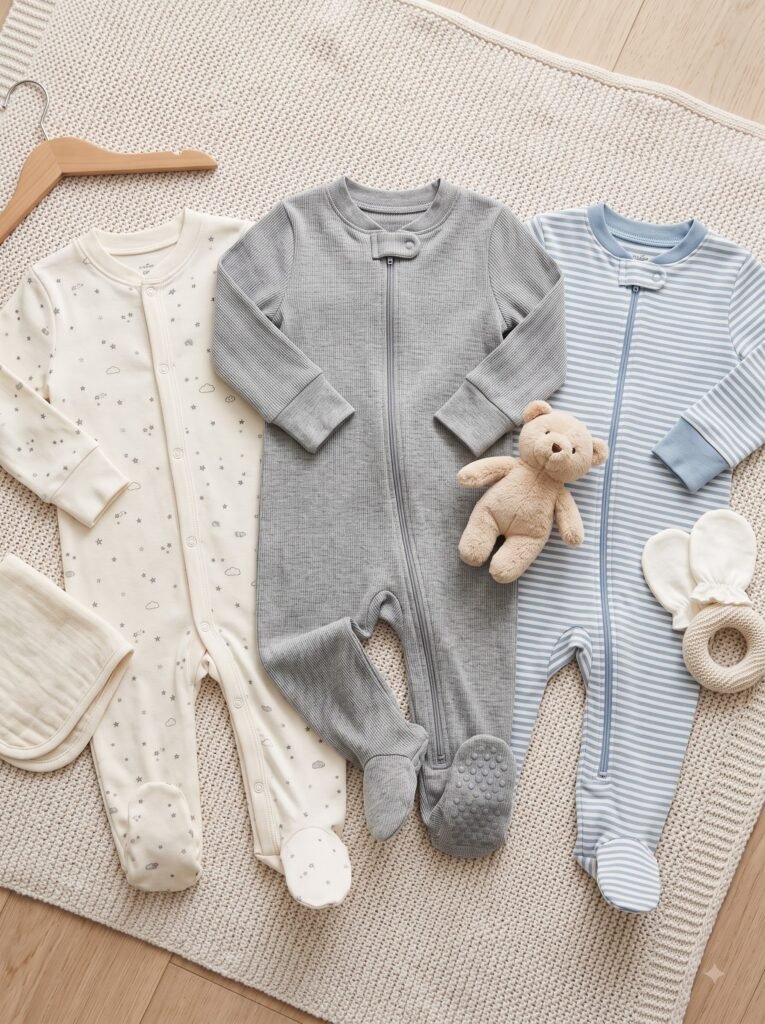
- Why it works: The true workhorse of newborn life. Doubles as a daytime outfit and nighttime sleeper.
- Sizing note: Newborn if under 8 lbs; 0–3 month for larger babies.
- Fabric/closure detail: Zipper or full front-snap closure. Skip hooded versions for sleep per safe-sleep guidelines.
7. Cotton Romper with Snap Crotch
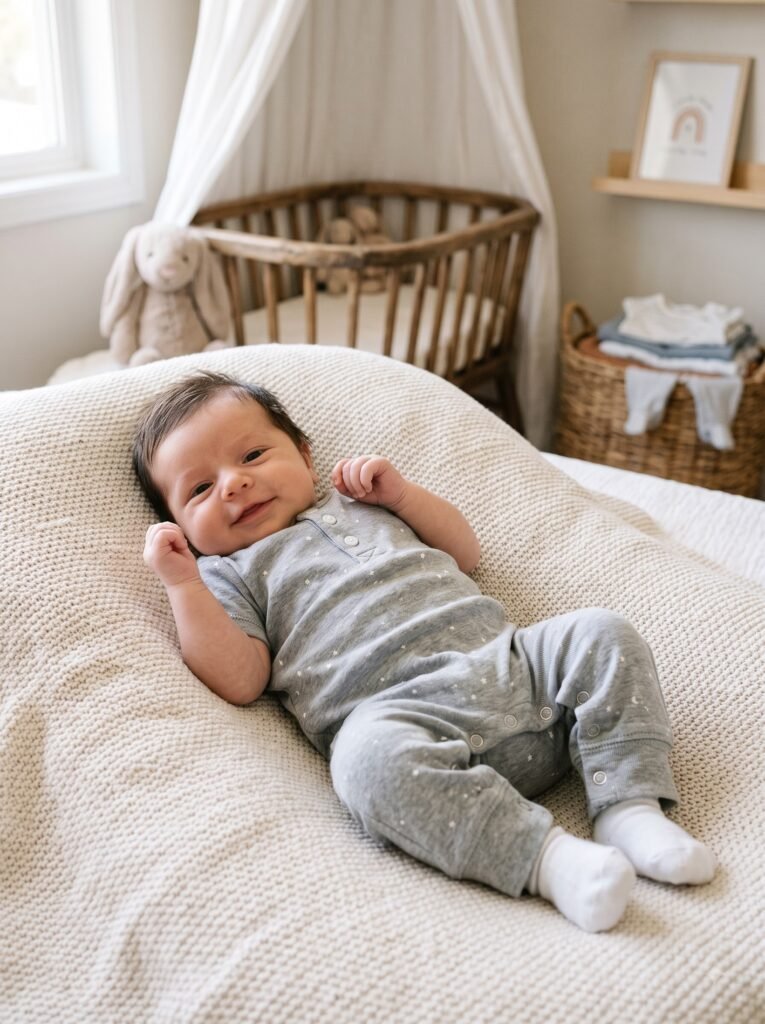
- Why it works: A romper keeps everything in place for skin-to-skin snuggling, tummy time, and going-out-to-grab-coffee days.
- Sizing note: Newborn.
- Fabric/closure detail: Snap crotch for fast changes, no neck ties, short sleeves for warmer months.
8. Wrap-Style Knit Set (Shirt + Pants)
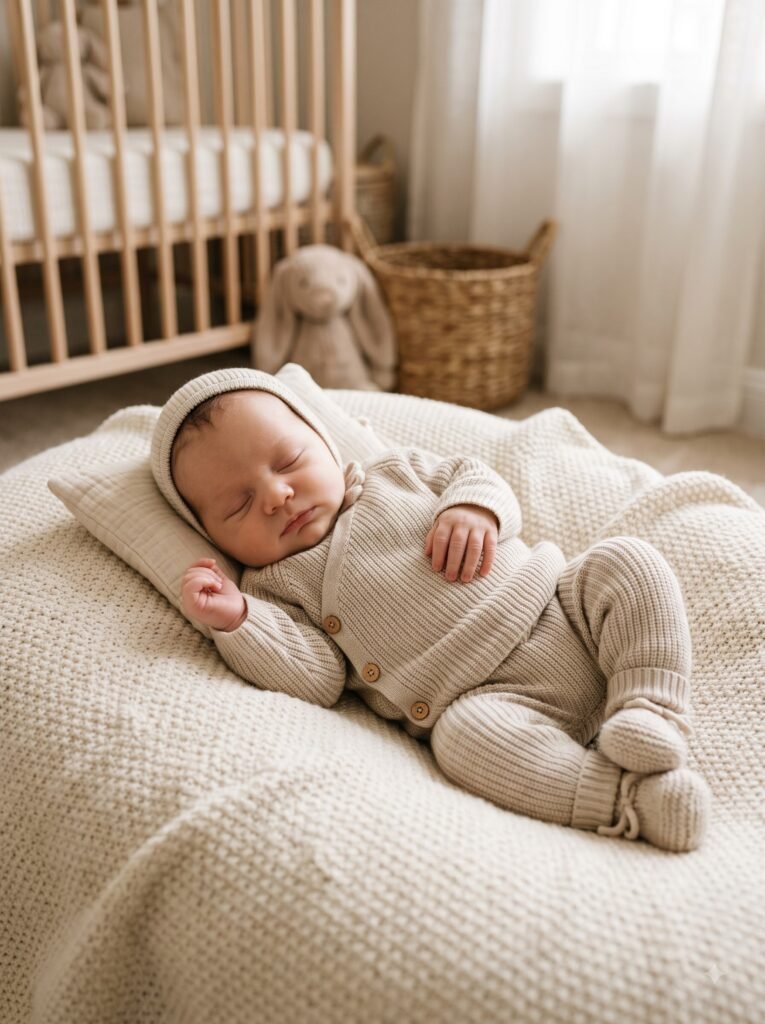
- Why it works: A knit set feels more “outfit-y” than a sleeper for the in-between visiting hours.
- Sizing note: 0–3 month.
- Fabric/closure detail: Wrap kimono top (overlapping V neck, no cord) + pull-on pants. Pick 100% cotton for breathability.
9. Banded Bib Onesie + Footless Pants
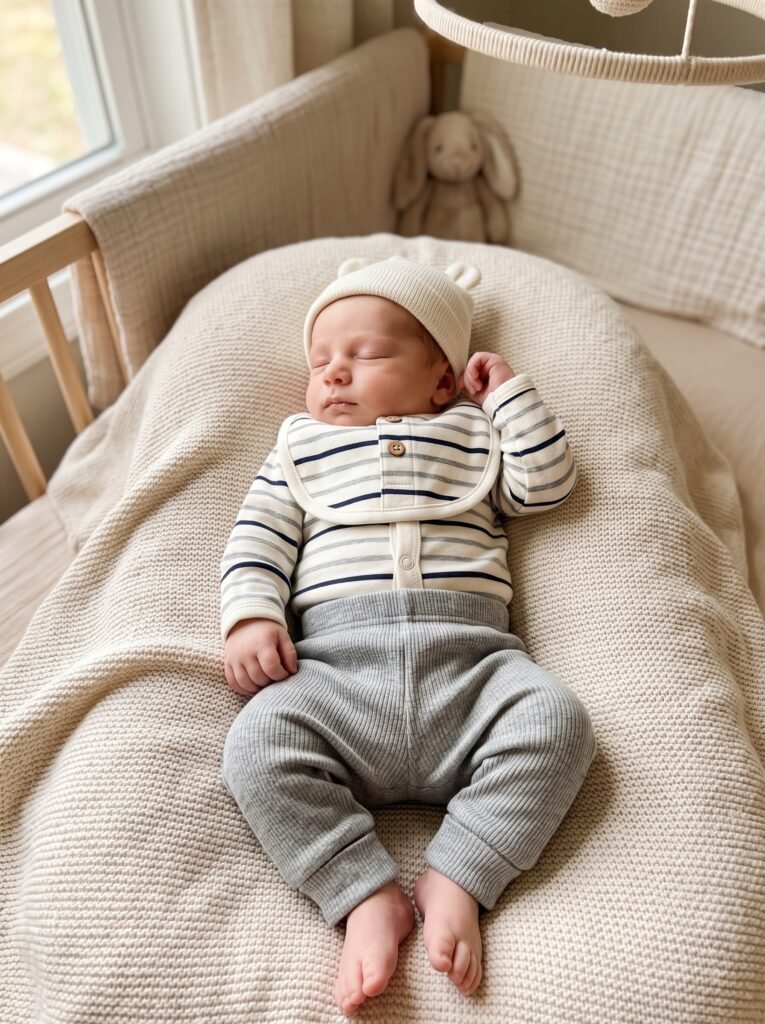
- Why it works: Banded onesies are gentler on tiny umbilical cords and the weighted version helps keep baby’s hands warm during tummy time.
- Sizing note: Newborn.
- Fabric/closure detail: Soft cotton banded top + matching footless pants. Skip hard plastic bib clasps.
Sleep at Home (Ideas 10–13)
10. Sleeveless Sleep Sack + Onesie
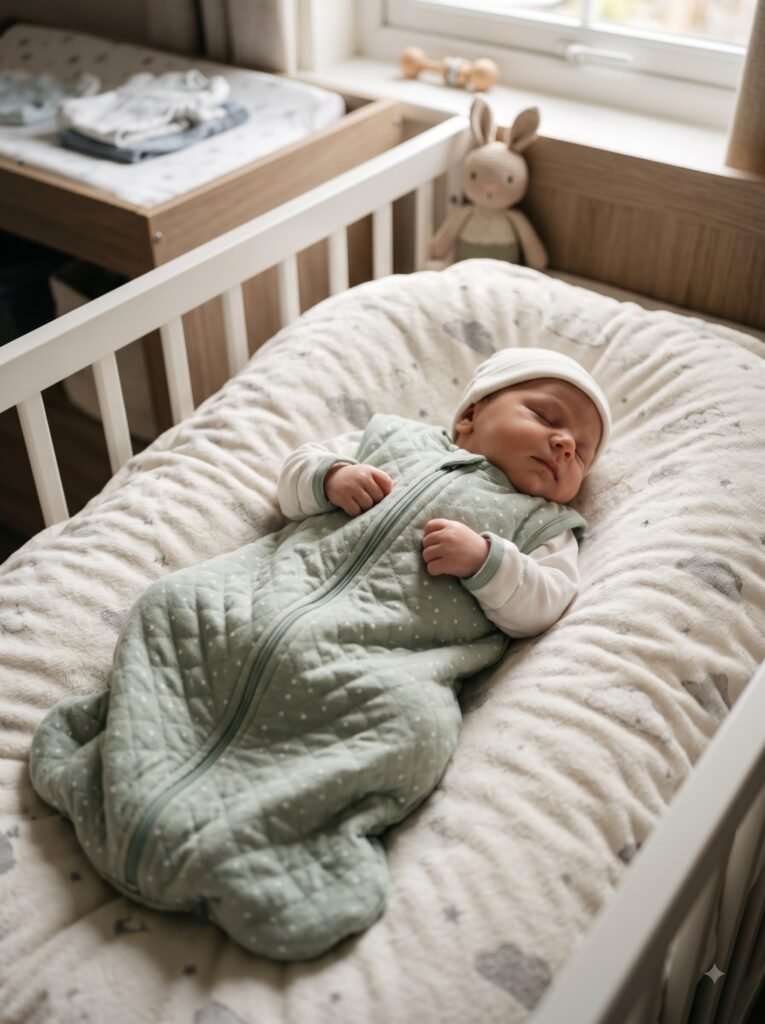
- Why it works: The sleeveless sleep sack is the gold standard for newborn sleep safety once baby is past the swaddle stage.
- Sizing note: Pick the right TOG for your nursery temperature (0.5 for warm, 1.0 standard, 2.5 for cool). (Nest Designs)
- Fabric/closure detail: Cotton or merino, no hood, zipper or velcro front.
11. Velcro Swaddle Sack (Pre-Rolling Stage)
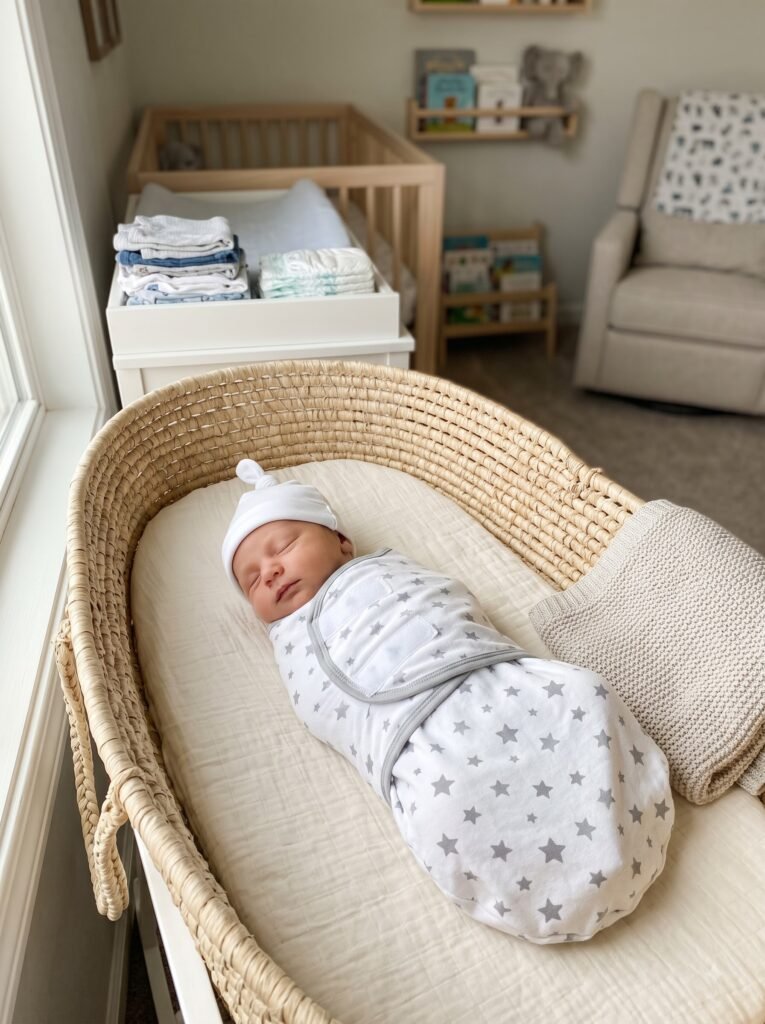
- Why it works: Velcro swaddles replace loose blankets, secure arms in place, and unzip for easy diaper changes.
- Sizing note: Choose by weight, not age.
- Fabric/closure detail: Cotton knit with reinforced velcro tabs. Stop swaddling at first rolling signs. (AAP 2022 update on infant sleep safety)
12. Merino Wool Sleep Sack (Cold Nursery)
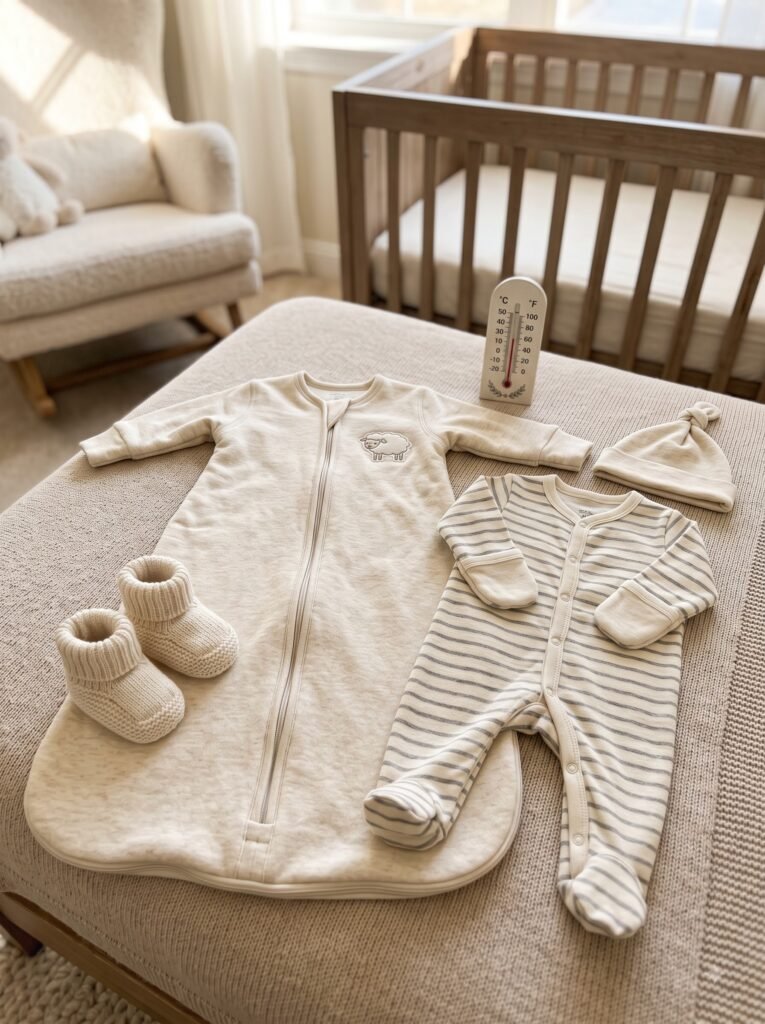
- Why it works: Merino breathes and regulates temperature, so baby stays warm without overheating.
- Sizing note: Choose by weight range.
- Fabric/closure detail: Long-sleeve, no hood, 1.0 or 2.5 TOG depending on nursery temperature.
13. Cotton Pajamas + Halo-Style Sleep Sack
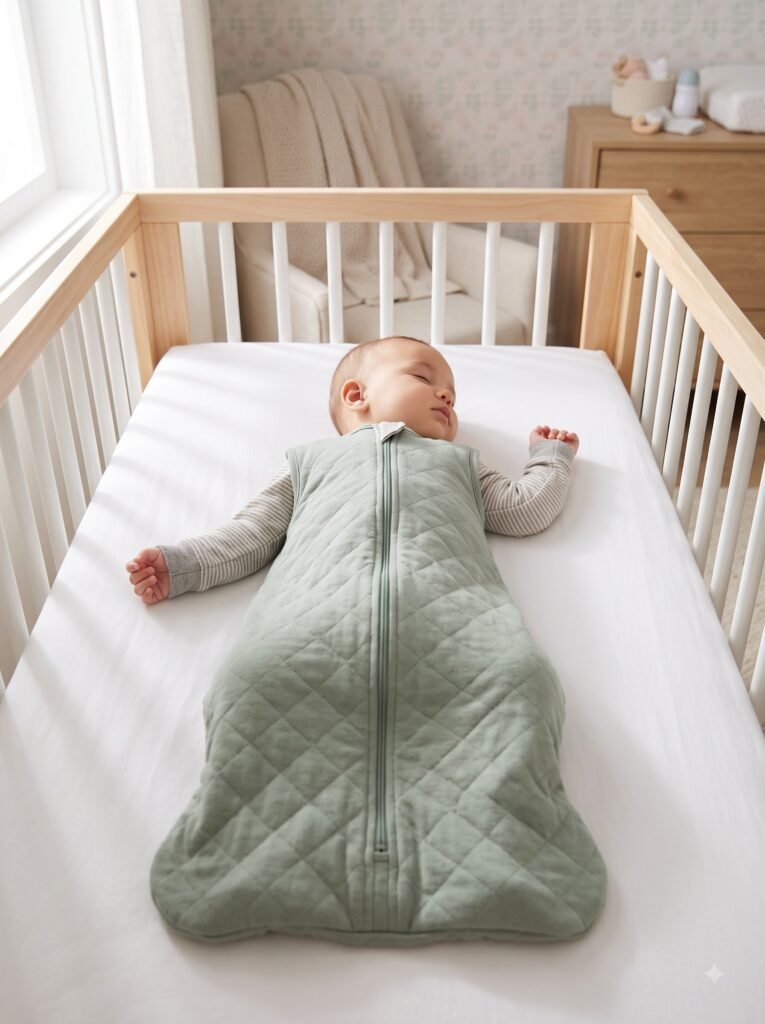
- Why it works: Layering pajamas underneath a sleep sack reduces the need to upgrade sizes every month.
- Sizing note: 0–3 month or follow the weight band on the sleep sack tag.
- Fabric/closure detail: Footed pajama (no drawstring waistband) + sleeveless sleep sack over the top.
Seasonal (Ideas 14–17)
14. Sun Hat + Lightweight Cotton Romper (Summer)
- Why it works: A wide-brim hat is the only safe-shade option for a newborn; sunscreen isn’t recommended before 6 months.
- Sizing note: Newborn strap-on hat fits head circumference around 13–15 inches.
- Fabric/closure detail: UPF-rated brim with chin strap toggle (no neck tie), short-sleeve cotton romper underneath.
15. Knit Beanie + Footed Pajama (Fall/Winter Indoors)
- Why it works: A hat compensates for heat loss in cooler indoor spaces while baby is awake and supervised.
- Sizing note: Newborn beanie (head circumference 13–15 inches).
- Fabric/closure detail: Cotton knit beanie with no ties; remove the hat for sleep per safe-sleep guidance. (HealthyChildren.org)
16. Fleece-Lined Car Seat Poncho (Winter Outdoors)
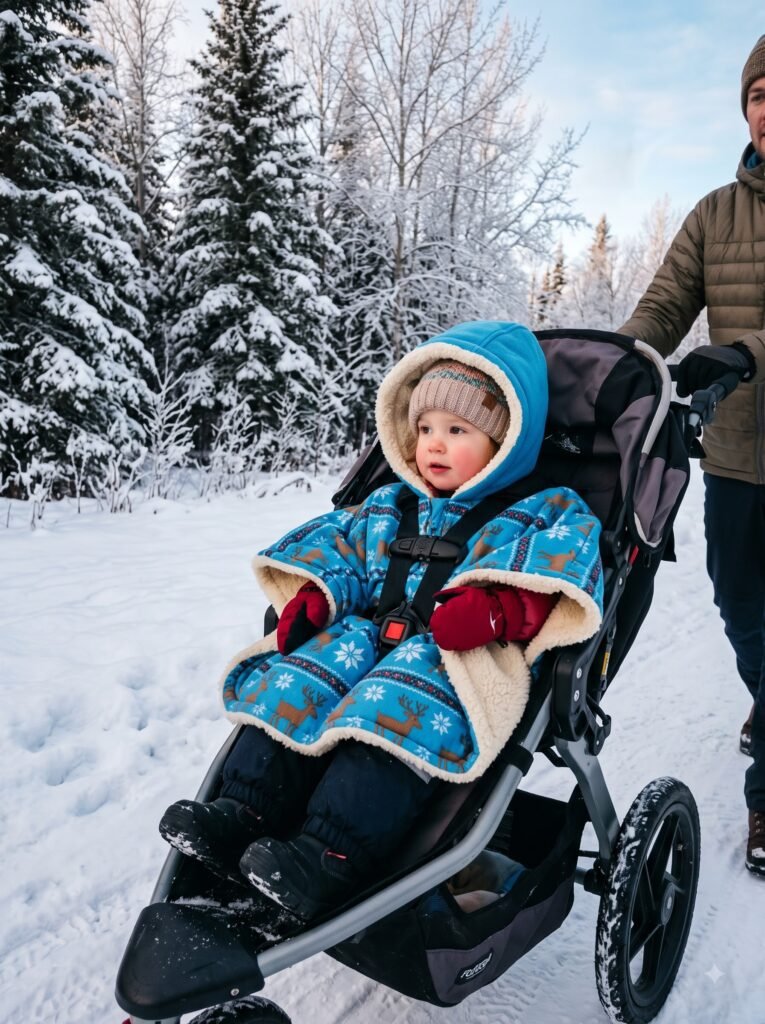
- Why it works: The poncho layers over the car seat harness, satisfying NHTSA’s safety guidance against bulky clothing under the harness. (NHTSA)
- Sizing note: Pick adjustable sizing that fits the infant car seat.
- Fabric/closure detail: Polar fleece exterior, snap or button front (no drawstring neck), head opening wide.
17. Footed Cotton Pajama + Cardigan (Spring Layering)
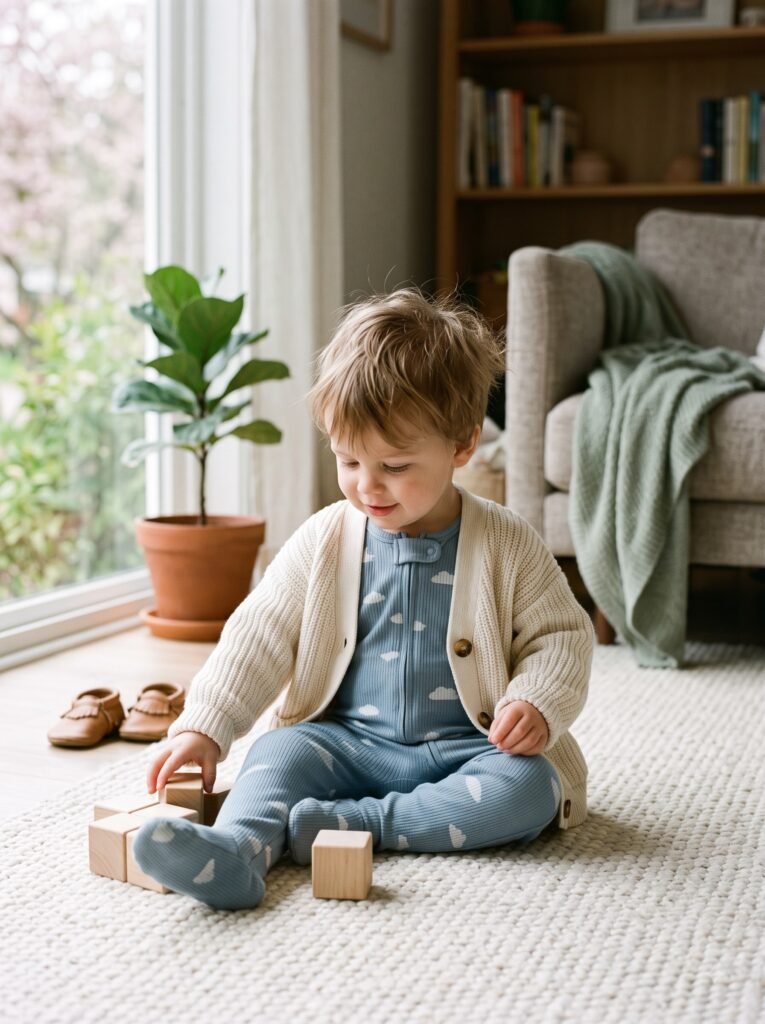
- Why it works: Spring weather flips between warm afternoons and cool mornings — layered pieces stay flexible.
- Sizing note: 0–3 month.
- Fabric/closure detail: Cotton footed pajama + open-front cotton cardigan with snap closures (no buttons that can come loose).
Photos & Milestones (Ideas 18–20)
18. Knit Bonnet + Swaddle Blanket Photo Set (Hospital-Style Photo)
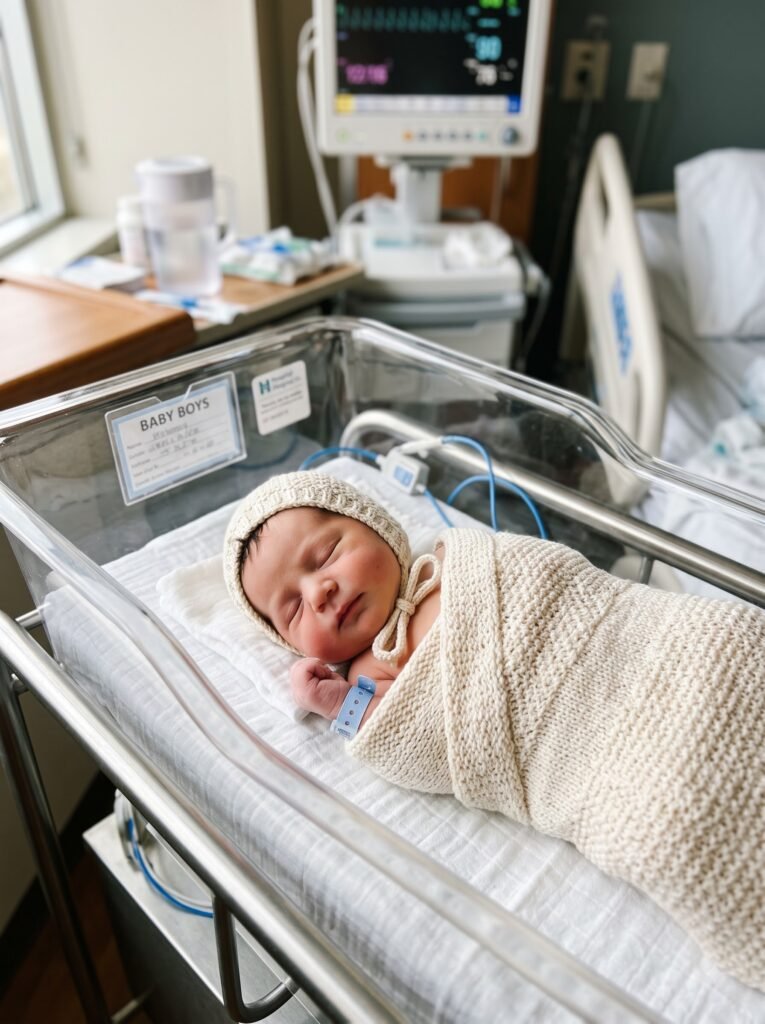
- Why it works: Hospital-style photos use neutral, soft textures that read timeless across decades.
- Sizing note: Newborn.
- Fabric/closure detail: Knit bonnet with elastic (no ties), soft swaddle blanket, no loose layers on top of baby during posed shots.
19. Soft Cream Romper + Felt Headband (Monthly Milestone)
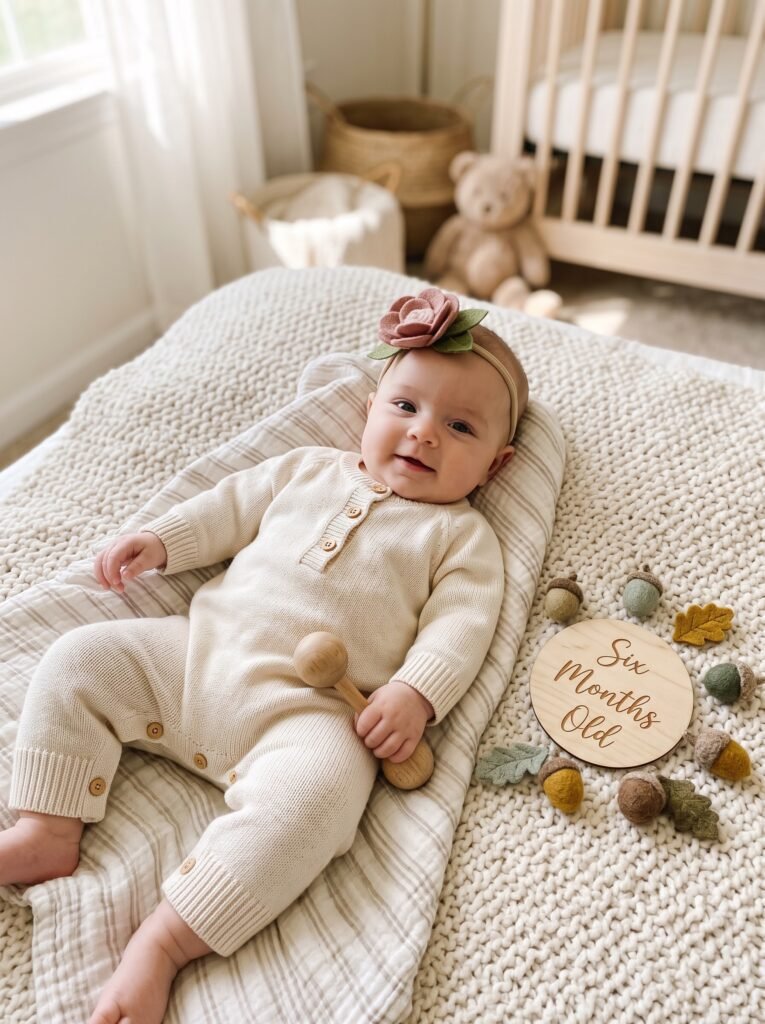
- Why it works: A minimalist monthly outfit lets the milestone prop (a number, a letter, a stuffed animal) stay in focus.
- Sizing note: 0–3 month that grows month-over-month.
- Fabric/closure detail: Cream knit romper, bow headband (secured, not tight), small felt number card from your milestone kit.
20. Family-Heirloom Coming-Home Outfit
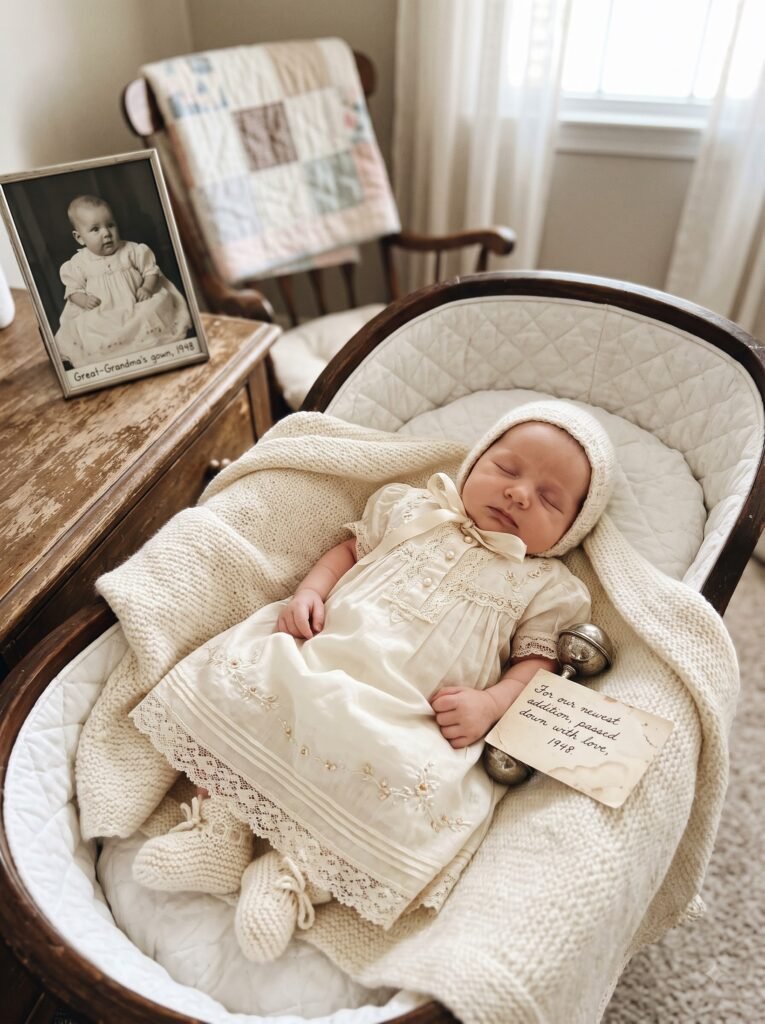
- Why it works: A vintage family outfit, even if just a blanket passed down, becomes a keepsake for the rest of your child’s life.
- Sizing note: Sized to newborn.
- Fabric/closure detail: Soft knit gown (no ribbons at the neck, no hood ties); pair with a hand-stitched layette blanket the family already owns.
Newborn vs 0–3 Month Sizing Cheat Sheet
| Feature | Newborn | 0–3 Month |
|---|---|---|
| Typical weight | 5–8 lbs | 8–12 lbs |
| Length | Up to 21 inches | 21–24 inches |
| Head circumference | 13–15 inches | 15–17 inches |
| Best for | First 2–4 weeks | 1 week to 3 months |
| Quantity to own | 6–8 pieces | 8–10 pieces |
| Why add both | Babies outgrow newborn within weeks, especially weight-gainers | Most-used size over the first 3 months |
Fabric & Closure Guide
Best Fabrics for Newborn Skin
- 100% cotton knit — soft, breathable, gentle on sensitive skin
- Cotton-muslin — lighter, ideal for warm nursery temps
- Merino wool — naturally temperature-regulating for cool nurseries
- Bamboo-blend knit — silky-soft, often hypoallergenic
Skip
- Polyester-heavy blends that don’t breathe
- Heavy fleece against bare skin (overheating risk)
- Scratchy wool or thick cable knits worn next to skin
Best Closures
- Side-snap or kimono-style — no pulling over the head
- Two-way zipper — easy diaper access at night
- Snap crotch on rompers — quick changes
- Magnetic closures — newer brands use magnets for one-hand fastening
Avoid
- Hood ties or neck drawstrings (per CPSC) (CPSC)
- Long pacifier clips (over 7 inches)
- Loose ribbons or bows at the neck
- Buttons that can snap off and become choking hazards
Printable Newborn Outfit Shopping List
Hospital Bag (2–3 outfits)
- ☐ Side-snap kimono onesies (2)
- ☐ Footed sleeper (1)
- ☐ Cotton cap (1) — for the first 24 hours only
At Home Core Wardrobe
- ☐ Footed long-sleeve sleepers (5–7)
- ☐ Short-sleeve onesies (6–8)
- ☐ Long-sleeve onesies (4–6)
- ☐ Pull-on pants (4–5 pairs)
- ☐ Cotton rompers (2–3)
- ☐ Knit cardigans (1–2)
- ☐ Cotton kimono-style tops (2–3)
Sleep Gear
- ☐ Sleeveless sleep sack (matching nursery TOG)
- ☐ Velcro swaddle sack (1) — stop at first rolling sign
- ☐ Cotton sleepers (3–4 extra)
Seasonal Adds
- ☐ Wide-brim sun hat with chin strap (summer)
- ☐ Knit beanie (fall/winter indoor)
- ☐ Fleece-lined car seat poncho (winter travel)
- ☐ Cotton outer layer cardigan (spring)
Photo Outfit Picks
- ☐ Cream/soft neutral romper (milestones)
- ☐ Tie-on or stretch knit bonnet (committed under chin, no neck ties)
- ☐ Family heirloom keepsake piece (optional)
Extras Worth Owning
- ☐ Bibs (6–8) for spit-up days
- ☐ Soft washcloths for wiping face and neck folds
- ☐ Fragrance-free baby detergent
Common Mistakes New Moms Make (and Easy Fixes)
- Buying only newborn size. Most babies outgrow newborn size in 2–4 weeks. Always stock 0–3 month pieces alongside.
- Skipping safe-sleep sleepwear entirely. Loose blankets in the crib are a top safety concern per the AAP. Use a properly-sized sleep sack instead. (HealthyChildren.org)
- Putting a puffy coat under the car seat harness. In a crash, the puff compresses and exposes the child. Put layers over the harness, not under it. (NHTSA guidance)
- Leaving a sleep cap on overnight. Hats sleep hot. Use a sleep sack TOG-appropriate for your nursery instead. (Nest Designs TOG guide)
- Buying adorable outfits with drawstrings at the neck. CPSC has flagged hood and neck drawstrings as strangulation hazards. Skip anything with a string at the neckline. (CPSC drawstring guidance)
- Dressing baby in too many layers. Hands and feet feel cool even when baby is warm. Check the chest or back of the neck for the real temperature.
- Skipping pre-washing new outfits. New fabric finishes can irritate sensitive skin. Always wash first in fragrance-free detergent.
- Forgetting about the umbilical cord. For the first 1–2 weeks, choose kimono-side-snap outfits that don’t rub against the stump.
- Buying only cute, none practical. That tiny bow-tie romper looks gorgeous on a hand-me-down box but won’t survive the first spit-up tornado.
- Not checking the drawstring or hood situation in gift outfits. Smile, say thank you, put the dangerous outfits aside for a memory box. Use safe versions for actual wear.
Frequently Asked Questions
1. How many newborn outfits should I own?
Plan for 8–10 pieces in newborn size and 8–10 pieces in 0–3 month size. You’ll change baby 2–3 times a day due to diaper leaks, spit-up, and general newborn reality. Two cold-water cotton loads per week works well with this quantity.
2. What size do most newborns wear coming home?
Most term newborns fit 0–3 month right away, especially those over 8 lbs. Babies under 7 lbs usually start in true newborn. Bring both sizes to the hospital in your bag.
3. Should I buy “newborn” or skip it?
Don’t skip it — babies under 7 lbs need it, and you’ll be glad to have 4–6 pieces for the first two weeks. Just don’t buy exclusively newborn. Stock both sizes and you’ll rotate naturally as baby grows.
4. What fabrics are best for newborn skin?
100% cotton knit is the gold standard for breathability and softness. Cotton-muslin works for warmer seasons. Merino wool is great for cooler nurseries because it regulates temperature naturally. Skip heavy synthetics against bare skin.
5. Are sleep sacks safe?
Yes — the AAP recommends infant sleep clothing like wearable blankets over loose blankets. Choose the right TOG for your room temperature, ensure proper fit by weight range, and stop swaddling at first rolling signs. (HealthyChildren.org)
6. What TOG should I use for the nursery?
Use 0.5 TOG for warm rooms (75°F+), 1.0 TOG for standard room temps (~70–73°F), and 2.5 TOG for cooler rooms (~65–69°F). (ergoPouch TOG guide, HALO chart)
7. Are baby clothes with hoods safe for sleep?
Skip them for sleep per safe-sleep guidance. Hoods and neck drawstrings pose a strangulation hazard per CPSC, and they increase overheating risk. Hooded outfits are fine for awake daytime wear, but remove for sleep. (CPSC drawstring guidance)
8. Can my newborn wear a winter coat in the car seat?
No — bulky coats compress in a crash and leave the harness too loose to protect baby. Use thin snug layers inside the harness and add a blanket over the harness once baby is buckled. (NHTSA car seat winter safety)
9. How should I wash newborn clothes?
Use fragrance-free, dye-free baby detergent. Wash all new outfits before first use. Skip fabric softener and dryer sheets — they leave residue that can irritate newborn skin. Hang dry knit pieces to prevent shrinkage.
10. What do I do if my baby hates outfits with head openings?
Kimono-style side-snap tops, two-way zipper sleepers, and romper snap crotches all bypass the head. Most parents rotate to these styles immediately because newborns strongly prefer clothes that don’t pull over their face.
11. When should I stop using the hospital cap?
Most pediatric guidance asks parents to remove the cap after the first 24 hours once baby is in a warm, temperature-controlled room. The cap is for the brief post-birth period only — for sleep at home, the AAP specifically discourages hats because they increase overheating risk. (HealthyChildren.org)
12. Should I buy matching sets or basics first?
Basics first. Two of those cute outfits get worn to a meal-and-nap phase. Six of those soft footed sleepers get worn every single day. A handful of mix-and-match solid colors (cream, sage, butter yellow, soft gray) hands you infinite combinations and photographs beautifully for milestone pictures.
13. What’s the best “going-home from hospital” outfit?
A footed sleeper in soft cotton with a side-snap kimono top layer and a single thin cap for the brief transition. Skip hooded outerwear for the car ride. Add a lightweight receiving blanket over the harness if it’s cold.
14. How do I keep tiny socks from getting lost?
Buy them in two-pair sets, fold them together before storing, and always run the dryer lint-trap check on laundry day. If you lose one, save the partner sock for the next size up often enough that you can replace both pairs slowly.
Final Thoughts
You will wash more tiny clothes in baby’s first year than you ever thought possible. You’ll gasp at the pile of grew-out-of-this-already items. You’ll pass your baby in a sleeper that’s two sizes too small and remember the night you first brought them home.
Outfits aren’t just fabric. They’re the backdrop to your first 12 weeks. Pick the ones that photograph well, and the ones that survive spit-up. Pick the ones that fit your climate, and the ones that won’t keep you up at night worrying about overheating. Pick the cutest bonnet, and the safest sleep sack.
You don’t need the registry-sized haul. You need a manageable little stack of soft, safe, repeatable pieces that you actually reach for. Twenty options above will hold you through most days, with enough variety to feel like it’s never boring.
Snap the side-snap. Pull on the pants. Smile through the tears. Take the photo. Tomorrow you do it all again, and that’s the magic of being a new mom — every small thing, every single time.