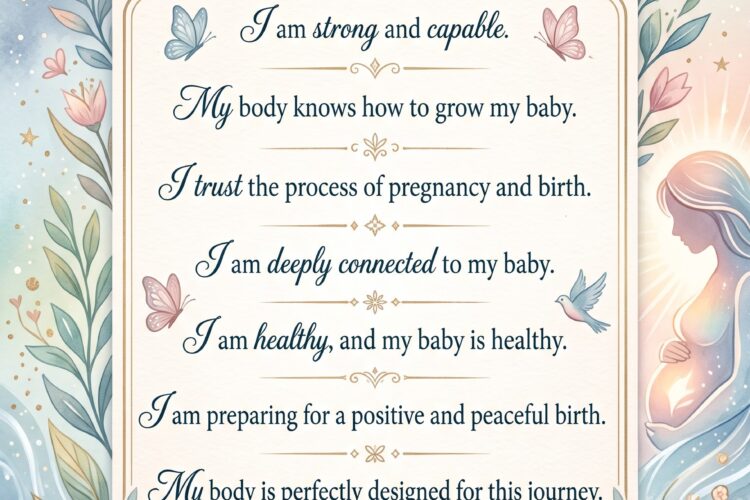
Some days pregnancy feels like magic. Other days it feels like your body, your emotions, and your to-do list are all working against you — and that’s exactly where daily pregnancy affirmations come in. These simple, repeatable phrases won’t make morning sickness disappear or speed up your third trimester, but they can quietly shift how you talk to yourself during one of the most physically and emotionally intense chapters of your life.
Affirmations work because pregnancy is as much a mental journey as a physical one. Between hormone swings, birth anxiety, body changes, and the sheer unknown of meeting a whole new person, your inner voice matters more than ever. A short, positive phrase repeated with intention can interrupt spiraling thoughts, ease fear before appointments, and help you feel more grounded in your changing body.
Below you’ll find 35 daily pregnancy affirmations organized to support you through every stage — morning routines, hard days, labor prep, and bonding with baby. Pick a few that resonate, say them out loud or write them down, and let them become part of how you talk to yourself for the next nine months.
1. “My body knows how to grow this baby.”

This is often the very first affirmation moms reach for, and for good reason. It gently reminds you that pregnancy isn’t something you have to force or control — your body has been doing this work instinctively for thousands of generations.
Why parents love this idea: It counters the common fear that something might “go wrong” by trusting the body’s natural design. When it works best: First thing in the morning, or anytime you feel disconnected from your changing body. Practical tip: Say it while placing a hand on your belly — the physical touch reinforces the words. Common mistake to avoid: Using it to dismiss real symptoms that need medical attention; trust your body, but still call your provider with concerns.
Pro Tip: Pair this affirmation with a few slow breaths for an instant calming effect.
2. “I am strong enough for this journey.”

Pregnancy asks a lot of you — physically, emotionally, mentally. This affirmation is a reminder that strength doesn’t mean feeling unstoppable every day; it means showing up anyway.
Why parents love this idea: It reframes hard days as proof of strength rather than signs of failure. When it works best: During physically demanding weeks, like the exhausting first trimester or the achy final stretch. Implementation tip: Write it on a sticky note for your bathroom mirror so you see it daily. Budget-friendly alternative: No supplies needed — just repeat it mentally during a shower or commute.
Why You’ll Love It: It works just as well on your toughest days as your best ones.
3. “Every day, my baby grows a little stronger.”
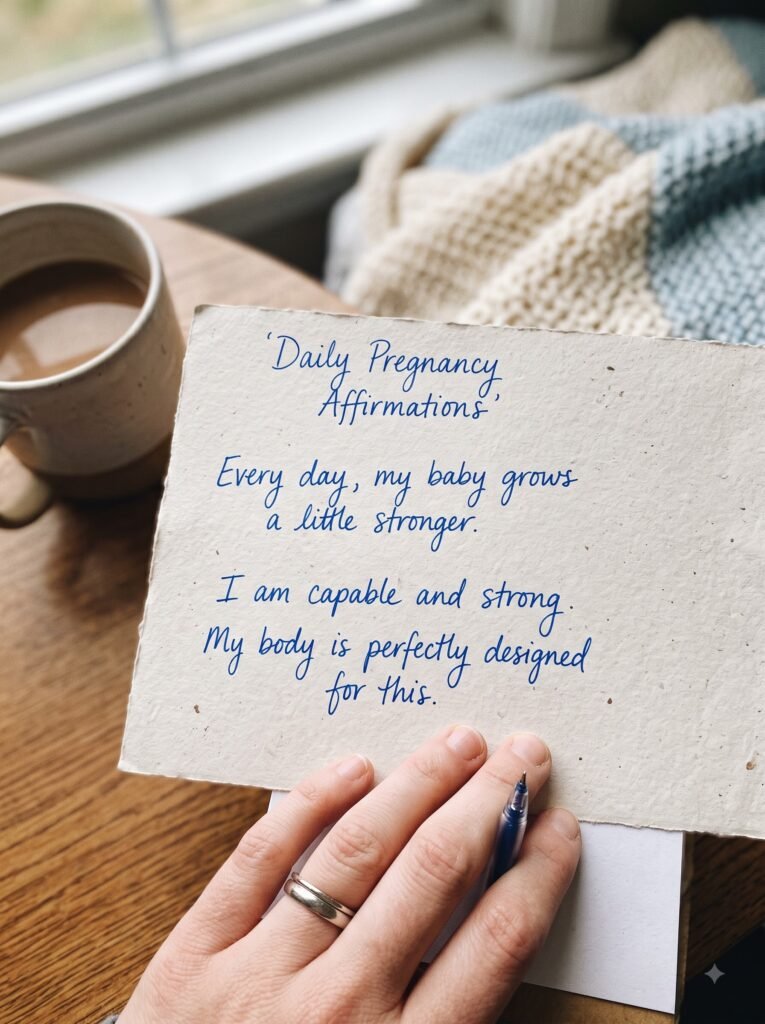
This affirmation shifts your focus from what’s uncomfortable about pregnancy to the incredible growth happening inside you, week by week.
Why parents love this idea: It builds a sense of progress, which is comforting during long stretches like the second trimester. When or where it works best: During prenatal appointments or after checking your weekly pregnancy app update. Practical tip: Say it while looking at ultrasound photos to deepen the emotional connection. Common mistake: Comparing your baby’s growth to online averages too strictly — every pregnancy has its own rhythm.
Quick Tip: Journaling this affirmation weekly creates a beautiful growth-based keepsake for later.
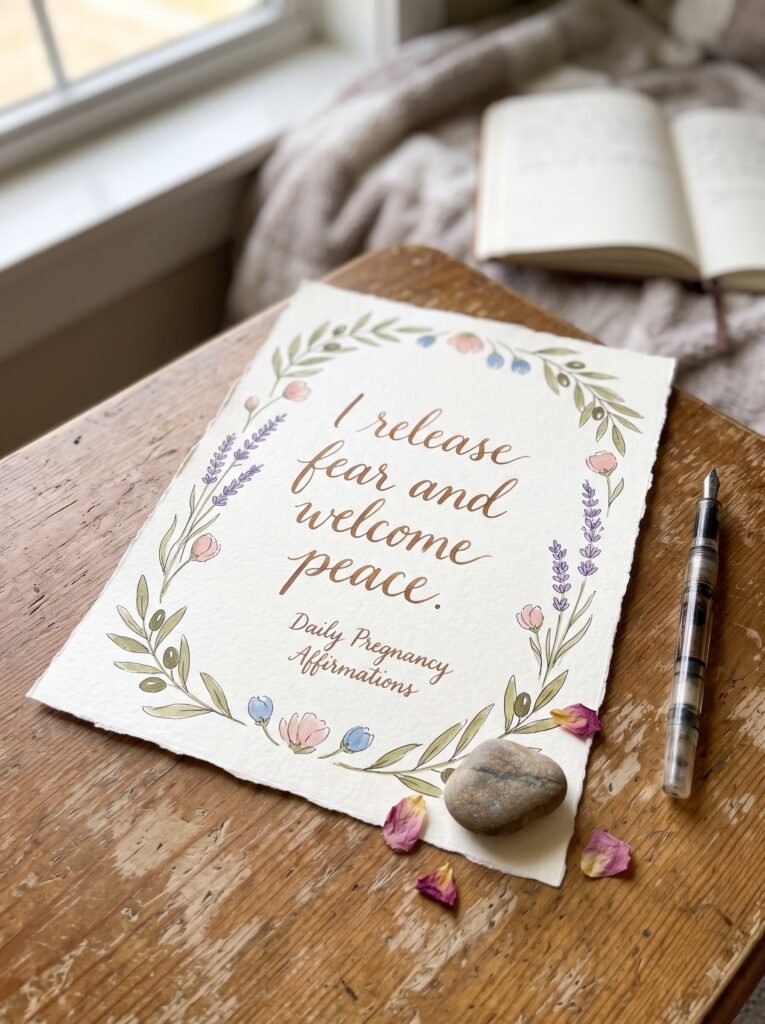
4. “I release fear and welcome peace.”
Anxiety is one of the most common — and least talked about — parts of pregnancy. This affirmation doesn’t pretend fear away; it simply gives you a phrase to return to when it shows up.
Why parents love this idea: It acknowledges fear as normal instead of something to feel guilty about. When it works best: Right before bed, when anxious thoughts tend to creep in. Implementation tip: Combine it with a slow exhale — breathe out the fear, breathe in the peace. Safety consideration: If fear becomes constant or overwhelming, this affirmation is a support tool, not a substitute for talking to your provider about perinatal anxiety.
Expert Advice: Many therapists recommend pairing affirmations with deep breathing for a stronger calming effect.
5. “My body is capable of an amazing birth.”
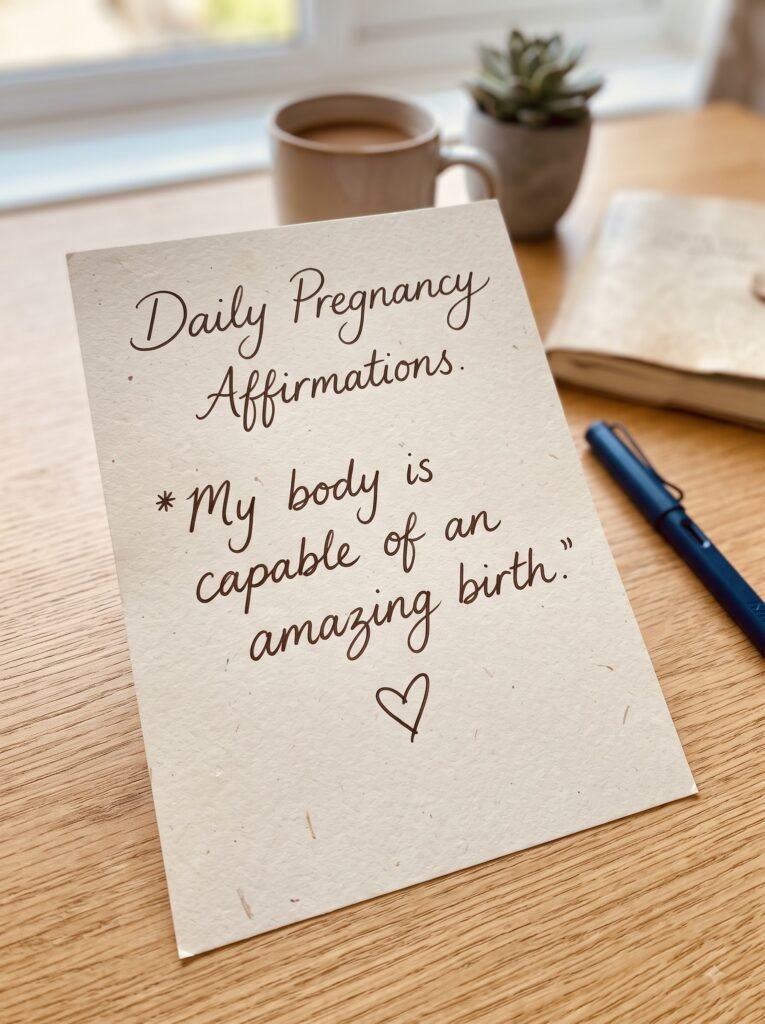
Birth can feel like the biggest unknown of pregnancy. This affirmation builds quiet confidence without requiring you to predict exactly how your birth will go.
Why parents love this idea: It supports confidence regardless of birth plan — vaginal, C-section, medicated, or unmedicated. When it works best: During childbirth education classes or while packing your hospital bag. Practical tip: Practice saying it slowly, like a mantra, so it feels natural to repeat during labor. Common mistake to avoid: Treating “amazing birth” as meaning a specific outcome — amazing simply means you and baby getting through it safely, however that looks.
Pro Tip: Add this affirmation to your birth plan document as a reminder for your support team too.
6. “I trust the timing of my body.”
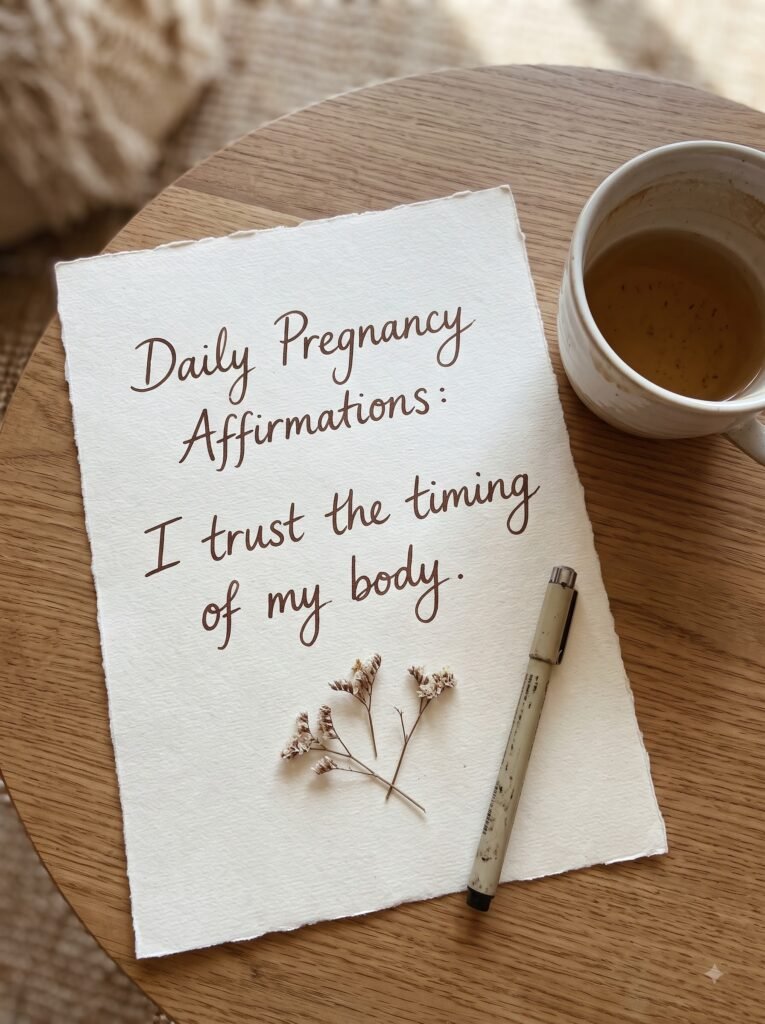
Waiting is one of the hardest parts of pregnancy — waiting to feel movement, waiting for test results, waiting for labor to start. This affirmation helps ease the urge to rush a process that can’t be rushed.
Why parents love this idea: It reduces the frustration of “why hasn’t this happened yet” thinking. When or where it works best: Past your due date, or during two-week waits between appointments. Implementation tip: Repeat it while doing something calming, like a slow walk. Budget-friendly alternative: Free — just requires a moment of quiet repetition.
Common Mistake: Letting due-date anxiety override this trust; remember due dates are estimates, not deadlines.
7. “I am doing a wonderful job.”
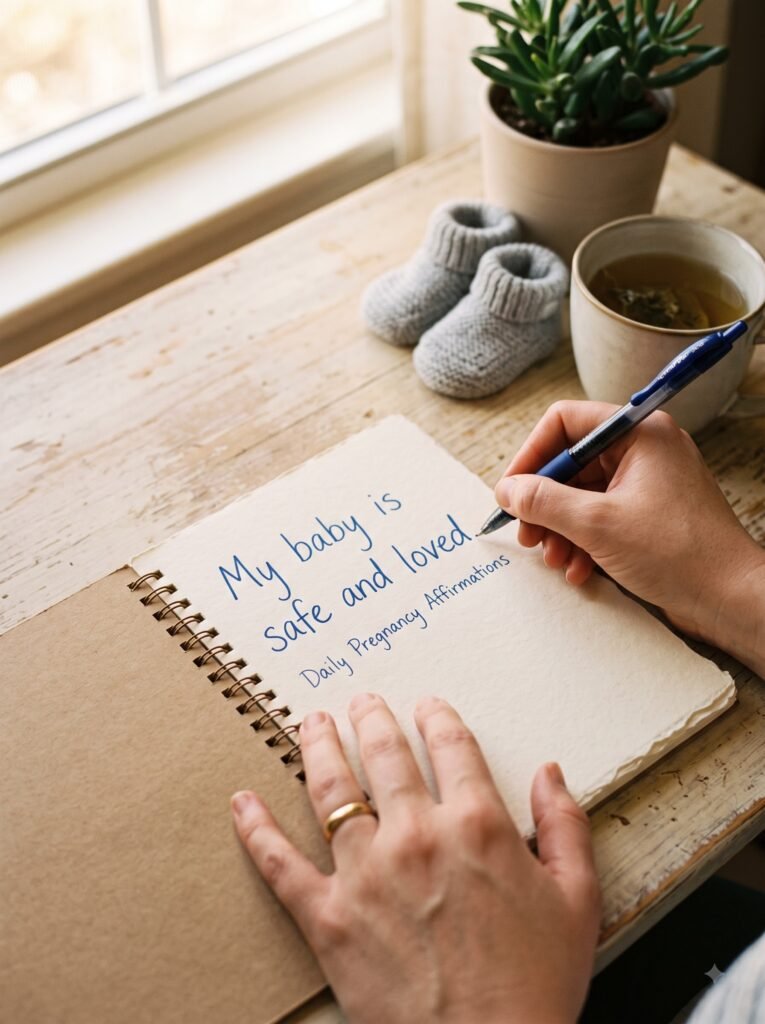
Simple, direct, and something every pregnant person deserves to hear more often — including from themselves.
Why parents love this idea: Pregnancy comes with a lot of self-doubt, and this affirmation cuts straight through it. When it works best: After a hard day, a missed workout, or a fast-food dinner that wasn’t part of “the plan.” Practical tip: Say it out loud in the mirror — it feels awkward at first, then genuinely comforting. Common mistake: Reserving this affirmation only for “perfect” pregnancy days; it matters most on imperfect ones.
Why You’ll Love It: It’s a built-in permission slip to stop striving for perfection.
8. “My baby is safe and loved.”
This affirmation nurtures the emotional bond between you and your baby, even before you’ve met face to face.
Why parents love this idea: It reinforces connection during a time when baby can feel abstract, especially early on. When it works best: During quiet moments, like right after feeling the first flutters of movement. Implementation tip: Speak it directly to your belly — babies can hear and respond to voice from around 25–27 weeks. Quick Tip: Try saying it alongside a lullaby you plan to sing after birth, building early familiarity.
9. “I am allowed to rest without guilt.”
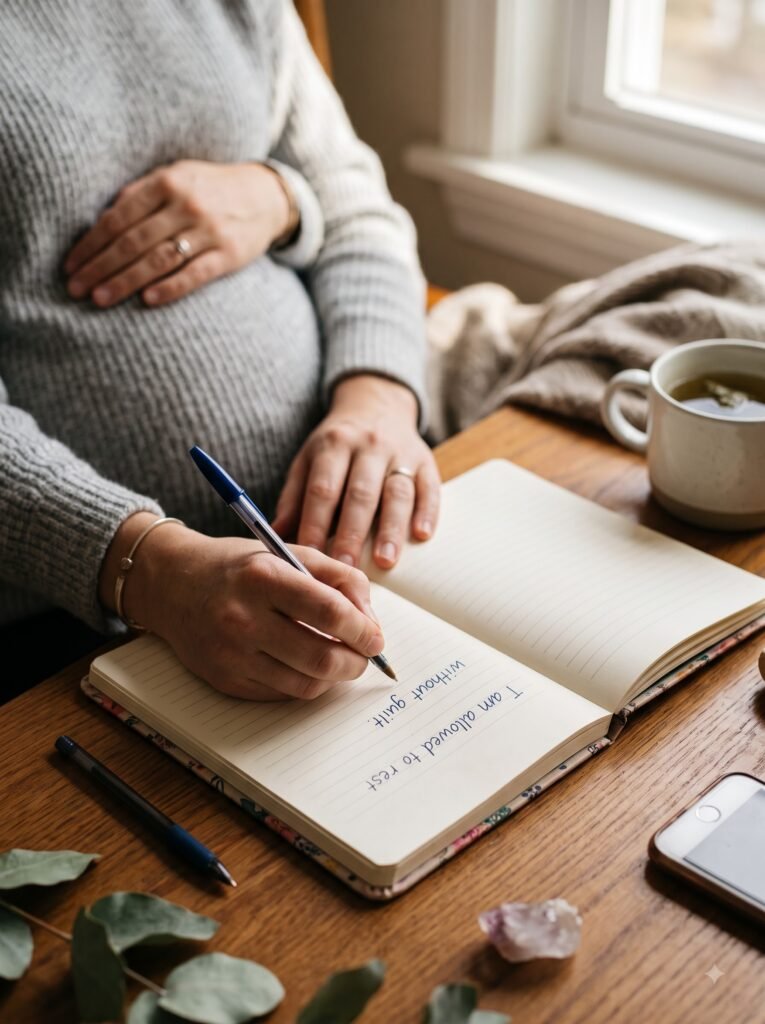
So many parents-to-be feel pressure to “keep up” during pregnancy. This affirmation gives you explicit permission to slow down.
Why parents love this idea: It directly challenges the guilt that comes with needing more rest than usual. When or where it works best: During nap time, or when canceling plans due to exhaustion. Practical tip: Pair it with an actual rest ritual — even 10 minutes lying down counts. Common mistake to avoid: Waiting until you’re completely depleted before allowing yourself rest.
Parent Hack: Set a recurring phone reminder that simply says “rest without guilt” during your most tiring trimester.
10. “My changing body is beautiful and powerful.”
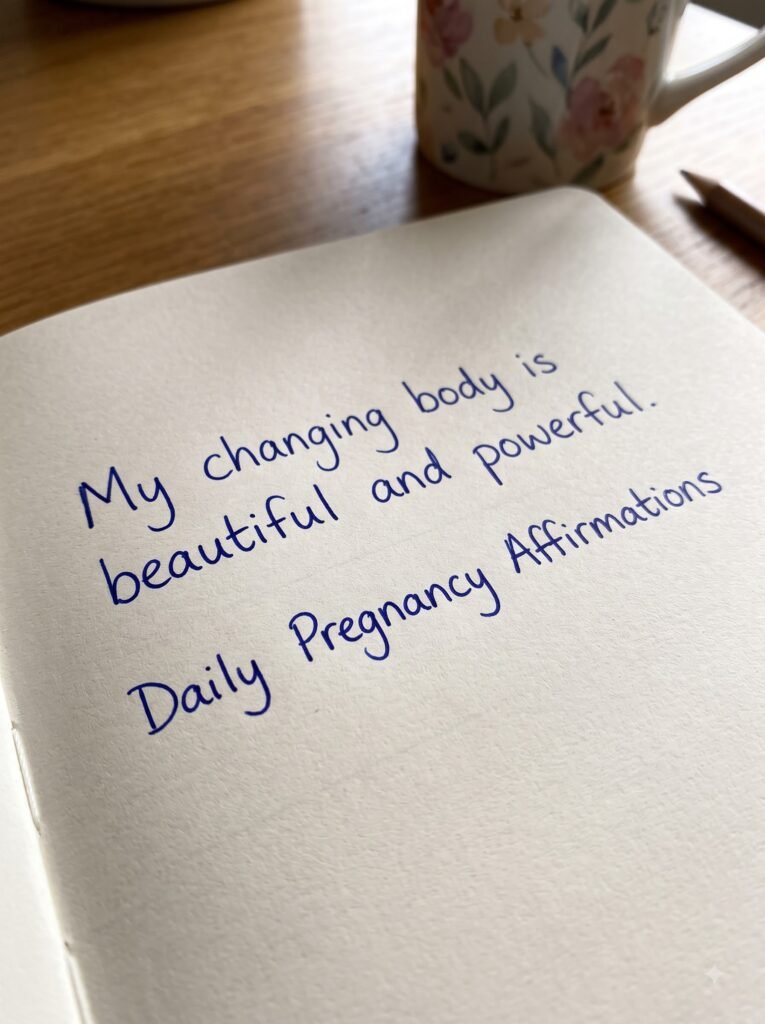
Body image struggles during pregnancy are incredibly common but rarely discussed openly. This affirmation offers a gentler internal narrative.
Why parents love this idea: It reframes stretch marks, weight gain, and body changes as signs of life-giving power rather than something to hide. When it works best: While getting dressed, or during belly-photo sessions. Implementation tip: Say it while looking at yourself fully, not just your belly. Safety consideration: If body image struggles feel persistent or distressing, this affirmation pairs well with support from a therapist familiar with perinatal mental health.
Why You’ll Love It: It helps you appreciate your body in real time, not just in hindsight.
11. “I am becoming the parent my child needs.”
This affirmation eases the common fear of “not being ready” by focusing on becoming rather than already being perfect.
Why parents love this idea: It removes the pressure of instant readiness and embraces growth instead. When or where it works best: During late-night worry spirals about parenting skills. Practical tip: Journal a sentence or two about what kind of parent you hope to be, alongside this affirmation. Common mistake: Comparing your “becoming” to someone else’s highlight reel on social media.
Quick Tip: Revisit this affirmation in postpartum too — becoming doesn’t stop at birth.
12. “I can handle whatever today brings.”
Some days on this journey are simply unpredictable — nausea, fatigue, an unexpected appointment. This affirmation builds resilience for the unknowns.
Why parents love this idea: It’s flexible enough to use on both hard and easy days. When it works best: First thing in the morning, before checking your phone or to-do list. Implementation tip: Say it while your feet first hit the floor, making it a grounding ritual. Budget-friendly alternative: No tools needed — just a moment of intention.
Pro Tip: Combine with a short gratitude note for an even stronger morning mindset.
13. “I nourish my body and my baby with love.”
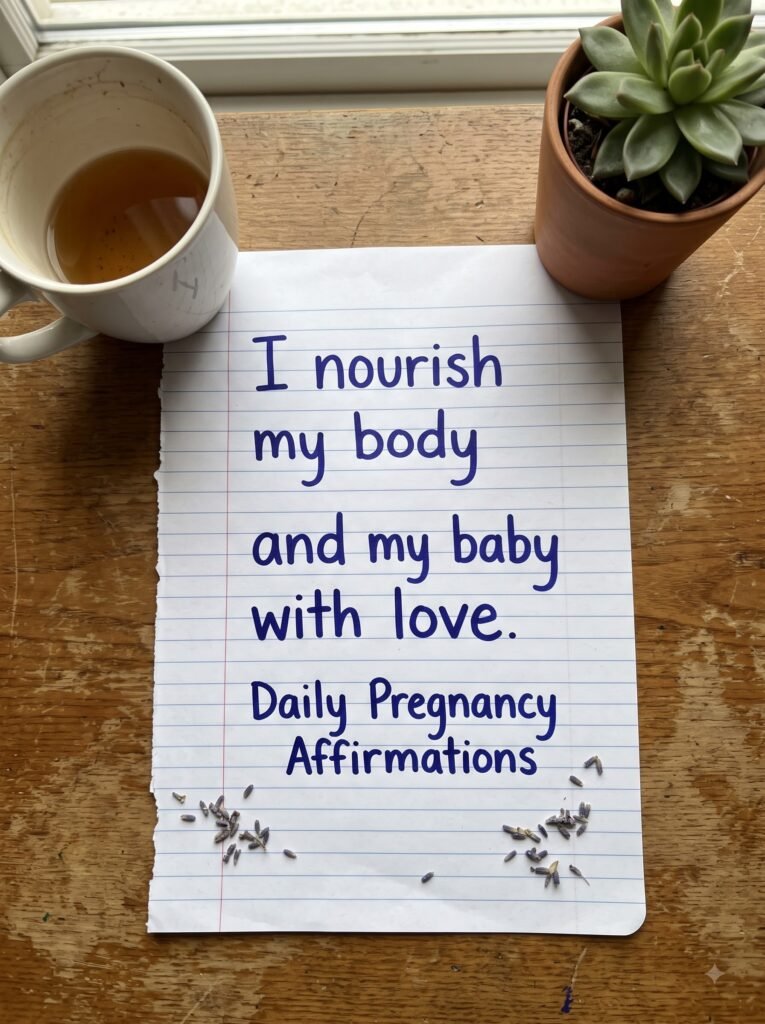
This affirmation supports a healthier relationship with food and nutrition during pregnancy, without pressure toward perfection.
Why parents love this idea: It reframes eating as an act of care rather than a strict checklist. When or where it works best: Before meals, especially on days when nausea makes eating difficult. Practical tip: Say it before taking prenatal vitamins to build a positive daily habit. Common mistake to avoid: Using it to justify ignoring real nutritional guidance from your provider — it’s meant to support healthy choices, not replace medical advice.
Expert Advice: Many OBs recommend pairing affirmations like this with small, frequent meals if nausea makes big meals difficult.
14. “My intuition guides me well.”

Pregnancy comes with an overwhelming amount of advice — some helpful, some conflicting. This affirmation strengthens trust in your own instincts.
Why parents love this idea: It helps quiet the noise of unsolicited opinions from well-meaning friends and family. When it works best: When facing a decision with no clear “right” answer, like feeding plans or nursery setup. Implementation tip: Pause and repeat this before making a parenting-related decision that feels overwhelming. Quick Tip: Keep a small notebook of moments your intuition was right — it builds real evidence over time.
15. “I am connected to generations of strong mothers before me.”
This affirmation draws on a sense of lineage and shared strength, which can be deeply comforting during an isolating stage of life.
Why parents love this idea: It widens your support system to include ancestors, culture, and community — not just people physically present. When or where it works best: During moments of loneliness or when missing a mother figure. Practical tip: Say it while holding a family heirloom or photo, if you have one. Why You’ll Love It: It reframes pregnancy as part of a much bigger, shared human story.
16. “I welcome support without guilt.”
Many parents-to-be struggle to ask for help. This affirmation gently dismantles that resistance.
Why parents love this idea: It reduces the pressure to “do it all” during pregnancy. When it works best: Before accepting an offer of help — a meal, a ride, extra rest. Implementation tip: Practice saying “thank you, I’d love that” out loud in advance, so it feels natural in the moment. Common mistake to avoid: Assuming asking for help is a sign of weakness rather than wisdom.
Parent Hack: Create a simple list of tasks you’d accept help with, so you’re ready when someone offers.
17. “My baby and I are working together.”
This affirmation builds a sense of teamwork rather than something being “done to” your body.
Why parents love this idea: It’s especially grounding during labor prep, when many people feel like passive participants. When or where it works best: During kick counts or prenatal yoga. Practical tip: Use it alongside breathing exercises to build a labor-ready mindset. Quick Tip: Many doulas recommend this exact reframe — “with,” not “to” — as a subtle but powerful shift.
18. “I am exactly where I need to be right now.”
Pregnancy can trigger a lot of comparison — to due-date buddies, to past pregnancies, to social media timelines. This affirmation interrupts that spiral.
Why parents love this idea: It anchors you in your own experience instead of someone else’s. When it works best: After scrolling social media and feeling behind or overwhelmed. Implementation tip: Say it while closing the app, as a mental reset. Common mistake: Skipping this reset and letting comparison thoughts linger unchecked.
Why You’ll Love It: It’s a fast, portable way to step out of comparison mode.
19. “I am worthy of care and compassion.”
So much of pregnancy focuses on baby’s needs. This affirmation redirects some of that care back toward you.
Why parents love this idea: It combats the guilt some moms feel prioritizing their own wellbeing. When or where it works best: During self-care moments — a bath, a nap, a quiet cup of tea. Practical tip: Say it while doing something specifically for yourself, not baby-related. Safety consideration: If self-compassion feels consistently difficult to access, a perinatal therapist can offer additional support.
20. “This too shall pass.”
Simple, ancient, and endlessly applicable — this affirmation reminds you that hard trimesters, symptoms, and stages are temporary.
Why parents love this idea: It offers real perspective during particularly rough weeks, like severe first-trimester nausea. When it works best: During physically uncomfortable stretches with a light at the end of the tunnel. Implementation tip: Pair with a mental image of your due date or a future milestone. Common mistake to avoid: Using it to dismiss symptoms that actually need medical attention — always mention concerning symptoms to your provider.
Pro Tip: Keep a small pregnancy symptom calendar so you can visually see how quickly things shift.
21. “I choose calm over chaos.”
Between hospital bags, nursery setup, and work deadlines, pregnancy can feel chaotic. This affirmation is a quick mental reset.
Why parents love this idea: It’s short enough to repeat mid-task, anywhere. When or where it works best: During overwhelming to-do list days. Practical tip: Say it while taking three slow breaths before tackling your next task. Quick Tip: Post it somewhere visible in your workspace for a mid-day reset.
22. “My love for this baby grows every day.”
A gentle bonding affirmation that deepens connection, especially useful before movement is felt regularly.
Why parents love this idea: It nurtures emotional attachment during the more abstract early weeks. When it works best: During prenatal appointments, especially after hearing baby’s heartbeat. Implementation tip: Say it while placing your hands on your belly after an ultrasound. Why You’ll Love It: It builds a bonding habit that naturally continues into the newborn stage.
23. “I am not alone on this journey.”
Isolation is common during pregnancy, especially for first-time parents or those without nearby family. This affirmation is a reminder of your wider support system.
Why parents love this idea: It counters the loneliness that can come with late nights and physical discomfort. When or where it works best: During solo appointments or partner travel. Practical tip: Pair it with a quick text to a friend or support group check-in. Budget-friendly alternative: Free online pregnancy communities can reinforce this feeling of connection.
24. “I trust my provider and my choices.”
Medical decisions during pregnancy can feel overwhelming. This affirmation builds confidence in the care team and choices you’ve made.
Why parents love this idea: It reduces second-guessing after appointments. When it works best: After a decision-heavy prenatal visit. Implementation tip: Write down your provider’s key advice afterward, then repeat this affirmation to settle any lingering doubt. Common mistake to avoid: Letting internet research override professional medical guidance — use affirmations to support trust, not avoid necessary questions.
Expert Advice: If something truly doesn’t sit right, this affirmation isn’t a replacement for asking your provider follow-up questions — it works best alongside open communication.
25. “I am creating a safe space for my baby to grow.”
This affirmation connects your emotional state to your baby’s environment, encouraging gentle self-regulation.
Why parents love this idea: It motivates calming practices without adding pressure or guilt. When or where it works best: During stressful days at work or home. Practical tip: Use it as a cue to step away and take a five-minute breathing break. Quick Tip: Studies suggest a calm environment benefits baby, but occasional stress is completely normal and not harmful — this affirmation is about gentle intention, not perfection.
26. “My due date is a guess, not a deadline.”
Especially useful in the final weeks, this affirmation eases the frustration of “any day now” waiting.
Why parents love this idea: It reduces anxiety around going past your estimated due date. When it works best: In the last two weeks of pregnancy. Implementation tip: Replace due-date countdowns with a “due month” mindset instead. Common mistake: Scheduling too many events tightly around your due date, adding unnecessary pressure.
27. “I honor my needs without apology.”
This affirmation supports boundary-setting during a season when everyone seems to have opinions and requests.
Why parents love this idea: It empowers saying no to plans, visitors, or expectations that feel like too much. When or where it works best: When declining a baby shower request or social obligation. Practical tip: Practice a simple boundary phrase alongside it: “That doesn’t work for me right now.” Parent Hack: Keep this affirmation in mind especially in the third trimester, when energy is often lowest.
28. “My body will know what to do during labor.”
A more specific companion to affirmation #5, this one focuses purely on the physical process of labor itself.
Why parents love this idea: It builds confidence heading into childbirth classes and birth planning. When it works best: During labor rehearsal practices, like breathing techniques or perineal massage routines. Implementation tip: Practice saying it during contractions in prenatal yoga or birthing classes to build familiarity. Safety consideration: Trusting your body doesn’t mean skipping medical guidance — use this affirmation alongside your provider’s birth plan recommendations.
29. “I am proud of how far I’ve come.”
Perfect for later trimesters, this affirmation acknowledges the emotional and physical distance already traveled.
Why parents love this idea: It offers a moment of reflection instead of constant forward-focus. When or where it works best: During week milestones — 20 weeks, 30 weeks, “full term” markers. Practical tip: Pair it with a bump photo or short journal entry to mark the moment. Why You’ll Love It: It builds a positive record you’ll want to look back on after baby arrives.
30. “Fear does not control my thoughts.”
A slightly firmer companion to affirmation #4, useful for more persistent anxious thought patterns.
Why parents love this idea: It offers a sense of agency over intrusive worries. When it works best: During late-night anxiety spirals or before a nerve-wracking test/scan. Implementation tip: Repeat it three times slowly, like a short meditation. Safety consideration: Persistent or severe anxiety deserves professional support — this affirmation is a tool, not a treatment.
31. “I give myself permission to feel every emotion.”
Pregnancy isn’t only joyful — it can include grief, fear, frustration, and exhaustion too. This affirmation validates the full emotional spectrum.
Why parents love this idea: It removes pressure to feel constantly grateful or happy. When or where it works best: During emotionally heavy days, including hormone-driven mood swings. Practical tip: Journal alongside this affirmation to process specific emotions as they come up. Expert Advice: Perinatal mental health specialists often emphasize that naming emotions — rather than suppressing them — supports better emotional regulation.
32. “I am building a beautiful life for my family.”
A big-picture affirmation for moments when day-to-day discomfort makes it hard to see the larger purpose.
Why parents love this idea: It reconnects daily effort to a meaningful long-term goal. When it works best: During nursery setup, budgeting for baby items, or planning parental leave. Implementation tip: Say it while working on a baby-prep task, turning a chore into a meaningful moment. Budget-friendly alternative: No cost involved — the meaning comes from mindset, not spending.
33. “My partner and I are a team.”
For those parenting with a partner, this affirmation reinforces connection during a season that can feel isolating even in relationships.
Why parents love this idea: It encourages open communication instead of silent overwhelm. When or where it works best: During disagreements about baby prep or division of labor. Practical tip: Say it together out loud during a weekly “check-in” conversation about how you’re both doing. Common mistake to avoid: Assuming your partner knows what you need without communicating it directly.
34. “I am learning and growing every single day.”
This affirmation softens the pressure to “know everything” before baby arrives.
Why parents love this idea: It reframes uncertainty as growth instead of failure. When it works best: After a parenting class, book chapter, or overwhelming Google search session. Implementation tip: Keep a running note of new things you’ve learned each week — it builds visible confidence over time. Quick Tip: Revisit this list on hard days as proof of how much you already know.
35. “Today, I choose gratitude for this journey.”
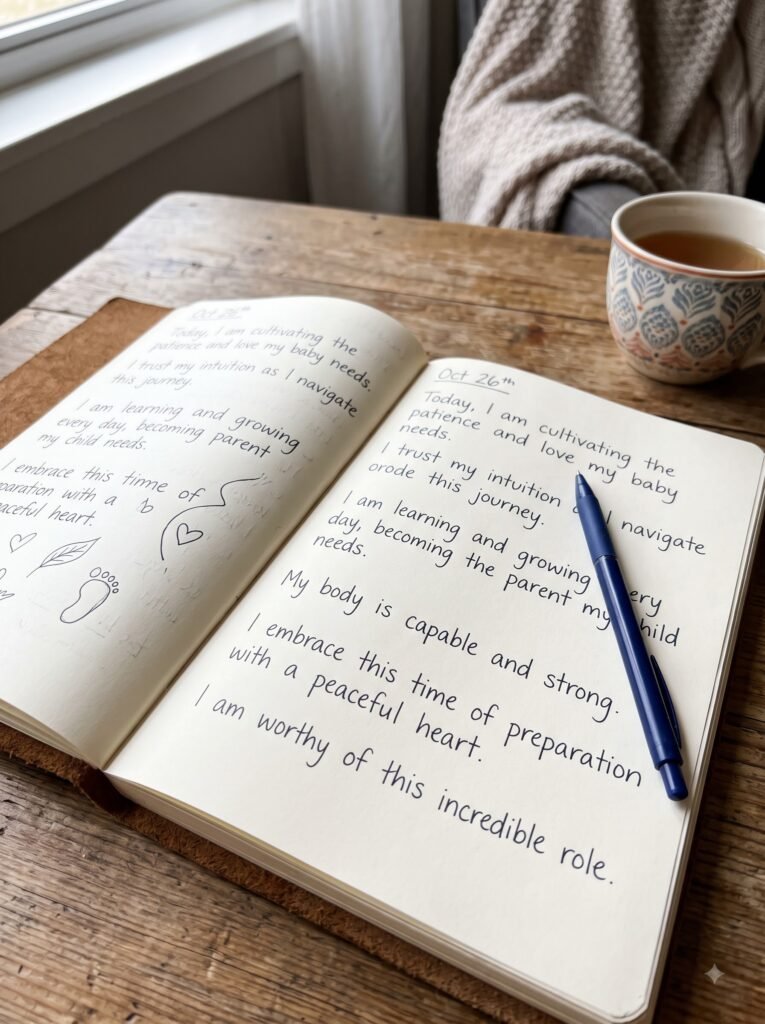
A gentle closing affirmation that anchors the whole practice — a reminder that even hard seasons hold moments worth appreciating.
Why parents love this idea: It’s flexible enough to end any day, good or difficult. When or where it works best: As a nightly ritual before sleep. Practical tip: Pair it with naming one specific thing you’re grateful for that day. Why You’ll Love It: Over nine months, this simple habit becomes a beautiful record of your pregnancy story.
Frequently Asked Questions
What are daily pregnancy affirmations?
Daily pregnancy affirmations are short, positive phrases repeated regularly to support emotional wellbeing, reduce anxiety, and build confidence during pregnancy and childbirth preparation.
Do pregnancy affirmations actually work?
Many parents find affirmations genuinely helpful for managing stress and anxious thoughts, though they work best as one part of a broader self-care routine rather than a standalone solution.
When should I say my affirmations?
Common times include first thing in the morning, before prenatal appointments, during quiet evening moments, or anytime anxious thoughts arise.
How many affirmations should I use each day?
There’s no set number — many parents pick 2–3 that resonate most and repeat them consistently rather than trying to use all of them at once.
Can affirmations help with pregnancy anxiety?
Affirmations can be a helpful supportive tool for everyday worry, but persistent or severe anxiety should be discussed with a healthcare provider or perinatal mental health specialist.
Can I say affirmations out loud to my baby?
Yes — many parents enjoy speaking affirmations directly to their belly, especially from the second trimester onward when babies can begin to hear sound.
Do affirmations replace prenatal therapy or counseling?
No. Affirmations are a helpful self-care practice, but they are not a substitute for professional mental health support when it’s needed.
What’s the best way to remember to say my affirmations?
Sticky notes, phone reminders, journaling, or pairing them with an existing routine (like brushing your teeth or taking prenatal vitamins) all work well.
Can affirmations help prepare for labor?
Yes — many birth educators and doulas recommend practicing labor-specific affirmations in advance so they feel natural to use during contractions.
Should partners use pregnancy affirmations too?
Absolutely. Partners often experience their own anxiety and anticipation, and shared affirmations can strengthen connection and communication as a team.
Final Thoughts
There’s no single “right” way to use daily pregnancy affirmations — the best ones are simply the phrases that make you feel a little calmer, a little stronger, or a little more connected to the baby growing inside you. Some days you might lean on affirmations about trust and strength; other days, you might need permission to rest or feel your emotions fully.
Choose the handful from this list that speak to you most, and don’t worry about getting it “perfect.” Whether you whisper them during a quiet morning routine, write them in a pregnancy journal, or simply think them during a hard moment, these small words can offer real, steady comfort through every stage of this incredible journey.
To Know about More Realted Affirmations on our website visit: Positive Affirmations For Kids (FREE PRINTABLE CARDS)