
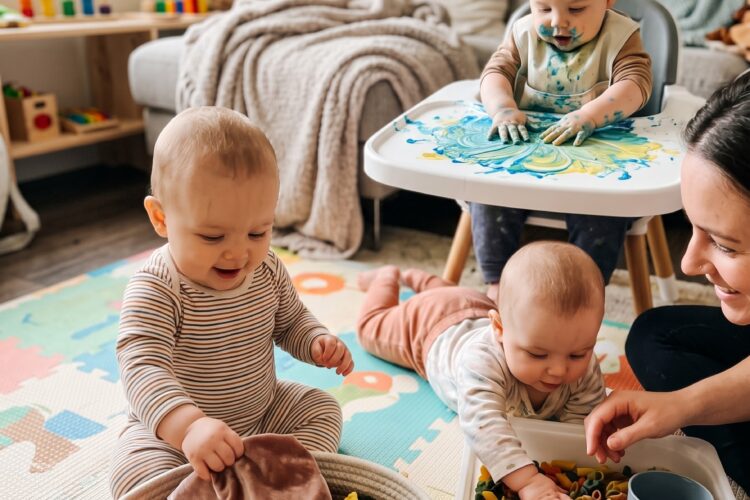
Ever watch your baby stare at a ceiling fan like it’s the most fascinating thing in the universe? That’s not random — it’s their brain building itself, one sight, sound, and squish at a time.
Sensory play isn’t just a cute Pinterest trend. It’s one of the most powerful tools you have for supporting your baby’s brain development, motor skills, and emotional regulation in those first few years. Every time your little one touches a new texture, hears an unfamiliar sound, or tastes something new, they’re literally wiring new neural connections.
The best part? You don’t need a Pinterest-perfect playroom or a stack of expensive toys to make it happen. Some of the most effective sensory activities for babies use things you already have in your kitchen drawer or laundry basket.
In this guide, you’ll find 50 simple, safe, and genuinely engaging sensory activities for babies — organized so you can jump straight to what fits your baby’s age, mood, or your energy level that day (because let’s be honest, some days you’ve got more bandwidth than others).
Why You’ll Love It: Every idea below is low-prep, budget-conscious, and doable even if you’re running on four hours of sleep.
1. Texture Basket Exploration
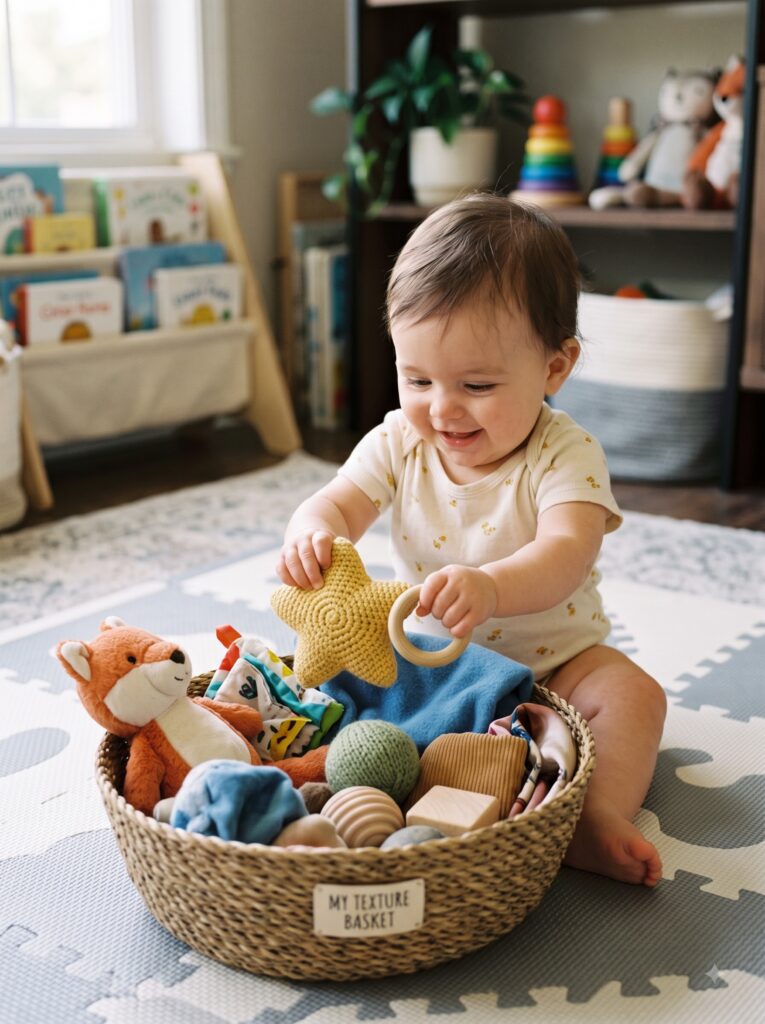
Fill a basket with items of different textures — a soft washcloth, a bumpy loofah, a smooth wooden spoon, a scrunchy piece of foil. Let your baby dig through and explore each one at their own pace.
Parents love this because it requires zero setup beyond raiding the house for safe household items. It works especially well during independent playtime when you need ten quiet (ish) minutes.
Pro Tip: Rotate the basket weekly so the “new” texture keeps their curiosity high. Avoid anything smaller than a toilet paper roll to prevent choking hazards, and always supervise closely.
A common mistake is overfilling the basket — three to five items is plenty; too many overwhelms rather than engages.
2. Taste-Safe Edible Finger Paint
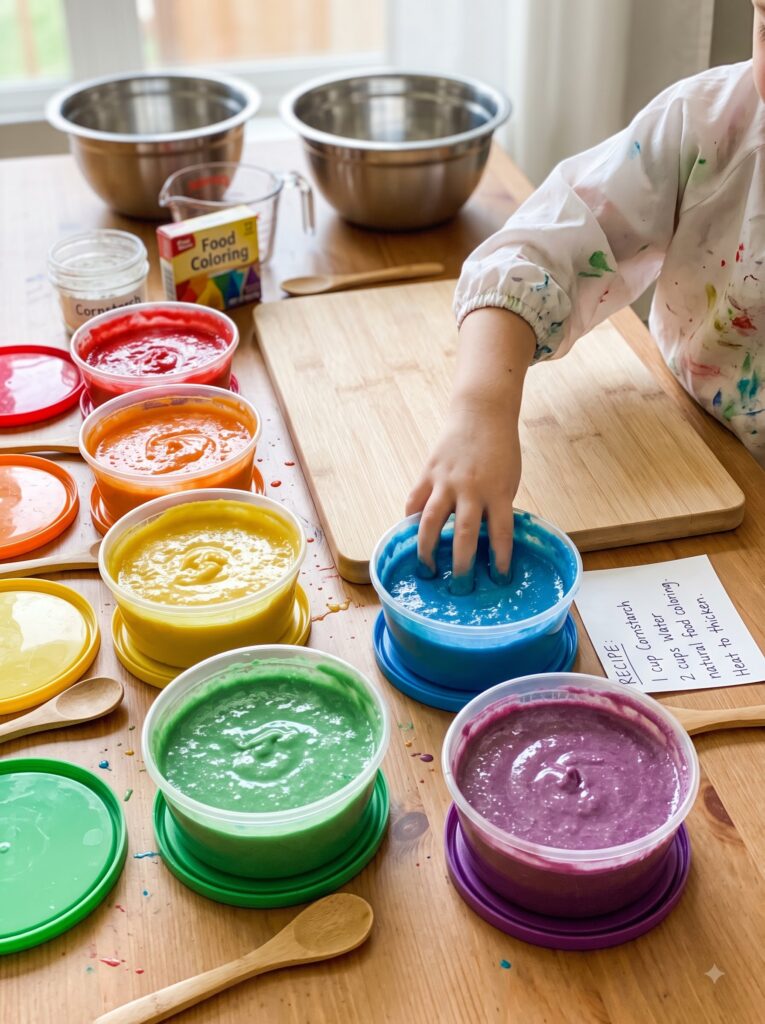
Mix plain yogurt with a few drops of food coloring, or blend cooked, cooled sweet potato for a natural orange hue. Spread it on a high chair tray and let your baby smear away.
This is a favorite because babies explore everything with their mouths anyway, so this removes the panic when a paint-covered fist heads straight for their lips.
Work on a washable surface or over a splash mat, since this gets delightfully messy. For a budget option, mashed banana or plain oatmeal with color works just as well as store-bought paint.
Common Mistake: Using regular craft paint “just this once.” Even non-toxic paint isn’t meant for ingestion — stick to truly edible ingredients for babies under 18 months.
3. Frozen Fruit in a Mesh Feeder
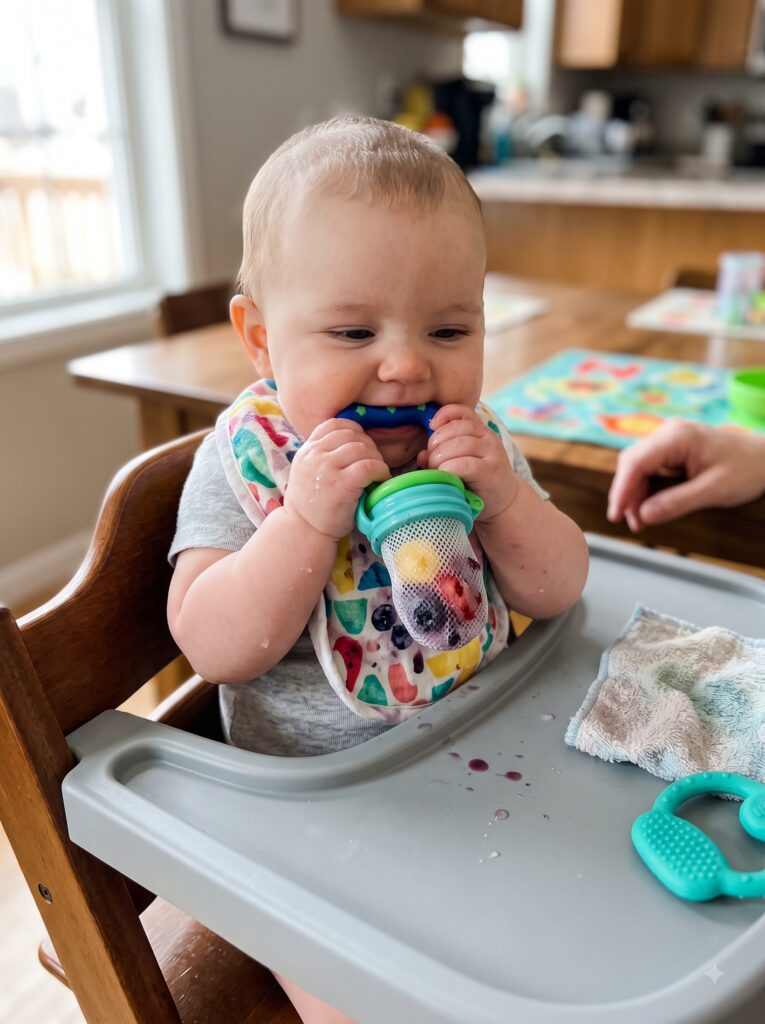
Pop small chunks of frozen banana, watermelon, or peach into a mesh or silicone feeder. The cold temperature and slow-melting texture make for a soothing, engaging sensory snack.
This is a teething-season lifesaver — the cold numbs sore gums while the flavor keeps babies interested far longer than a plain teether.
Always supervise feeder use and inspect the mesh regularly for tears. Skip this one if your baby has any known fruit allergies, and always introduce new foods one at a time.
Quick Tip: Keep a few feeders in the freezer at all times so you always have one ready during a fussy, teething afternoon.
4. Crinkle Fabric Books
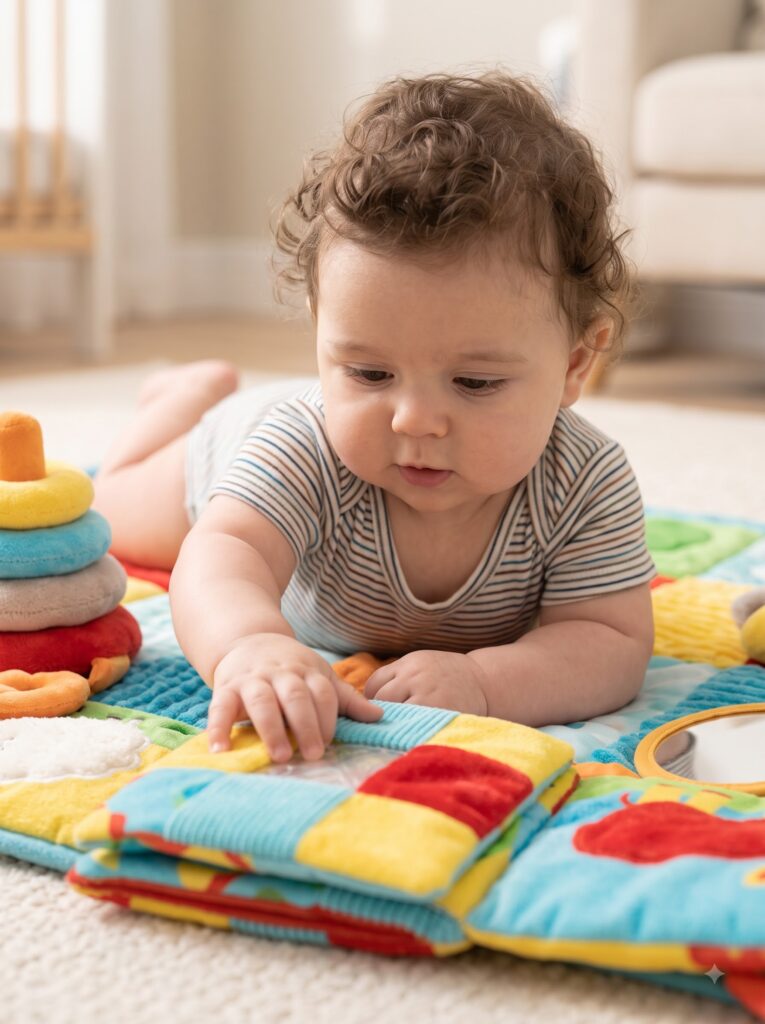
These fabric books make a satisfying crinkle sound with every page turn and often include different textured panels — fleece, corduroy, mesh. The sound-texture combo is a two-in-one sensory win.
Babies love the auditory feedback almost as much as the tactile exploration, making these ideal for tummy time when they need a reason to lift and turn their head.
They’re inexpensive secondhand finds, and machine-washable versions hold up well to drool. A DIY version can be made by sewing crinkly cellophane between fabric scraps.
Why You’ll Love It: They double as a portable activity for strollers, car rides, and waiting rooms.
5. Water Play in the Bath
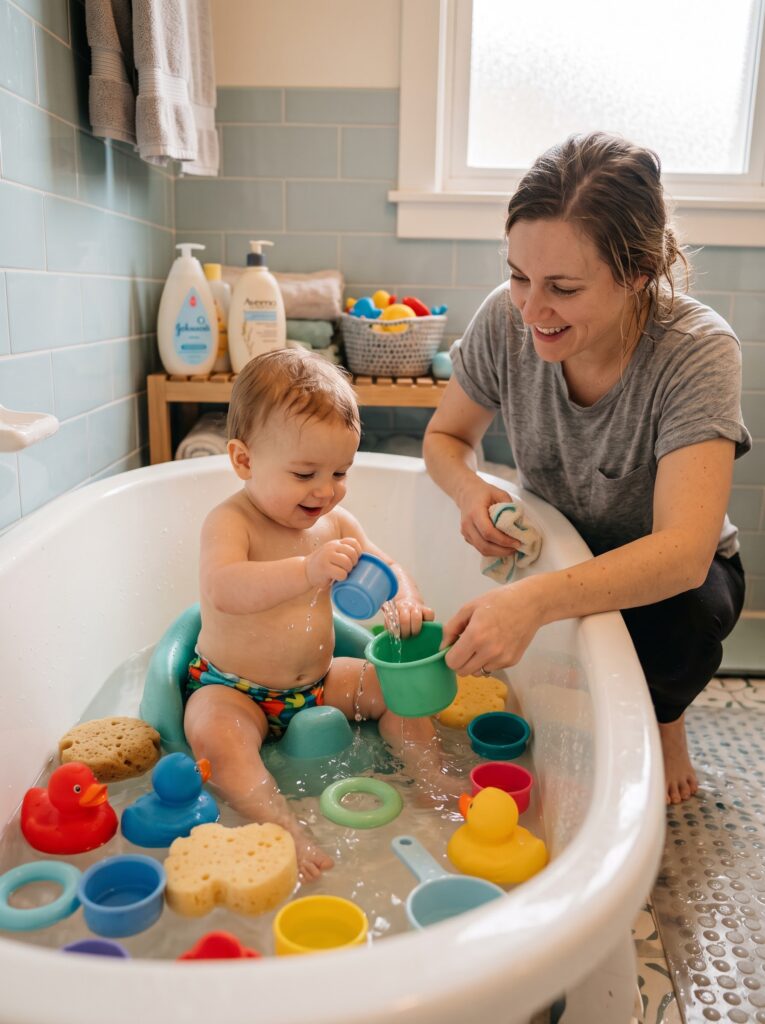
Add measuring cups, a soft sponge, and a few floating toys to bath time. Let your baby pour, splash, and squeeze to their heart’s content.
This works beautifully because it turns an everyday routine into a rich sensory experience without adding extra time to your day.
Keep water shallow and never leave baby unattended, even for a few seconds — bath drownings can happen silently and fast. A budget-friendly swap for fancy bath toys is simply using kitchen measuring cups and a colander.
Safety Note: Always test water temperature with your wrist or a bath thermometer before baby gets in.
6. Sensory Bottles
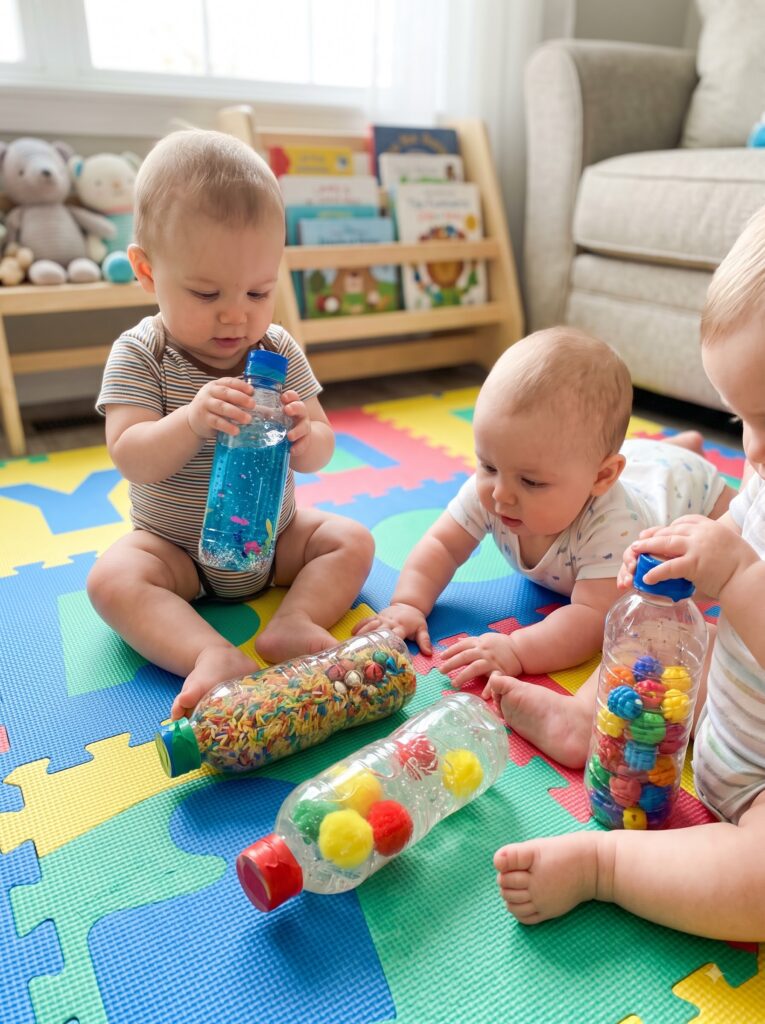
Fill a clear, sturdy plastic bottle with water, glitter, and a drop of dish soap, then hot-glue the lid shut. Baby can shake, roll, and watch the contents swirl.
Parents appreciate that these are mess-free and endlessly reusable, making them perfect for car seats, high chairs, or restaurant outings.
Make several with different fillers — rice, beads, sequins — for variety in sound and movement. Double-check the lid seal is truly secure before handing it over.
Parent Hack: Use a hot glue gun around the entire rim, not just a dab, so curious little hands can’t pry it open.
7. Tummy Time on Different Textures
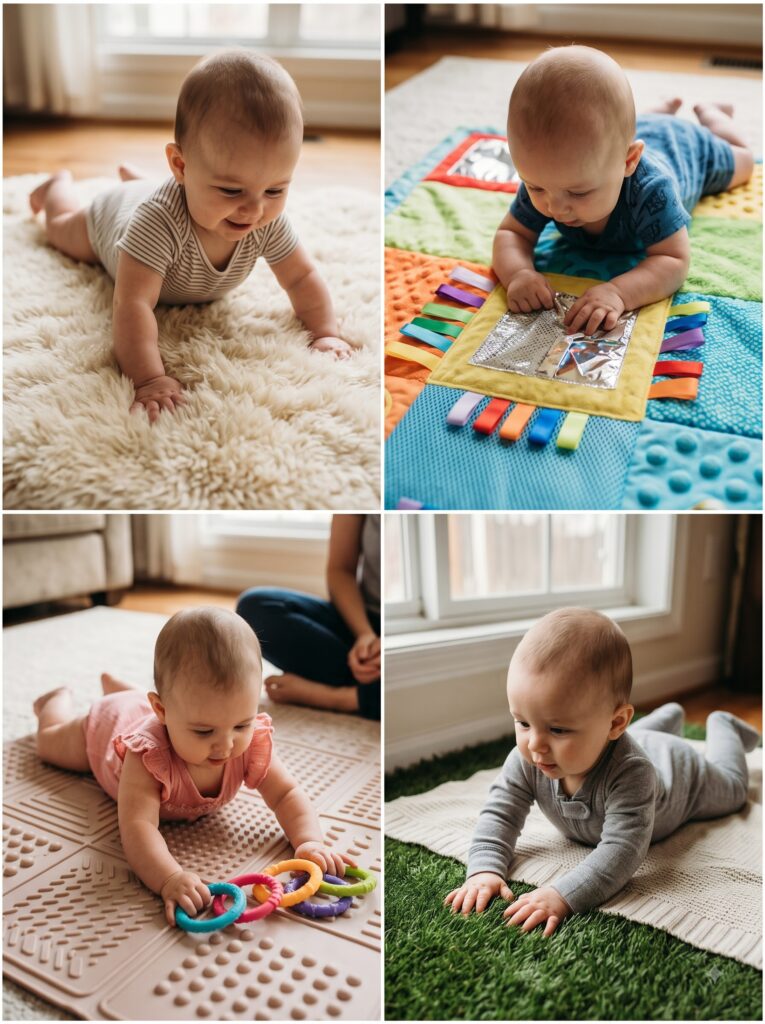
Instead of the same blanket every time, rotate tummy time across a fuzzy rug, a cool tile floor, or a bumpy play mat. Each surface gives different tactile feedback through baby’s hands and forearms.
This idea works because it makes a sometimes-fussy activity more tolerable by keeping things novel and interesting.
Always supervise tummy time fully, and stop if baby seems overly distressed rather than pushing through. A towel or muslin cloth works as a free alternative to a specialty mat.
Expert Advice: Pediatric therapists often recommend varying tummy time surfaces specifically to build tactile tolerance early.
8. Scarf Pulling from a Tissue Box
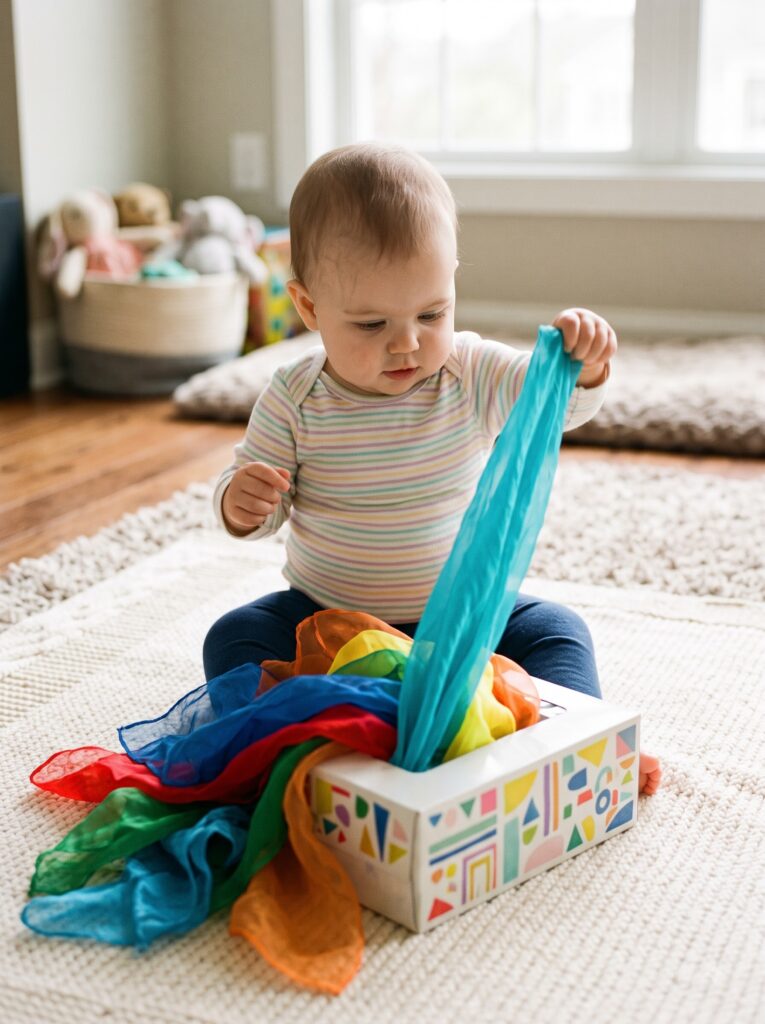
Stuff a few silky scarves or ribbon strips into an empty tissue box and let baby pull them out one by one, then stuff them back in.
This simple in-and-out motion builds fine motor skills and hand-eye coordination while the flowing fabric offers gentle visual and tactile stimulation.
It’s essentially free if you already have scarves at home, and it’s endlessly repeatable — babies rarely tire of the “pull and reveal” surprise.
Common Mistake: Using scarves with loose threads or beads that could pose a choking risk; stick to simple, secure fabric.
9. Light and Shadow Play
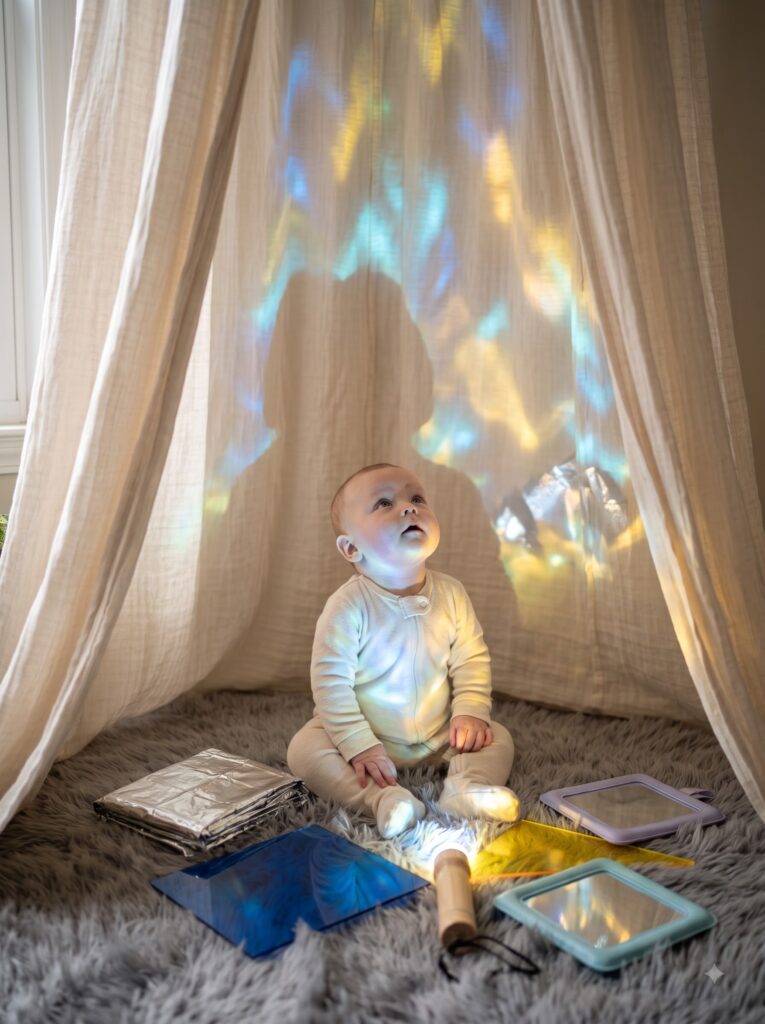
Dim the room and shine a flashlight on the wall, moving it slowly so baby can track the light. Add hand shadows or a colorful cellophane filter for extra visual interest.
Babies’ vision develops rapidly in the first year, and high-contrast moving light is captivating even for very young infants who can’t yet track fast movement.
This works especially well during the “witching hour” before bedtime as a calming wind-down activity. Keep the light gentle and never shine it directly into baby’s eyes.
Quick Tip: A phone flashlight covered with colored tissue paper makes an instant DIY light show.
10. Musical Instrument Exploration
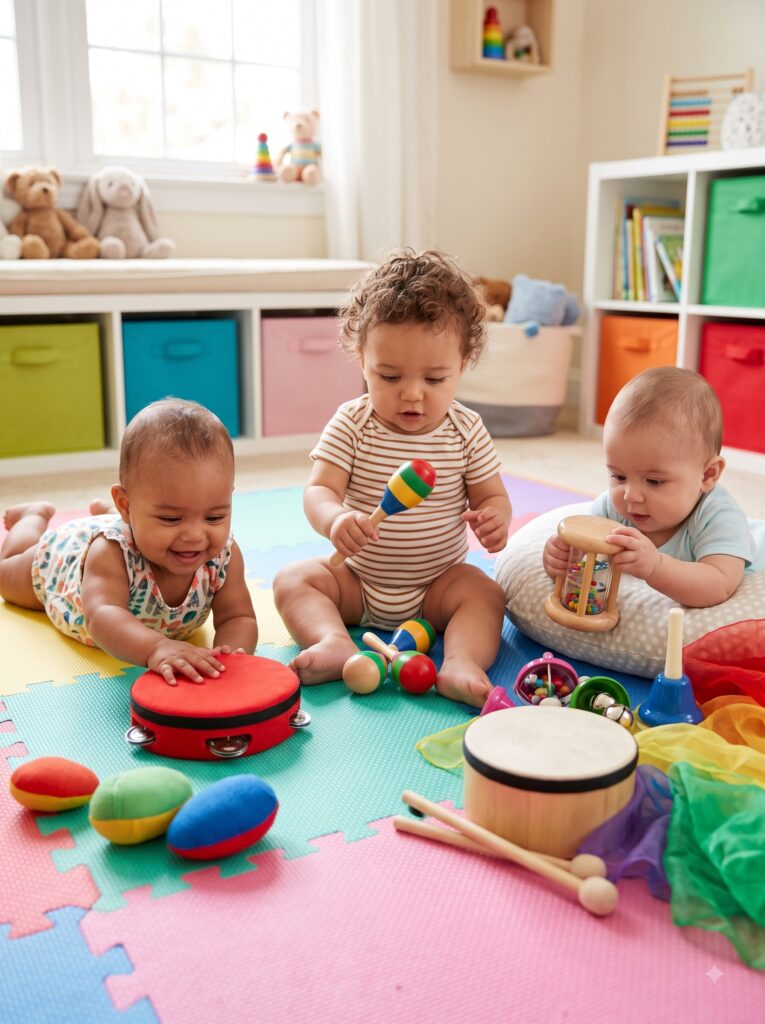
Hand baby a set of soft-bodied maracas, a small drum, or even pots and wooden spoons. Let them bang, shake, and discover cause and effect through sound.
This is a hit because it teaches an early lesson in cause-and-effect — “I did that, and something happened” — which is foundational for cognitive development.
Kitchen items make a completely free instrument set: a wooden spoon and an upside-down pot works just as well as a store-bought toy. Keep instruments large enough that they can’t be swallowed.
Pro Tip: Narrate what you’re doing (“bang, bang, loud!”) to pair language development with the sensory experience.
11. Rice or Oat Sensory Bin (Supervised)
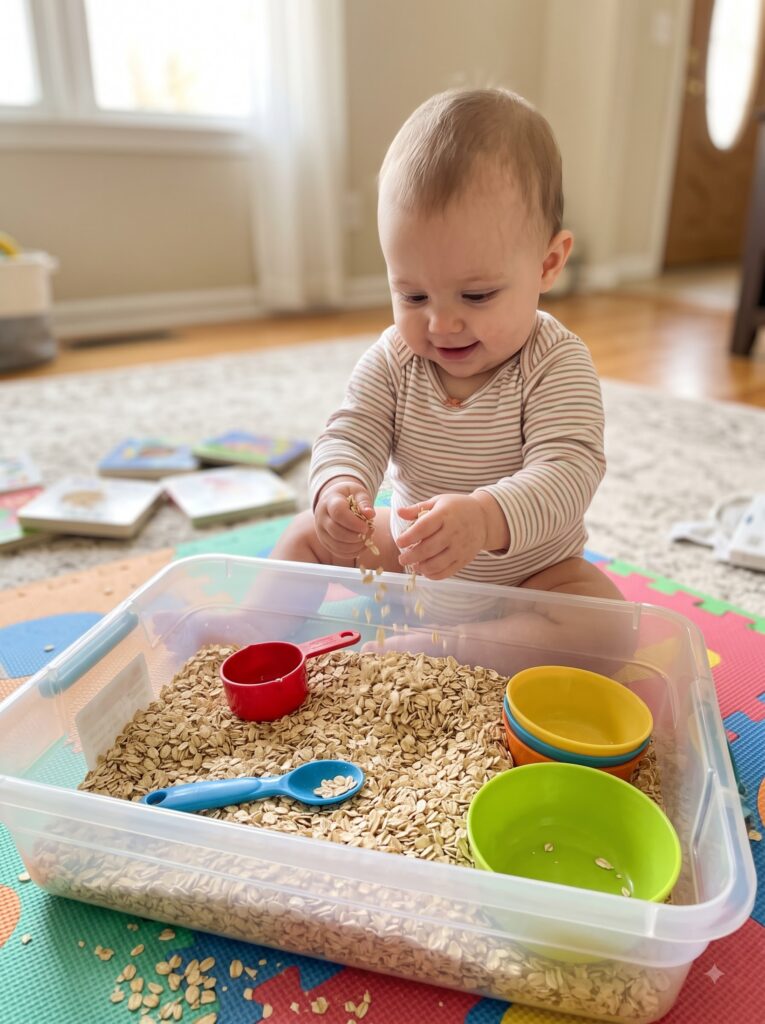
For babies old enough to sit up and past the heaviest mouthing phase (typically 10+ months with close supervision), a shallow bin of dry oats or rice offers a rich pouring and scooping experience.
Parents love how calming the repetitive pouring motion can be, almost meditative for both baby and caregiver.
This is strictly a supervised activity — never leave baby alone with loose dry goods due to choking risk. Toasting the oats first adds a warm, inviting scent.
Safety Consideration: Skip this one entirely if your baby still mouths everything; wait until you’re confident they won’t eat handfuls.
12. Bubble Wrap Under a Blanket
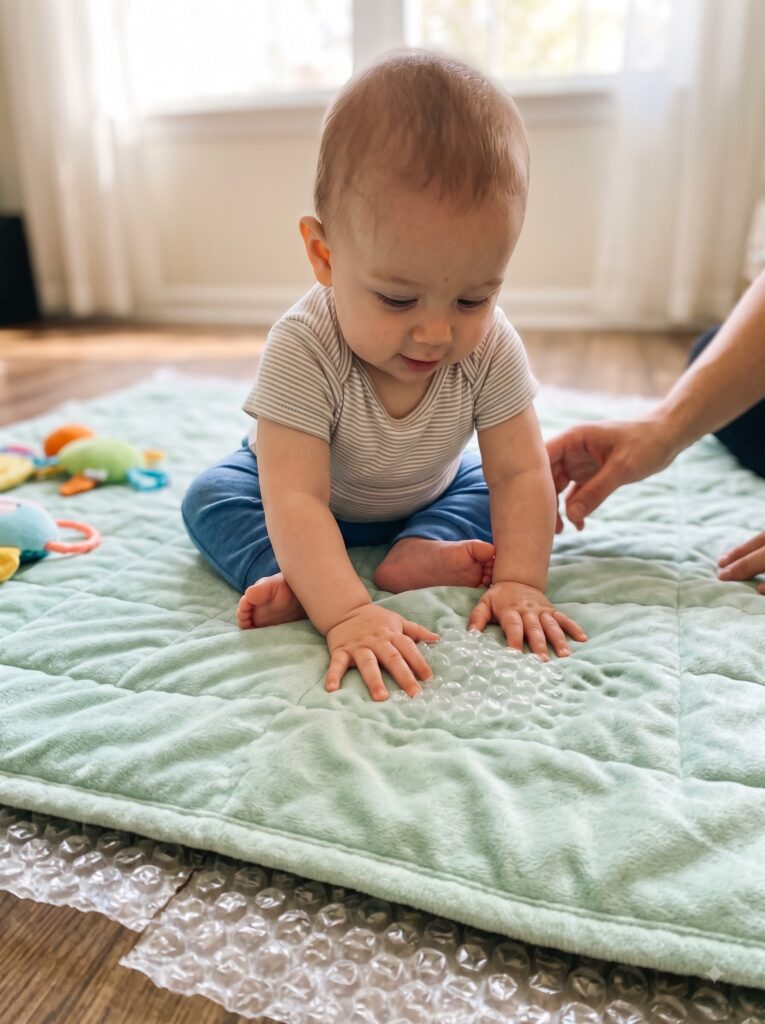
Tape a sheet of bubble wrap to the floor and cover it with a thin blanket or sheet. Let baby crawl or roll across it to feel the unexpected pop and texture beneath.
This activity delights babies because the sensation is genuinely novel — nothing else in daily life feels quite like it.
Tape down all edges securely so nothing shifts or bunches under baby’s hands and knees. A bath mat with raised bumps makes a reusable alternative if you don’t have bubble wrap on hand.
Why You’ll Love It: It’s a five-minute setup that buys you a solid stretch of engaged, independent play.
13. Mirror Play
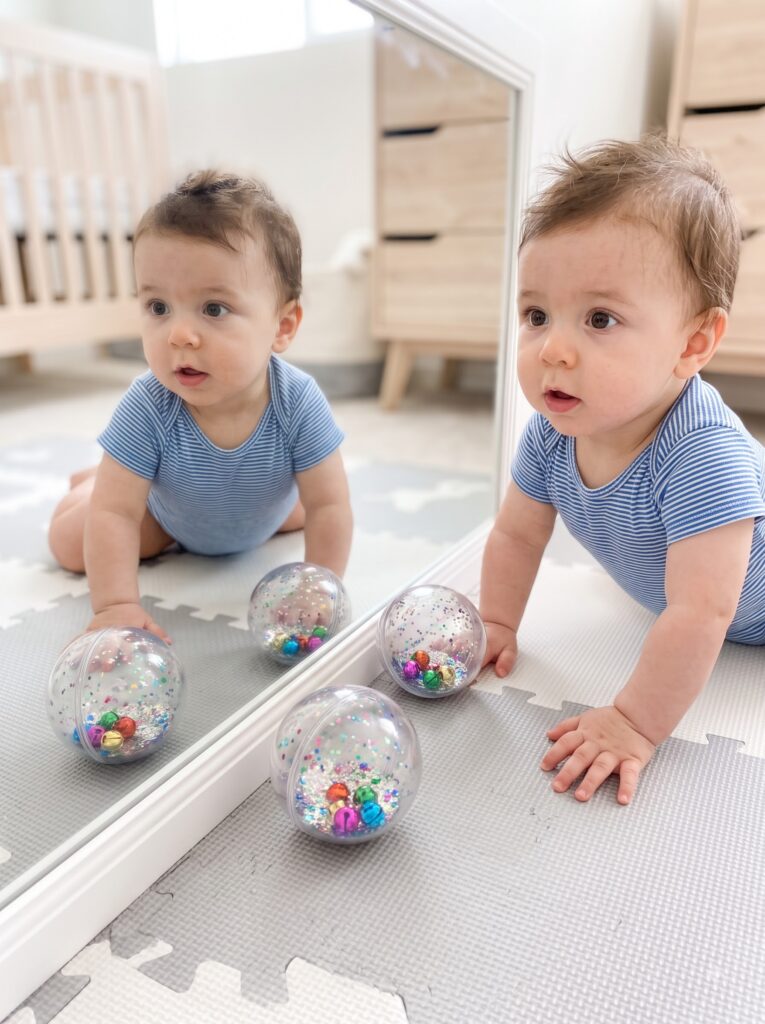
Prop an unbreakable baby-safe mirror at floor level during tummy time or seated play. Babies are endlessly fascinated by the “other baby” staring back at them.
This supports early self-awareness and social-emotional development, long before they understand it’s actually their own reflection.
Choose acrylic or shatterproof mirrors specifically made for babies rather than household glass mirrors. Position it securely so it can’t tip onto baby.
Parent Hack: Combine mirror time with singing — babies love watching their own mouth move while making sounds.
14. Ice Cube Sensory Play
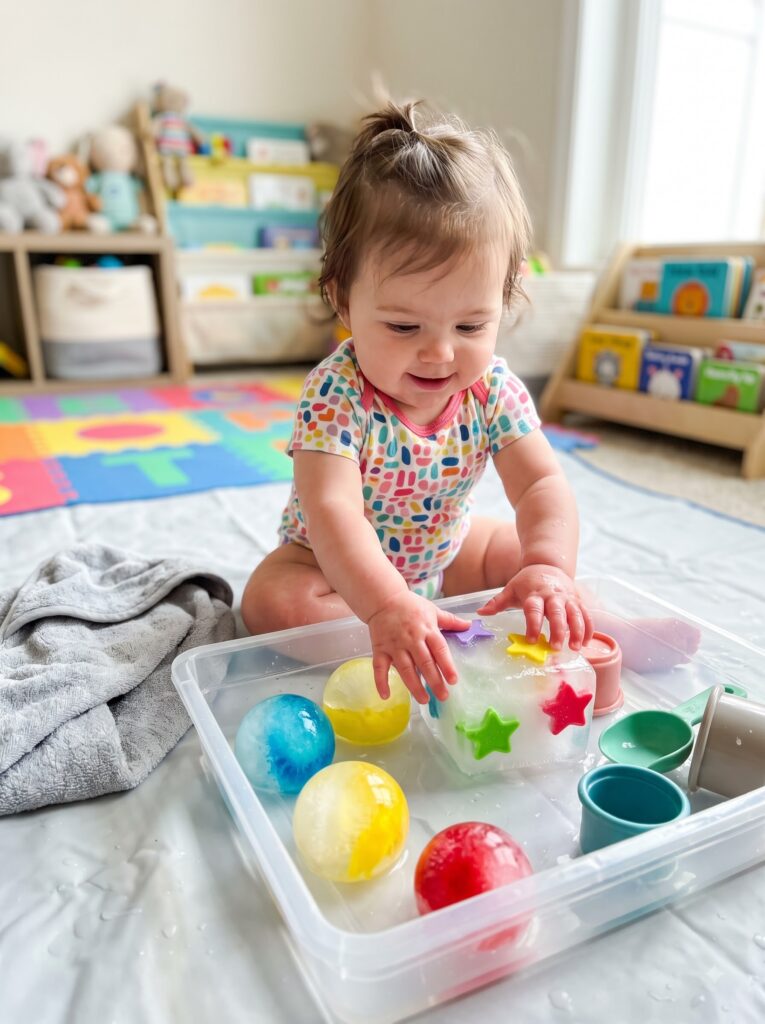
Place a few large ice cubes in a shallow tray or on a high chair tray (supervised, for babies past the choking-risk mouthing stage). Let baby touch, push, and watch them slowly melt.
This introduces temperature as a sensory concept and is a genuinely novel experience most babies haven’t encountered.
Use cubes large enough that they can’t fit fully in baby’s mouth, and end the activity the moment fingers seem too cold. Freezing colored water adds a visual element too.
Common Mistake: Leaving ice unattended on a tray — supervise the entire session, as melting ice can quickly become a slipping or choking hazard.
15. Textured Ball Pit (Mini Version)
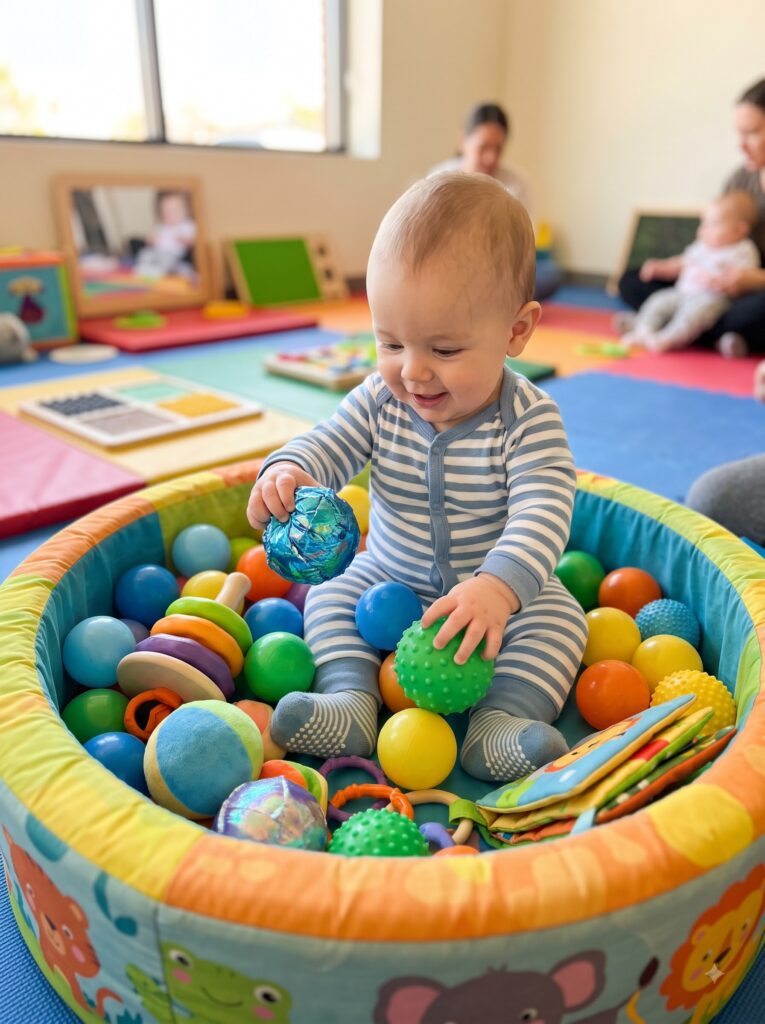
Fill a laundry basket with a mix of textured balls — smooth, bumpy, soft fabric ones — for baby to sit in and explore.
This gives a full-body sensory experience, engaging touch across arms, legs, and hands all at once, which is harder to achieve with hand-only activities.
A shallow, sturdy laundry basket works as a free alternative to a store-bought ball pit. Make sure the basket can’t tip and that balls are all larger than a choking hazard size.
Quick Tip: Rotate in a few crinkly or squeaky balls to add sound to the mix.
16. Scented Play (Herb and Spice Sniffing)
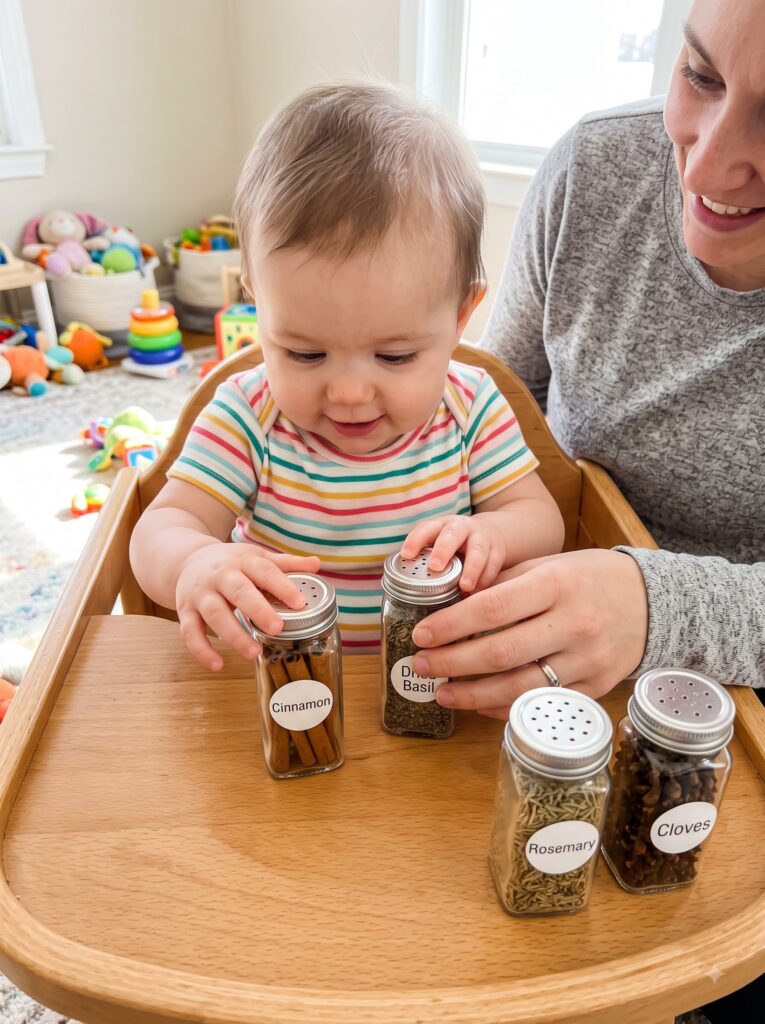
Place a few pinches of mild, baby-safe herbs like basil, mint, or cinnamon in small sealed sachets or jars with holes poked in the lid, and let baby smell each one.
Smell is one of the most underused senses in baby play, yet it’s directly linked to memory formation and emotional development.
Keep everything sealed enough that baby can’t access or ingest the contents directly — sniffing only, not tasting. Skip strong or irritating scents like citrus oils or anything spicy.
Expert Advice: Occupational therapists note that scent exploration in infancy can support healthier eating and reduced pickiness later on.
17. Water Table or Basin Splashing
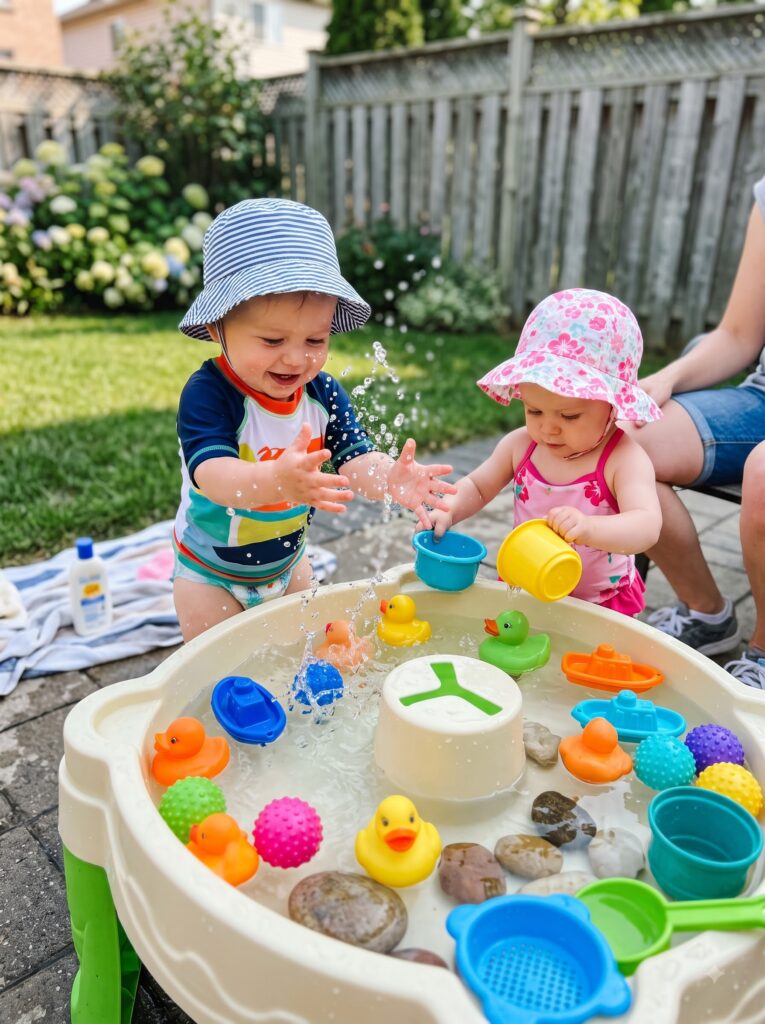
Set a shallow basin of lukewarm water on a towel outdoors or in the kitchen, with a few cups and spoons for pouring.
This activity is a favorite for warm days because it combines cooling relief with rich tactile and auditory feedback from splashing water.
Keep water level low — just an inch or two — and stay within arm’s reach the entire time. A dish tub works just as well as a purchased water table.
Safety Consideration: Never substitute unsupervised time here; drowning risk exists even in very shallow water.
18. Balloon Batting (Supervised, No Popping)
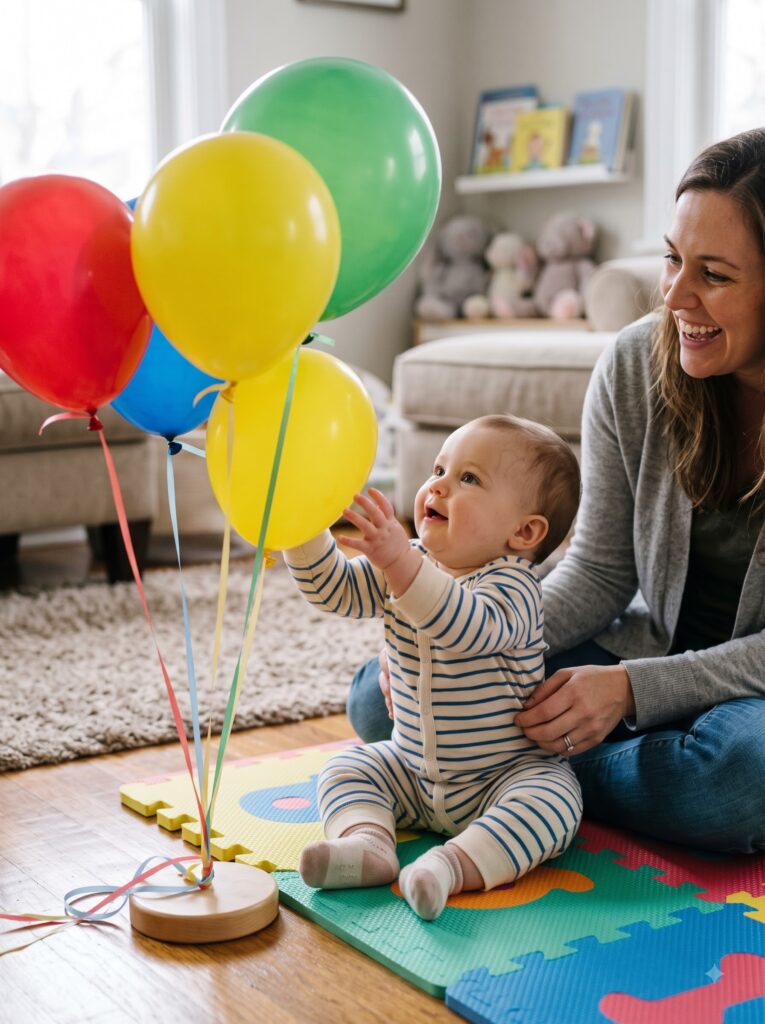
Tie a soft balloon loosely and let baby bat at it while lying on their back or during supported sitting. The slow, floaty movement is easy for young eyes to track.
Babies love the unpredictable, drifting motion, which is different from the fast, jerky movement of most toys.
This must be closely supervised at all times, and popped or deflated balloon pieces should be discarded immediately, as they’re a serious choking hazard. Consider a soft, lightweight fabric ball as a safer substitute for younger or more mouth-oriented babies.
Common Mistake: Walking away “just for a second” — balloon activities require full, constant attention.
19. High-Contrast Flashcards
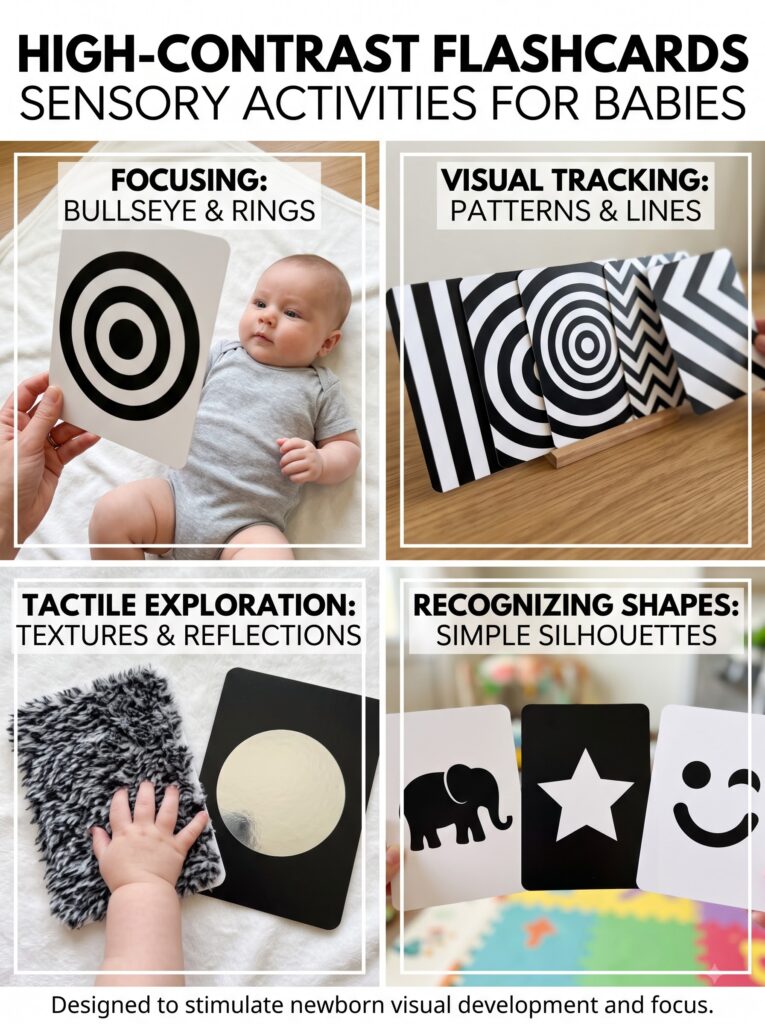
Show baby simple black-and-white or high-contrast patterned cards, especially in the first few months when color vision is still developing.
This works because newborns and young infants see high contrast far more clearly than pastel colors, making these cards genuinely more engaging than typical soft nursery decor.
Hold cards about 8–12 inches from baby’s face and watch for eye tracking. DIY versions are easy — simple black marker patterns on white cardstock work just fine.
Pro Tip: Rotate cards every few days; babies lose interest once a pattern becomes too familiar.
20. Textured Sensory Walk
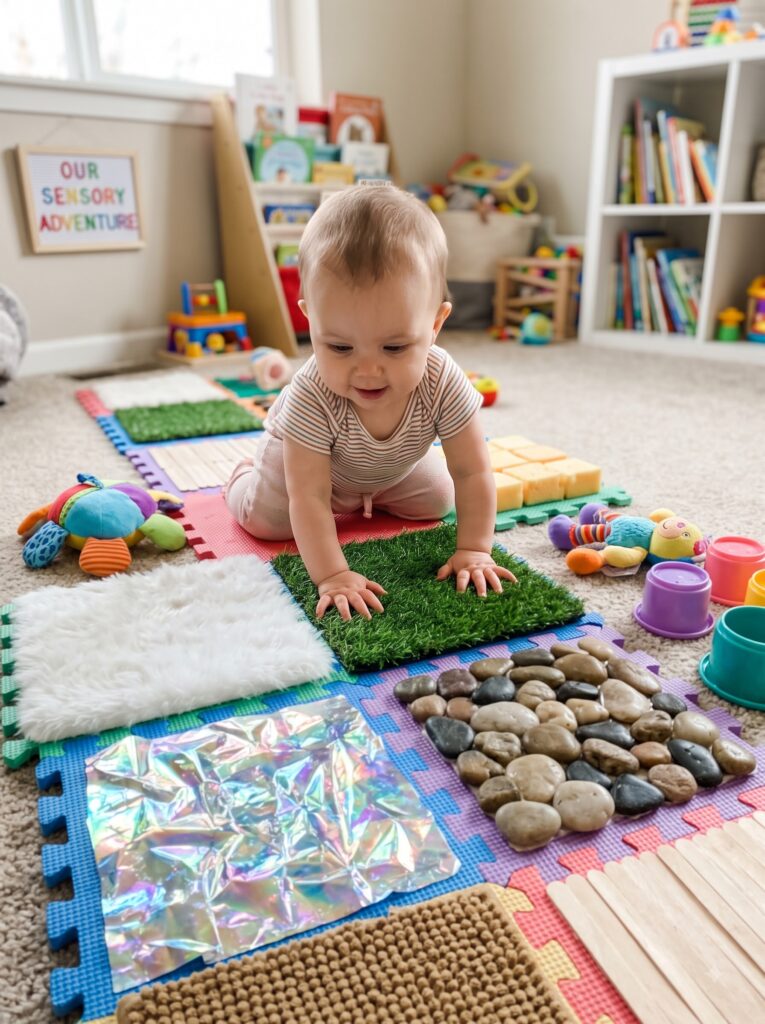
Tape down different materials in a row on the floor — bubble wrap, a towel, foil, a doormat — creating a “path” for baby to crawl across.
This full-body approach engages touch through hands, knees, and feet simultaneously, offering more input than a seated activity alone.
Secure every edge with tape so nothing slides or bunches underneath crawling knees. Recycled household materials make this essentially free to set up.
Why You’ll Love It: It turns crawling practice into a genuinely exciting mini-adventure across the living room.
21. Peekaboo with Different Fabrics
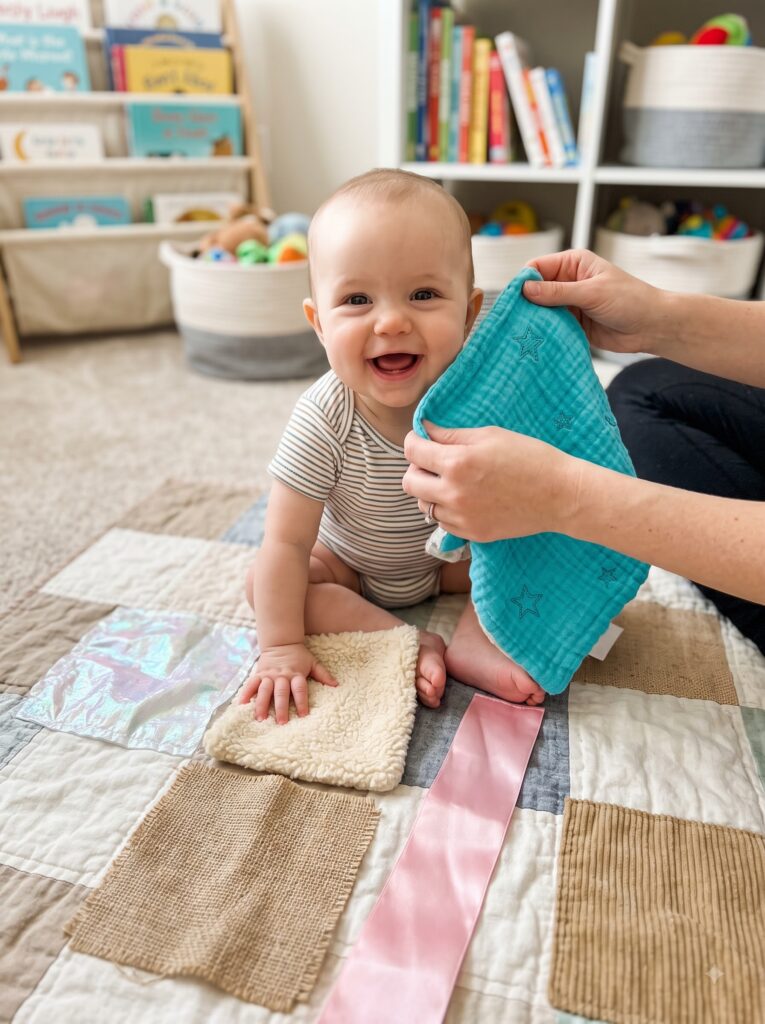
Instead of just hands, use a lightweight scarf, muslin cloth, or even a burp cloth for peekaboo. The changing fabric adds a tactile layer to a classic game.
This game supports object permanence, a major cognitive milestone, while also being a reliable giggle-generator.
It works anywhere — car seat, high chair, changing table — and needs zero extra tools beyond a spare cloth. Keep the fabric loose and never covering baby’s face for more than a second.
Quick Tip: Vary your voice and pacing each round to keep the surprise fresh even after dozens of repeats.
22. DIY Sensory Board (Busy Board)
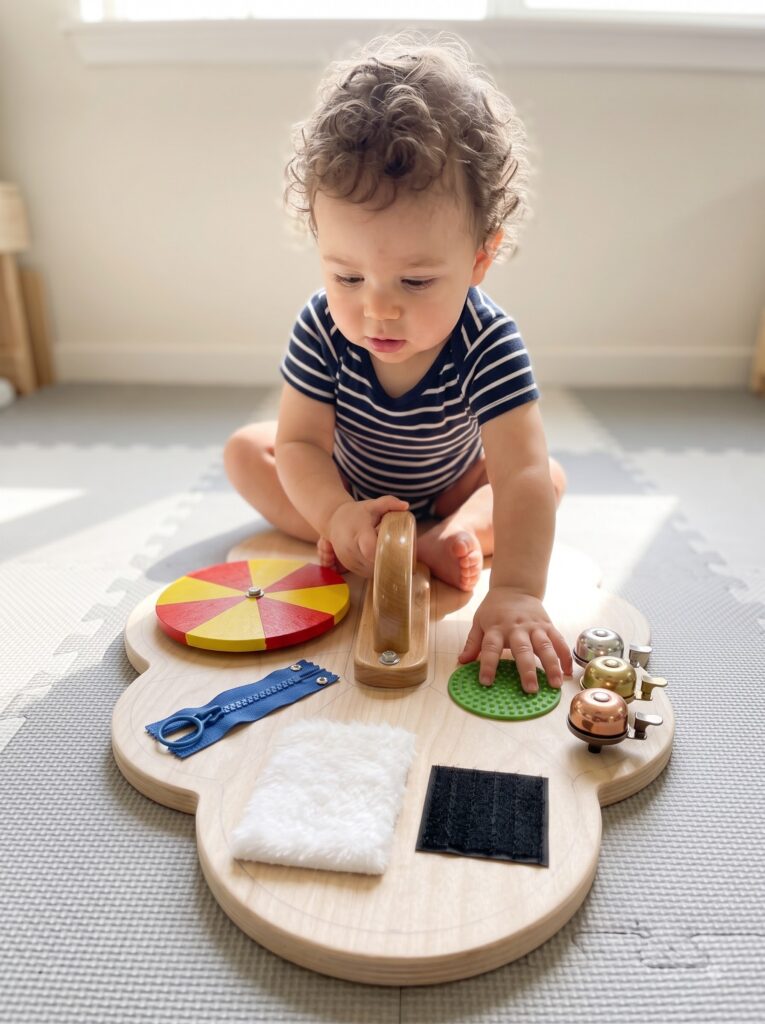
Attach various safe household items — a light switch, a zipper, a doorbell button, a strip of Velcro — to a sturdy board for baby to explore.
Parents love this because it’s a one-time build that keeps paying off as baby’s fine motor skills sharpen over months.
Sand down any rough edges and hot-glue every element securely so nothing pulls loose. A budget version can use a thick piece of cardboard instead of plywood.
Common Mistake: Including small buttons or beads that could detach — test every element with a firm tug before handing it to baby.
23. Wind Chime or Bell Exploration
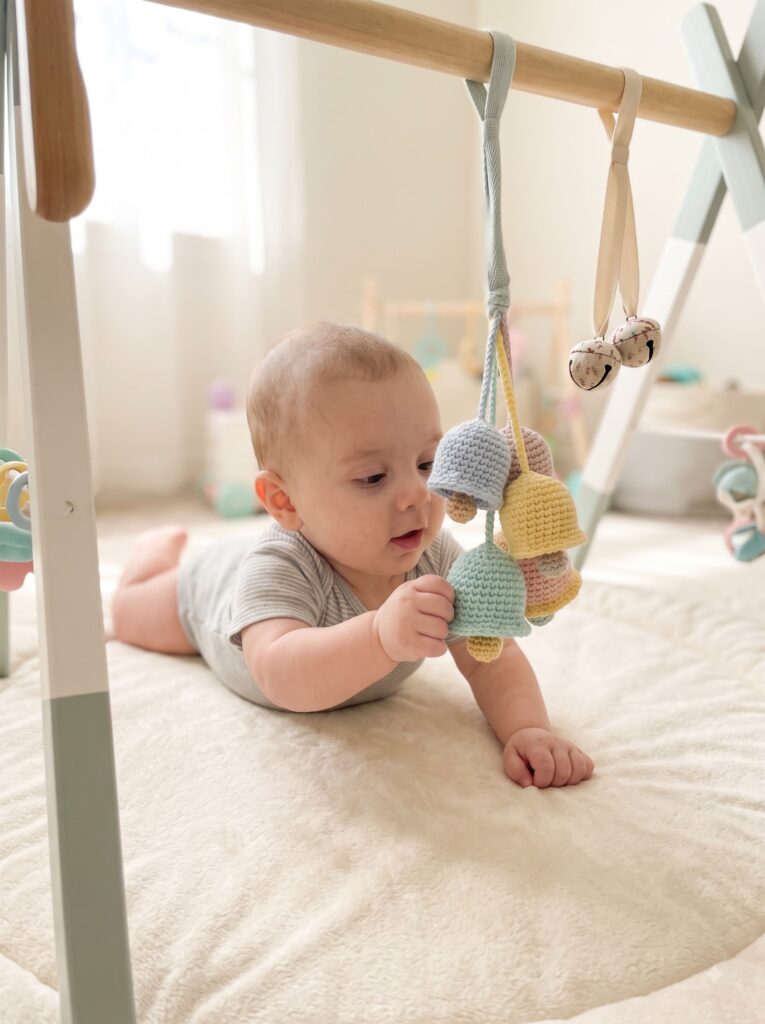
Hang a soft baby-safe bell or wind chime within reach during tummy time or seated play, letting baby’s movements trigger gentle sounds.
This introduces the concept of cause and effect through sound, rewarding baby’s own movement with an auditory response.
Choose fabric or soft-bodied bells over metal for younger babies who still mouth objects. A set of jingle bells sewn into a soft pouch works as a safe DIY alternative.
Pro Tip: Position it just slightly out of reach to encourage reaching, stretching, and eventually crawling toward the sound.
24. Painting with Ice Cubes
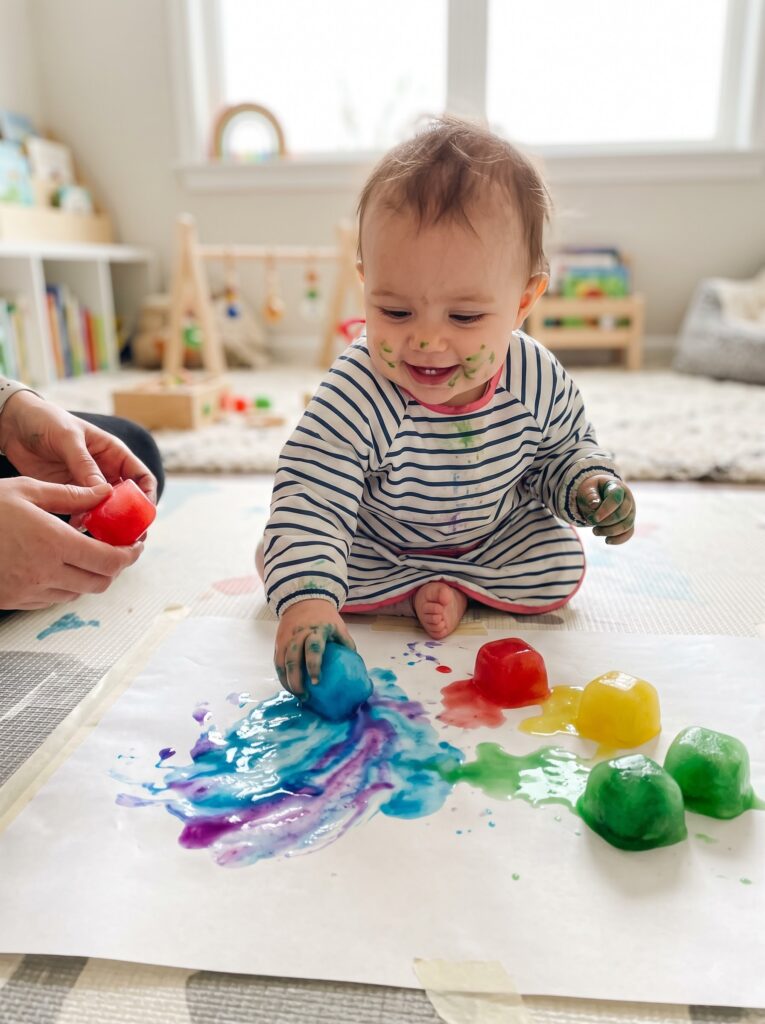
Freeze diluted, food-safe paint (or beet juice, spinach juice) into ice cube trays with a popsicle stick handle. Let an older baby drag the melting cube across paper.
This combines temperature, color, and texture in one activity, and the slow melt keeps engagement going longer than typical paint.
Supervise closely since this is best for babies past the primary mouthing stage. Keep sessions short since little hands get cold fast.
Quick Tip: Do this one outside or over an easy-clean surface — it drips more than you’d expect.
25. Homemade Sensory Mat with Ziplock Bags
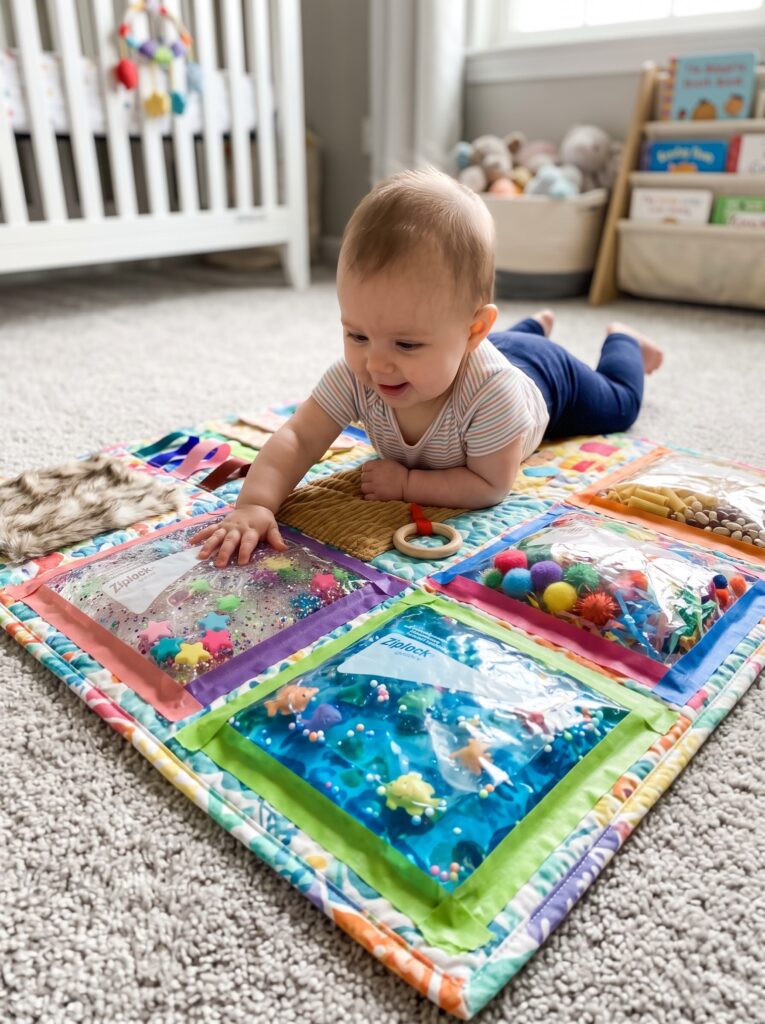
Fill a sturdy freezer bag with hair gel, water beads, or paint, then tape it securely to the floor or high chair tray. Baby can press and squish without any mess reaching their hands directly.
This is a favorite for parents who want sensory benefits without the cleanup — it’s mess-contained by design.
Double-bag it and tape every edge generously to prevent leaks or tears. Never allow unsupervised access, as a torn bag becomes a choking and mess hazard fast.
Expert Advice: Occupational therapists frequently recommend “sealed sensory bags” as a mess-free entry point for texture-averse babies.
26. Nature Walk Texture Collection
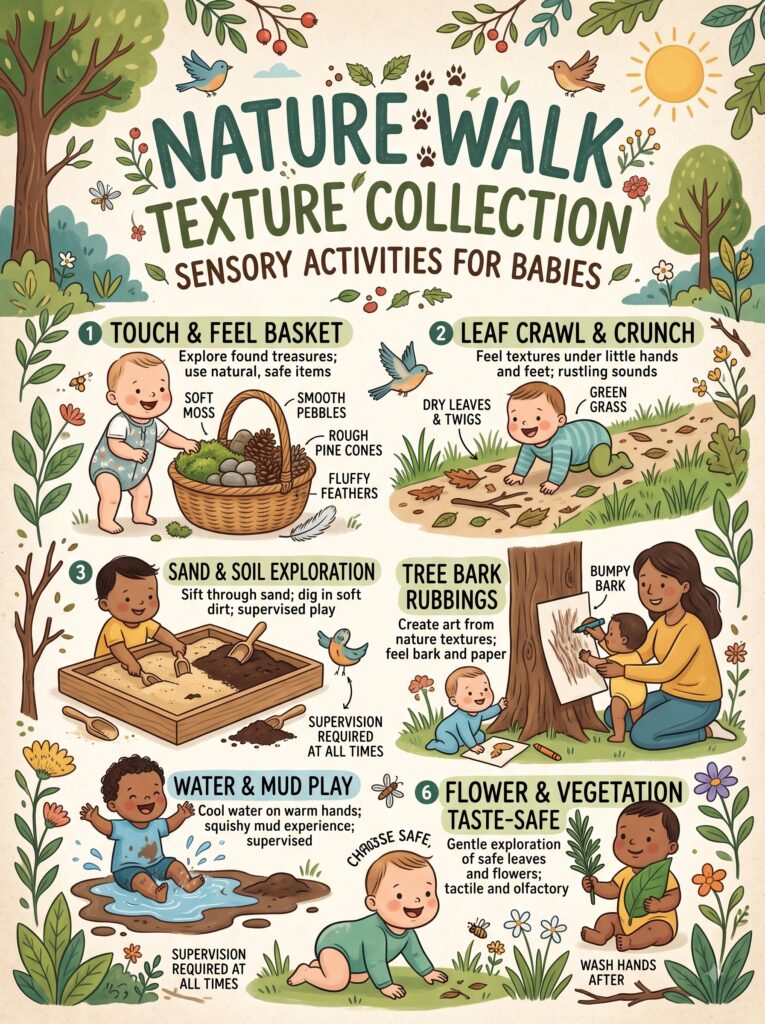
On a walk, let baby touch safe natural textures — tree bark, smooth stones, soft leaves — while you narrate what they’re feeling.
Outdoor sensory input is different from anything indoors, offering temperature, texture, and scent variety all at once.
Stick to items too large to be a choking hazard, and avoid anything with thorns, sap, or known toxicity. This costs absolutely nothing beyond the time for a stroll.
Why You’ll Love It: It naturally builds vocabulary — “rough,” “cool,” “soft” — right alongside the sensory experience.
27. Bubble Blowing
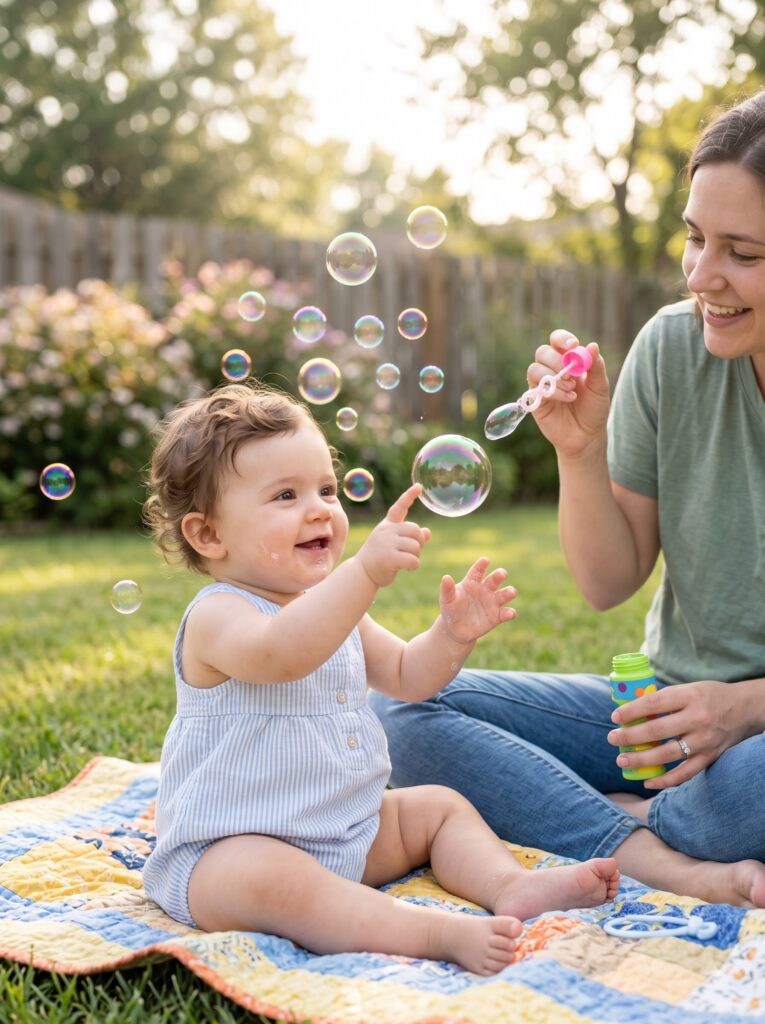
Blow bubbles slowly in front of baby and let them reach, track, and eventually try to pop them. The slow-floating movement is ideal for developing visual tracking.
Babies of nearly every age find bubbles captivating, making this one of the most universally reliable sensory activities on this list.
Use tear-free, non-toxic bubble solution and keep it away from baby’s mouth. Homemade solution (dish soap and water) works as a budget-friendly swap for store-bought bottles.
Common Mistake: Blowing bubbles too fast or too close — slow and steady keeps baby engaged without overwhelming them.
28. Soft Brush Massage
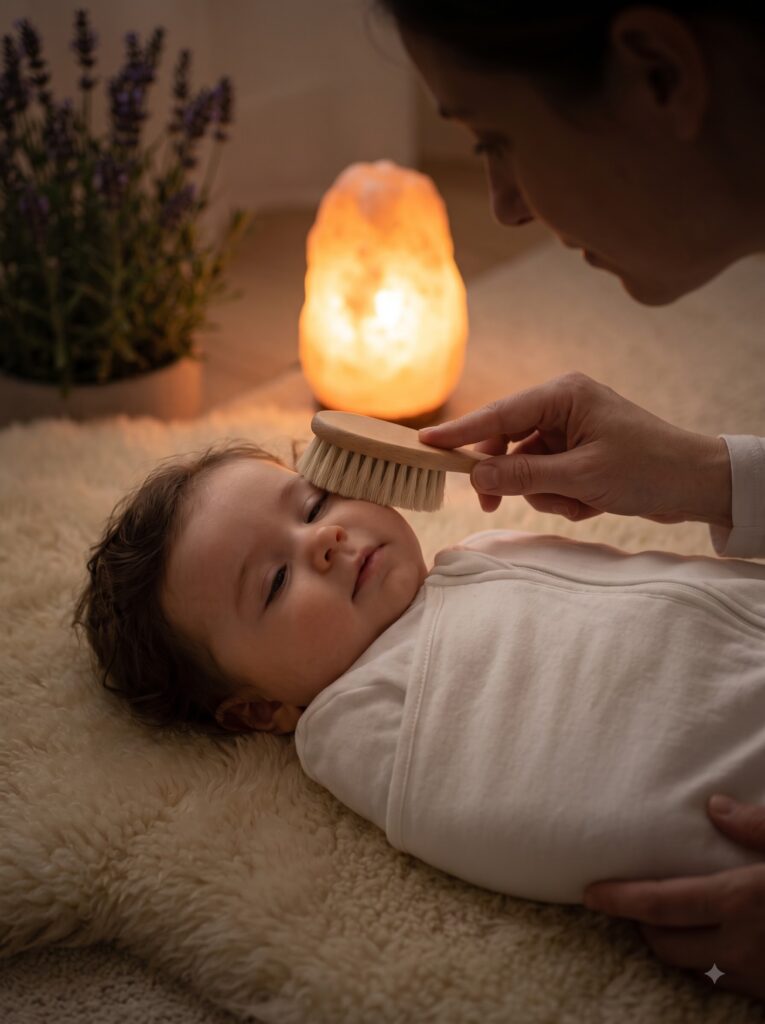
Using a very soft baby brush or your fingertips, gently stroke baby’s arms, legs, and back in slow, rhythmic movements, especially after a bath.
This calming activity supports the tactile sense while also strengthening your bonding connection through touch.
It’s ideal right before nap or bedtime as part of a soothing wind-down routine. Keep pressure light and watch baby’s cues — if they turn away or fuss, ease off.
Pro Tip: Pair the massage with quiet talking or humming for a multi-sensory calming ritual.
29. Homemade Shaker Eggs
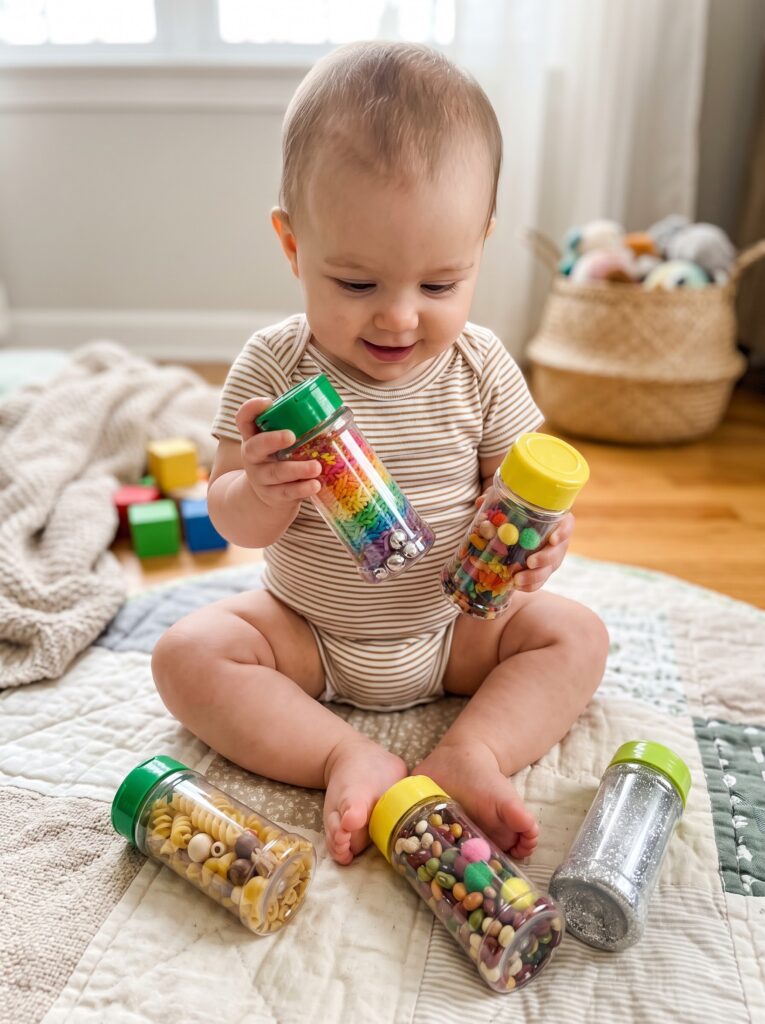
Fill small plastic eggs (the kind from Easter sets) with rice, beans, or bells, then seal with strong tape. Baby can shake them to hear different sounds from each one.
This is an affordable, endlessly repeatable way to introduce sound differentiation — heavier fillers rattle differently than lighter ones.
Tape the seams thoroughly and check regularly for wear, since a cracked egg becomes a choking hazard immediately. This is best for babies who’ve moved past the intense mouthing phase.
Quick Tip: Make a few with different fillers and see if baby starts to favor one sound over another.
30. Water Bead Discovery Bag (Sealed Only)
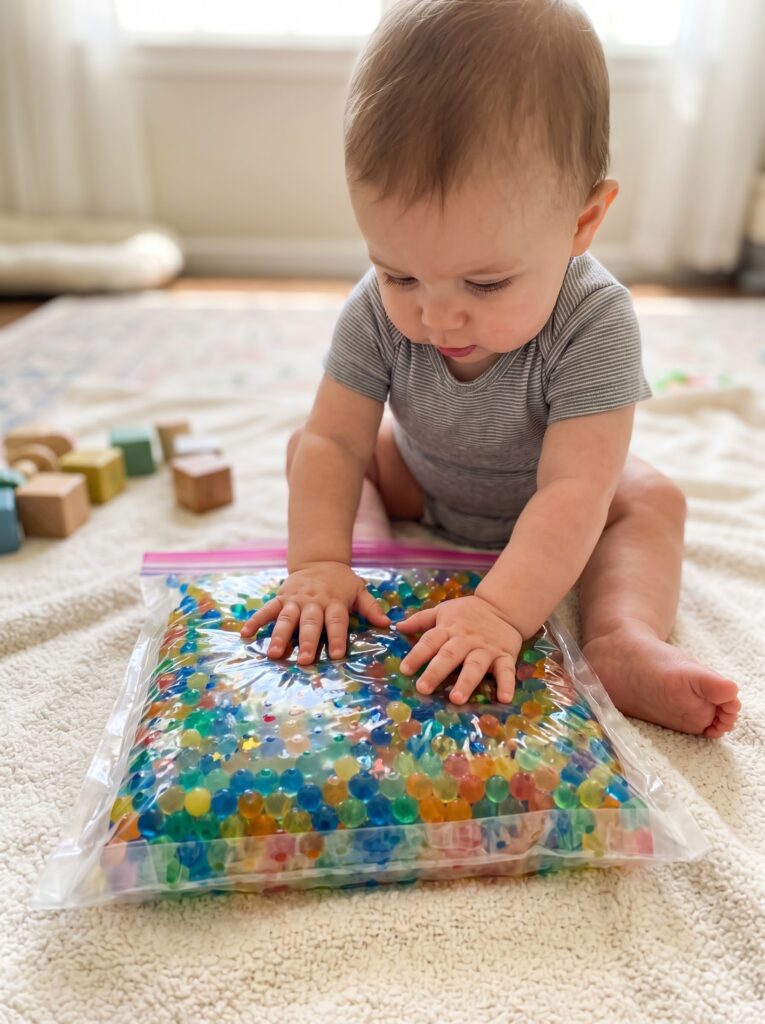
Similar to the sensory mat, seal water beads inside a thick, taped freezer bag so baby can squish and watch them move without direct contact.
Water beads are visually mesmerizing and offer a unique squishy resistance unlike anything else on this list.
This must always stay sealed — loose water beads are a serious and sometimes fatal choking and intestinal blockage hazard if ingested. Double-bag and tape thoroughly, and only use under full supervision.
Safety Consideration: If you’re not 100% confident the seal will hold, skip this activity entirely and choose a different texture-based option instead.
31. Sound Basket with Household Objects
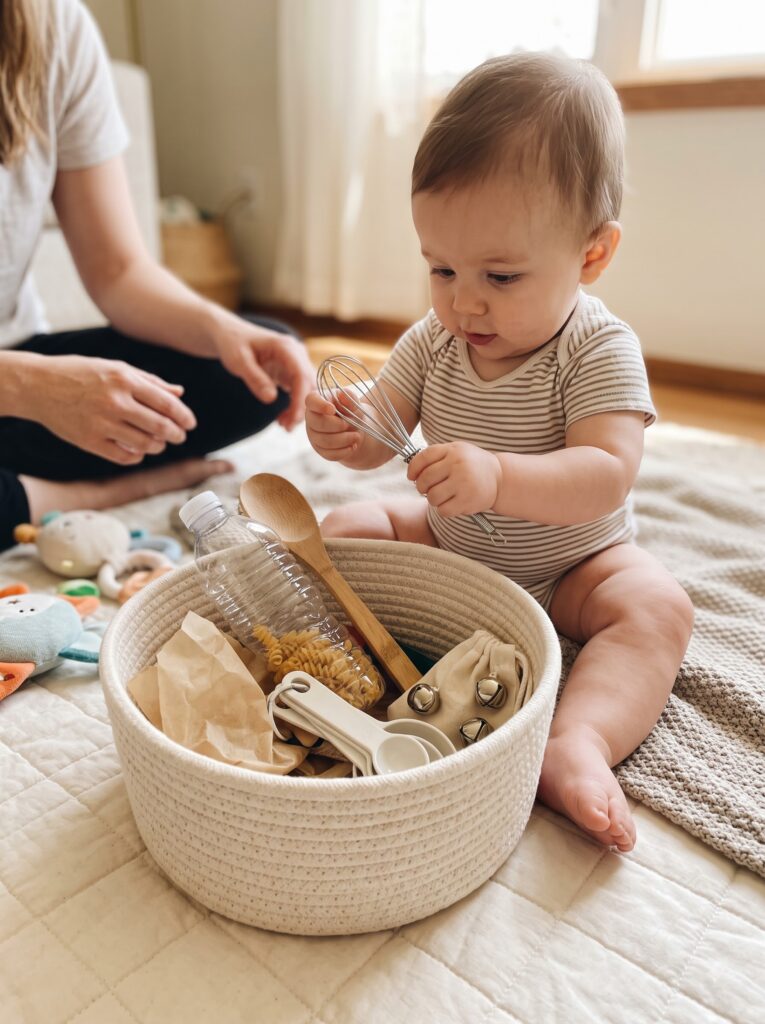
Gather a whisk, a set of keys (baby-safe replica), crinkly paper, and a small bell into a basket for baby to explore and compare sounds.
This builds early auditory discrimination skills as baby starts to notice that different objects make distinctly different noises.
Choose items with no sharp edges or small detachable parts. This basket costs nothing since it’s built entirely from things already in your kitchen drawer.
Common Mistake: Including anything with a battery compartment or small screws that could come loose over repeated handling.
32. Blanket Swing (Gentle Sensory Motion)
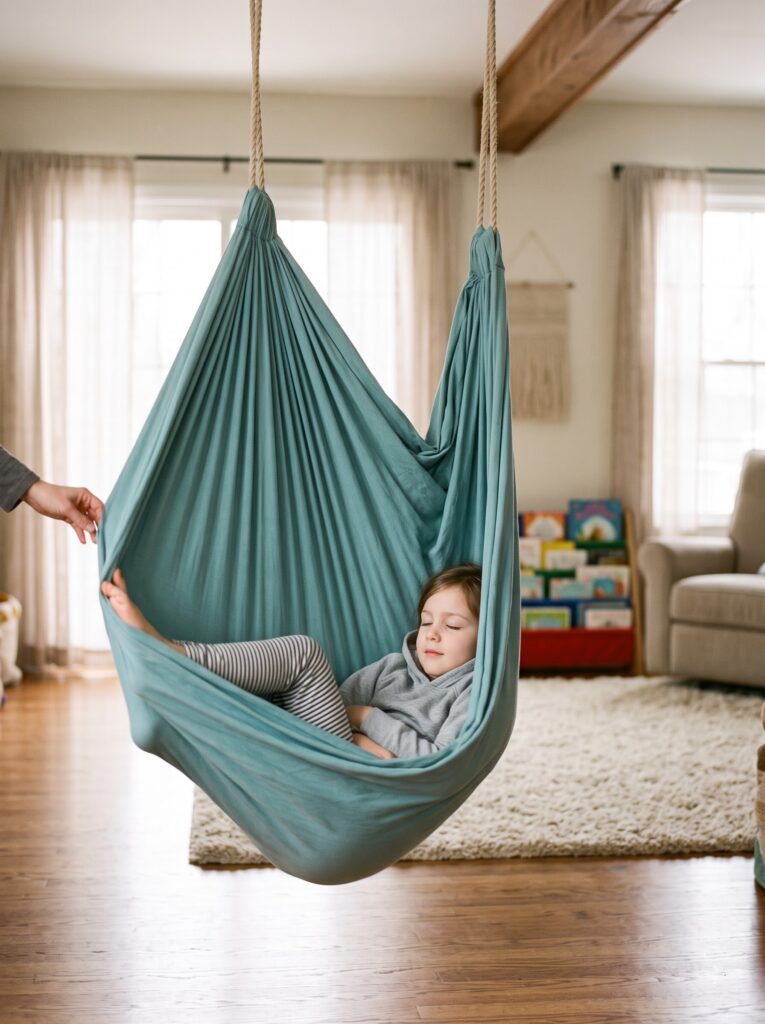
With two adults, gently swing baby in a soft blanket a few inches off the ground in slow, rhythmic motions.
This activity supports the vestibular sense — baby’s sense of balance and movement in space — which is a sensory system often overlooked beyond touch and sight.
Keep movements slow, low, and brief, watching closely for any signs of distress. This should always involve two capable adults, never attempted solo.
Safety Consideration: Stop immediately if baby seems startled rather than delighted; not every baby enjoys this type of motion, and that’s completely normal.
33. Textured Board Books
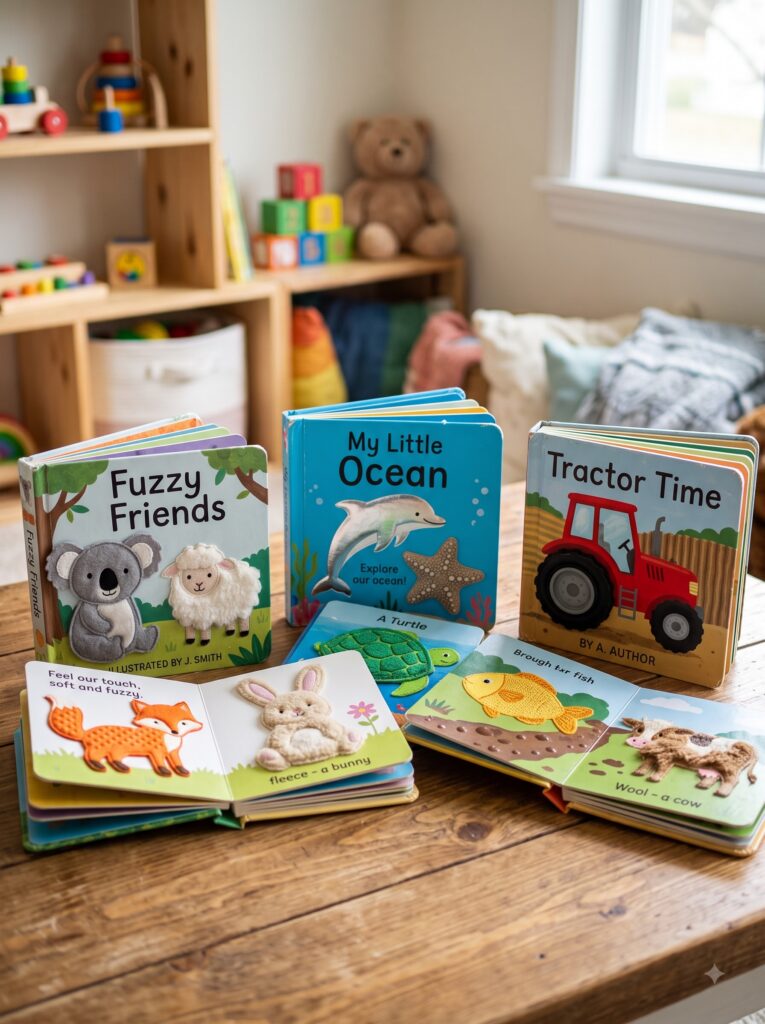
Choose board books with raised textures, flaps, or varied paper types (like “That’s Not My…” series) for story time.
This combines early literacy exposure with tactile exploration, giving reading time an extra sensory dimension.
Look for secondhand copies at thrift stores or library sales to keep costs down. Inspect regularly for loose flaps that could become a choking risk.
Why You’ll Love It: It makes reading time genuinely interactive rather than passive, which tends to hold baby’s attention longer.
34. Cardboard Box Exploration
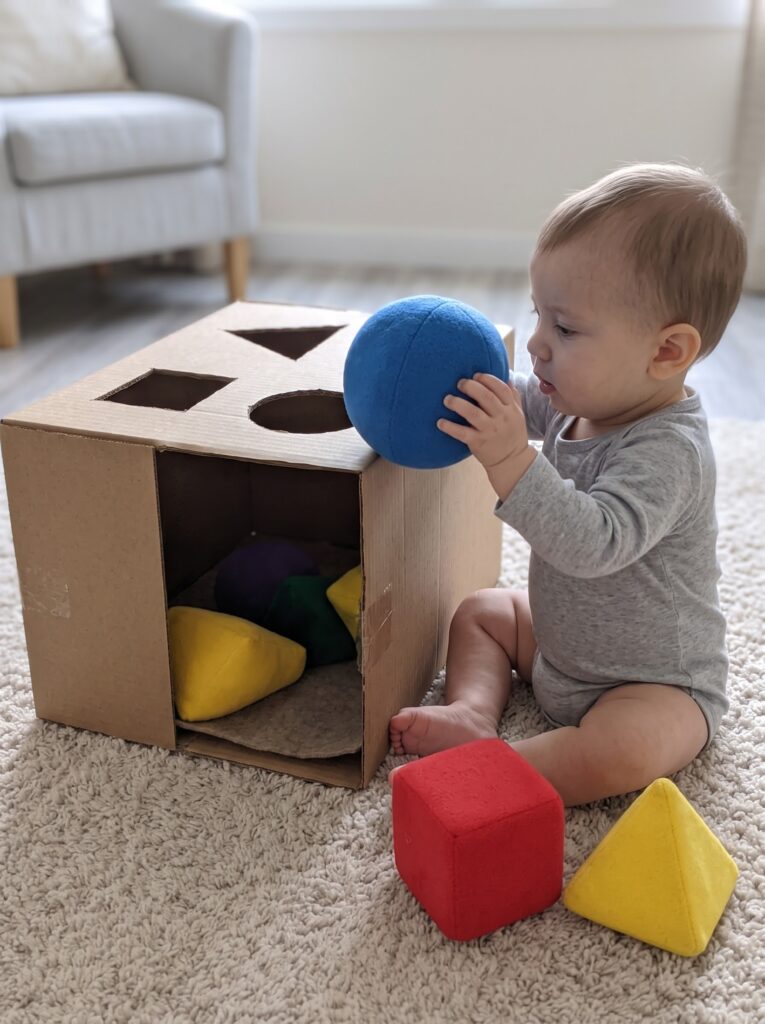
An empty cardboard box (with no staples or sharp edges) can become a crawl-through tunnel, a drum, or a container to fill and dump.
Babies often find simple boxes more captivating than the toy that came inside them — the open-ended nature invites more exploration.
Remove all tape, staples, and labels beforehand for safety. This is about as budget-friendly as sensory play gets, since it’s typically free.
Pro Tip: Cut a few holes for peekaboo moments to add an extra layer of engagement.
35. Foil Ball Crumpling
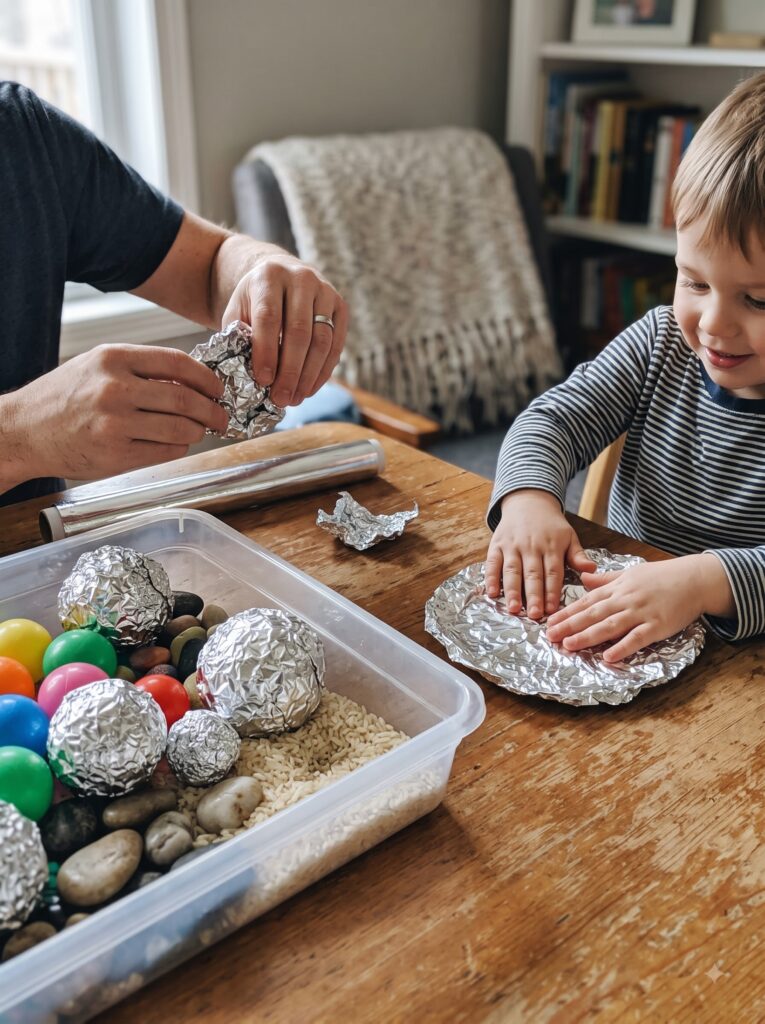
Give baby a large ball of crumpled aluminum foil to squish, roll, and listen to. The crinkling sound and cool texture are both novel sensory inputs.
This is a five-second setup that consistently captures attention, making it a great “I need two minutes” activity.
Make the ball large enough that it can’t be a choking hazard, and supervise closely since foil can tear into smaller pieces over time. Replace it once it starts fraying at the edges.
Common Mistake: Leaving a well-worn, torn foil ball in rotation too long — swap it out at the first sign of tearing.
36. Rainbow Rice Sensory Bin
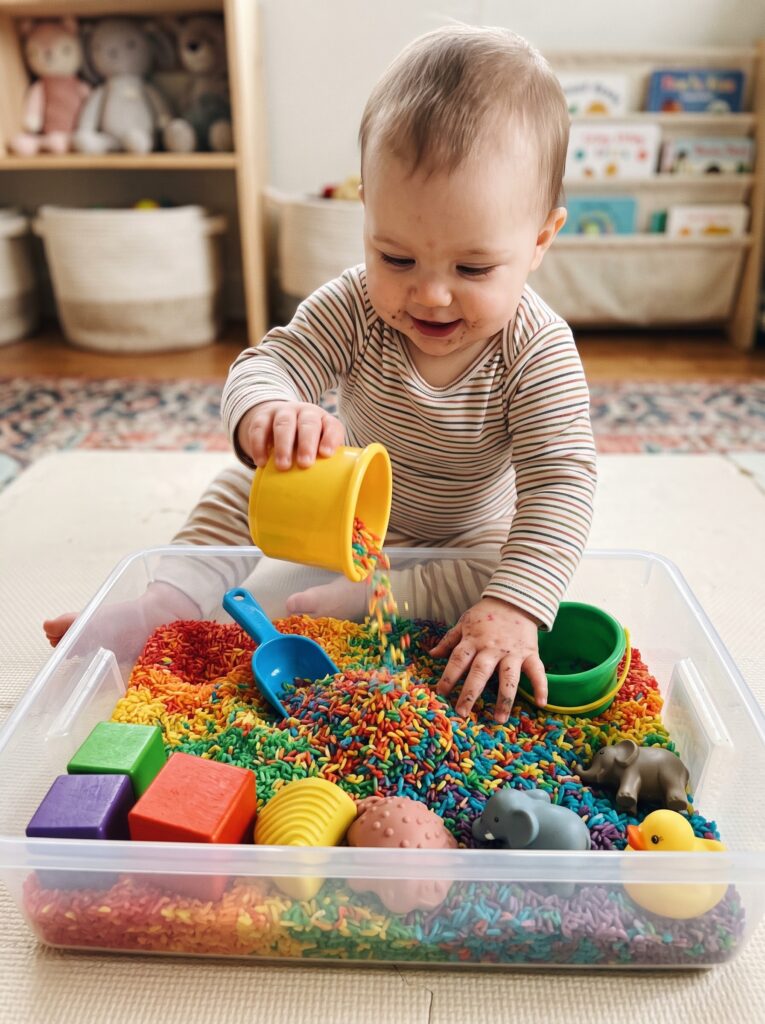
Dye dry rice with food coloring and rubbing alcohol, let it dry, then offer it in a shallow bin with scoops and cups (for babies past the mouthing stage).
The vivid color makes this visually thrilling in a way plain rice isn’t, adding a strong visual component to the tactile pouring experience.
This is strictly for supervised, non-mouthing babies given the choking risk of loose rice. A budget version skips the dye and uses plain rice with just as much tactile value.
Safety Consideration: Always sweep and dispose of spilled rice promptly, as loose grains are a slipping and choking hazard for both baby and pets.
37. Baby-Safe Playdough
Make a simple edible dough from flour, water, and a touch of oil (add cocoa powder or beet juice for natural color) for supervised squishing and pressing.
This is a favorite because it’s genuinely safe if a curious baby takes a taste, unlike standard craft playdough.
Store it in the fridge in an airtight container for reuse across a few sessions. Always supervise, since even edible dough poses a choking risk in larger clumps.
Quick Tip: Add a drop of vanilla extract for a pleasant scent that makes the activity multisensory.
38. Textured Sock Puppets
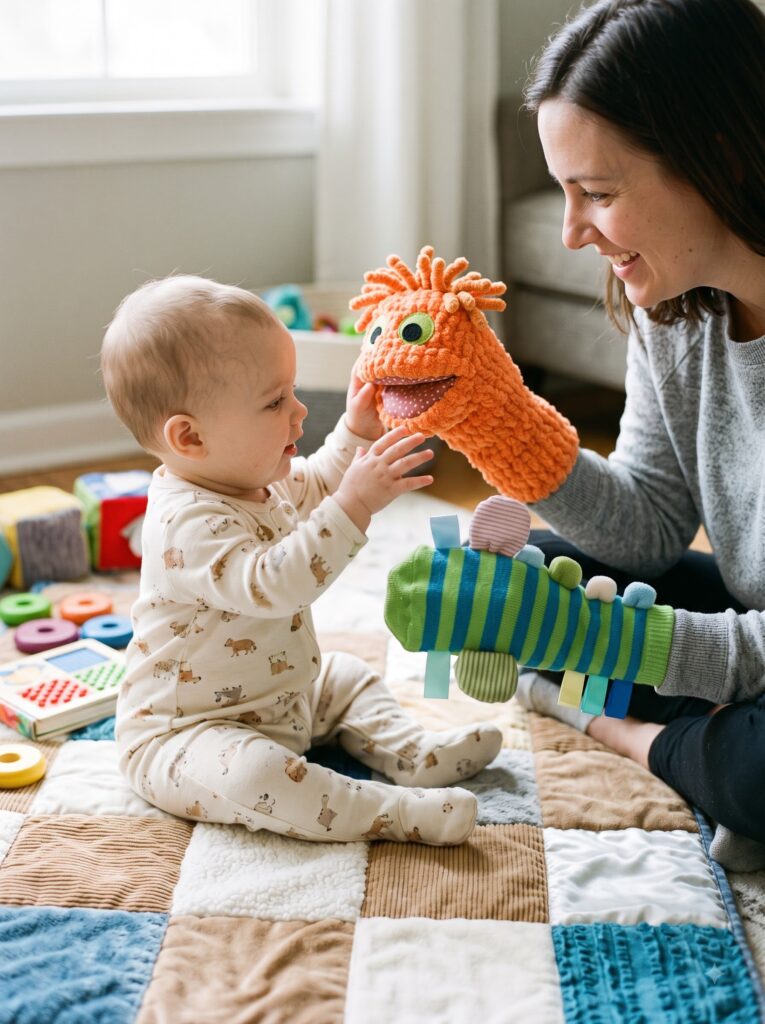
Slip a sock over your hand, adding a felt textured “face,” and use it for gentle interactive play, letting baby touch the different textured features.
This combines social interaction with tactile exploration, since baby is engaging with a “character” rather than a static object.
A plain sock works fine without any embellishment if you’re short on time. Skip small buttons for eyes — use fabric marker or embroidery instead.
Why You’ll Love It: It transforms an everyday sock into an engaging, giggle-inducing character in under a minute.
39. Music and Movement Time
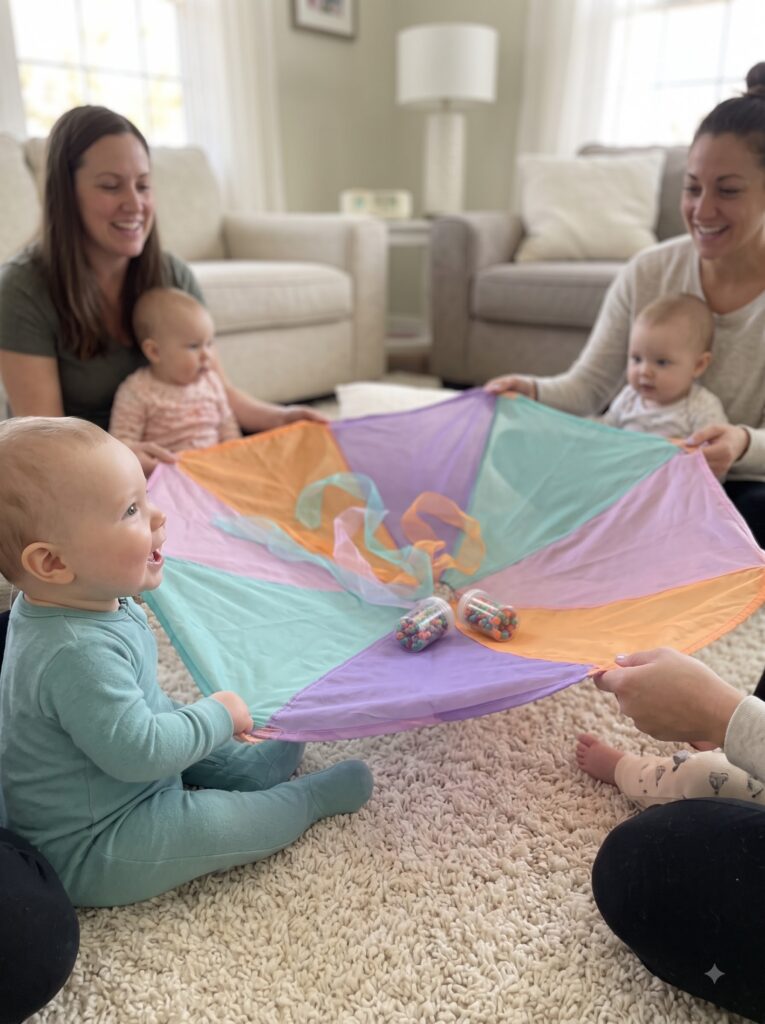
Play a range of music genres — classical, upbeat pop, gentle lullabies — and gently bounce, sway, or dance with baby in your arms.
This introduces baby to a wide auditory range while also stimulating the vestibular system through movement.
It works especially well during fussy transition times, like right before a nap, when rhythmic movement is naturally soothing. No equipment needed beyond a phone or speaker.
Pro Tip: Notice which genres seem to calm versus energize your baby — you’ll likely spot patterns within a few sessions.
40. Textured Puzzle Balls
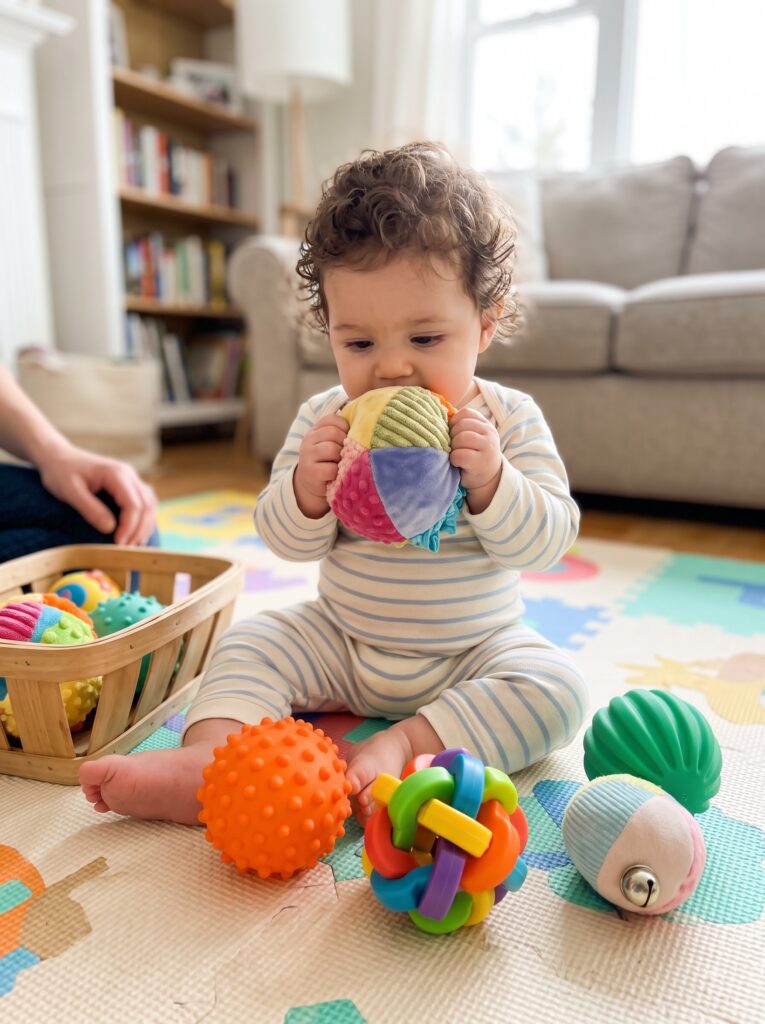
Offer a set of stacking or textured sensory balls, each with a different surface — ridged, dotted, smooth — for baby to grasp, mouth (safely, if designed for it), and roll.
These toys are popular because they’re specifically engineered for safe mouthing, removing a lot of the supervision burden compared to household substitutes.
They’re a worthwhile investment if your budget allows, though a mix of a tennis ball and a textured bath toy achieves something similar for free.
Common Mistake: Buying a set with pieces too small for baby’s current stage — check age recommendations on packaging carefully.
41. Feely Box Guessing Game
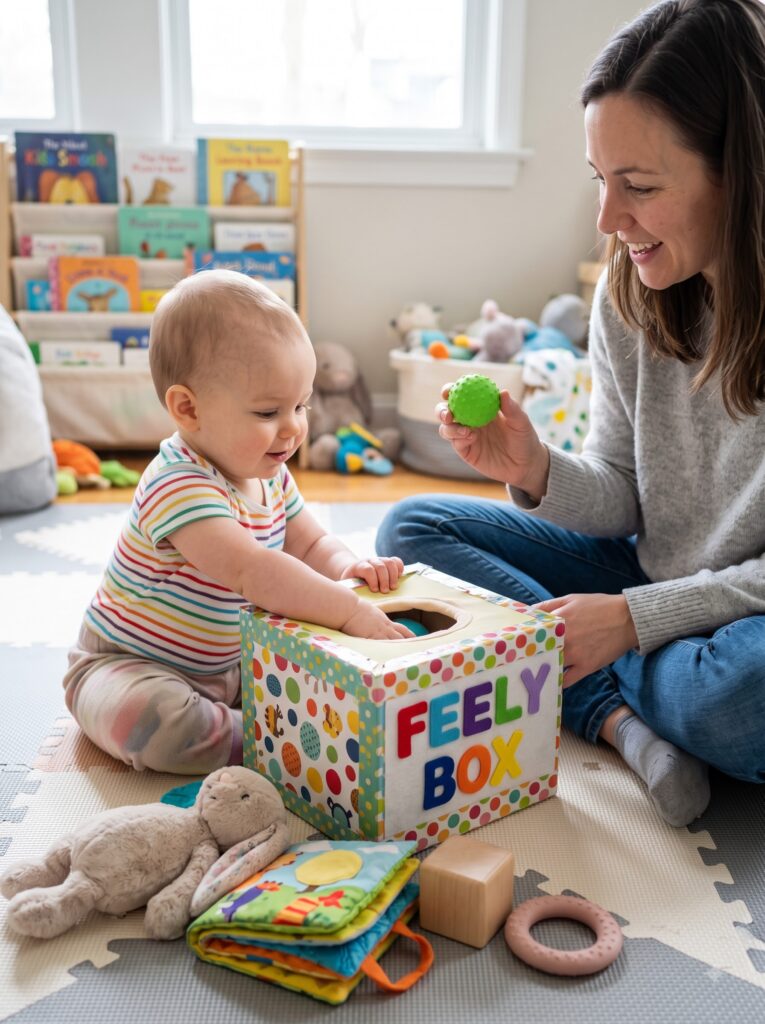
Cut a hand-sized hole in a shoebox lid and place one familiar object inside — a spoon, a small stuffed animal — for baby to feel and eventually pull out.
This is best for slightly older babies (10+ months) who enjoy the anticipation and surprise of “what’s inside,” blending cognitive and tactile skills.
Keep objects large and simple at first, since the “hidden” element alone is often challenging enough for younger babies. A tissue box works as a smaller alternative to a shoebox.
Quick Tip: Celebrate loudly when they pull the object out — the enthusiastic reaction keeps them motivated to try again.
42. Vibration Play (Safe Toys Only)
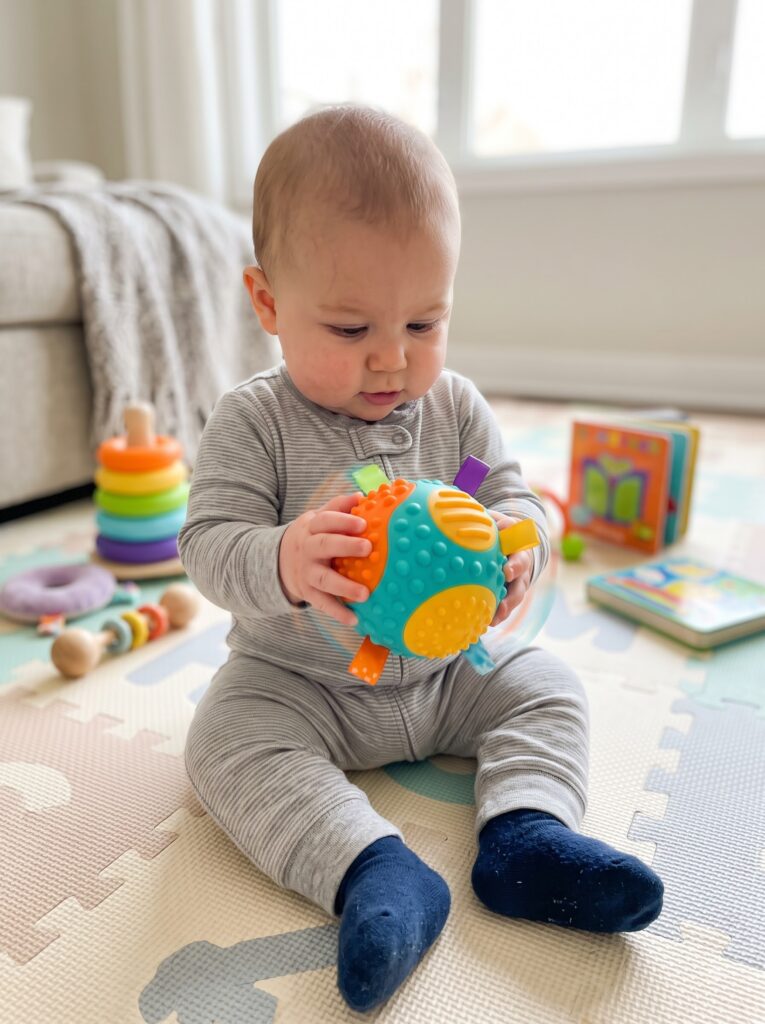
Offer a baby-safe teether or toy with a gentle, low vibration setting (designed specifically for infants) to introduce a new tactile sensation.
Vibration offers a genuinely different sensory input than static texture, and many babies find the gentle buzz soothing, especially during teething.
Only use products specifically designed and labeled safe for infant use, never adapted adult devices. Check batteries are fully sealed and inaccessible.
Safety Consideration: Discontinue immediately if baby seems distressed rather than soothed by the vibration.
43. Outdoor Grass and Blanket Time
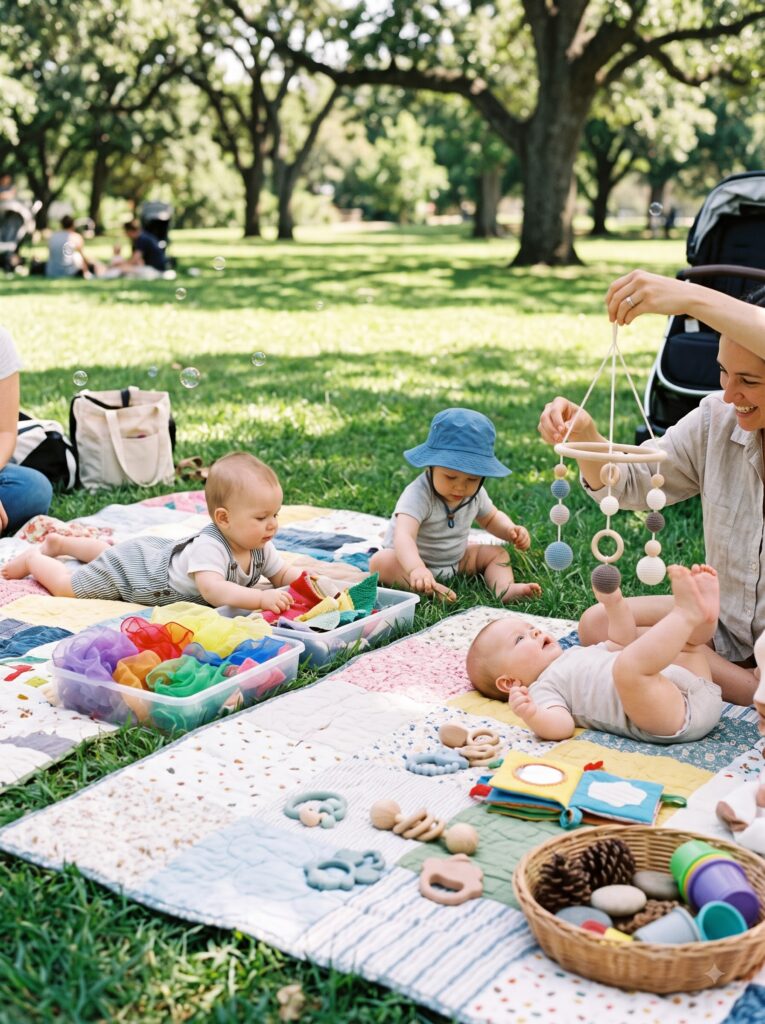
Lay a blanket on the grass and let baby’s bare feet or hands touch the grass just beyond the blanket’s edge under close supervision.
This introduces a completely different outdoor texture and temperature that indoor play simply can’t replicate.
Check the lawn beforehand for pesticides, sharp debris, or biting insects. This activity is entirely free and works well as part of a regular outdoor routine.
Why You’ll Love It: Fresh air paired with sensory play tends to improve both nap quality and mood afterward.
44. Balloon Static Hair Play (For Watching, Not Touching)
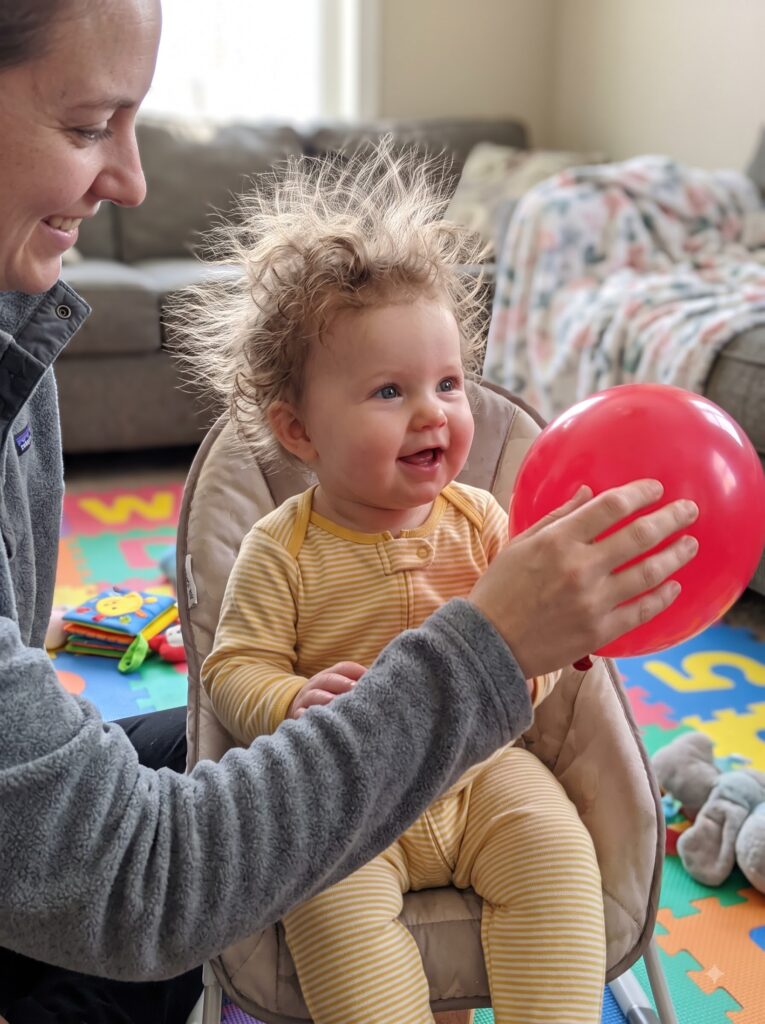
Rub a balloon gently on your own hair to create static, then let baby watch the visual effect as your hair lifts — a fun, safe way to introduce a surprising visual phenomenon.
This is more observational than hands-on, making it a nice low-stakes option when you want engagement without a mess or safety concern.
Keep the balloon itself away from baby directly given standard balloon choking risks. This is genuinely free and takes seconds to set up.
Quick Tip: Babies often respond more to your exaggerated reaction and laughter than the static itself — ham it up a little.
45. Sensory Story Time with Props
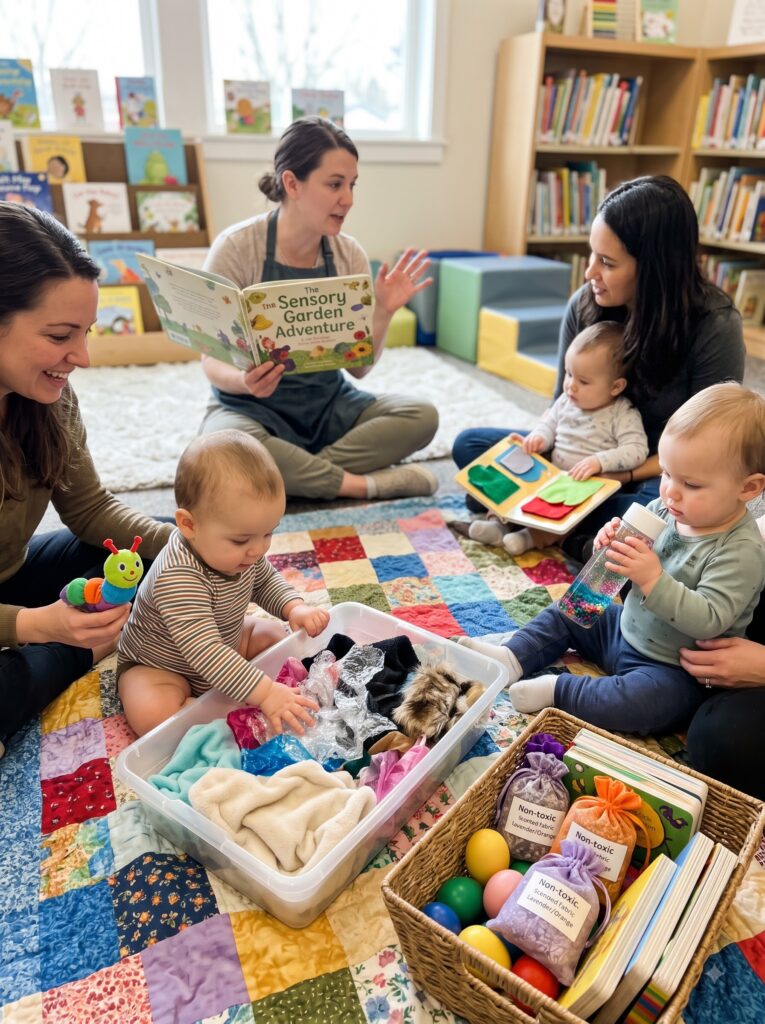
While reading a simple book, incorporate a matching prop — a soft toy sheep for a farm book, a scarf for a “wind” scene — that baby can touch as you read.
This turns passive listening into an interactive, multisensory experience that tends to hold attention significantly longer than reading alone.
Keep props simple and story-relevant rather than overwhelming baby with too many objects at once. Secondhand props or household stand-ins work just as well as matching toy sets.
Pro Tip: Use the same prop consistently across readings so baby starts to anticipate and reach for it.
46. Warm and Cool Object Comparison
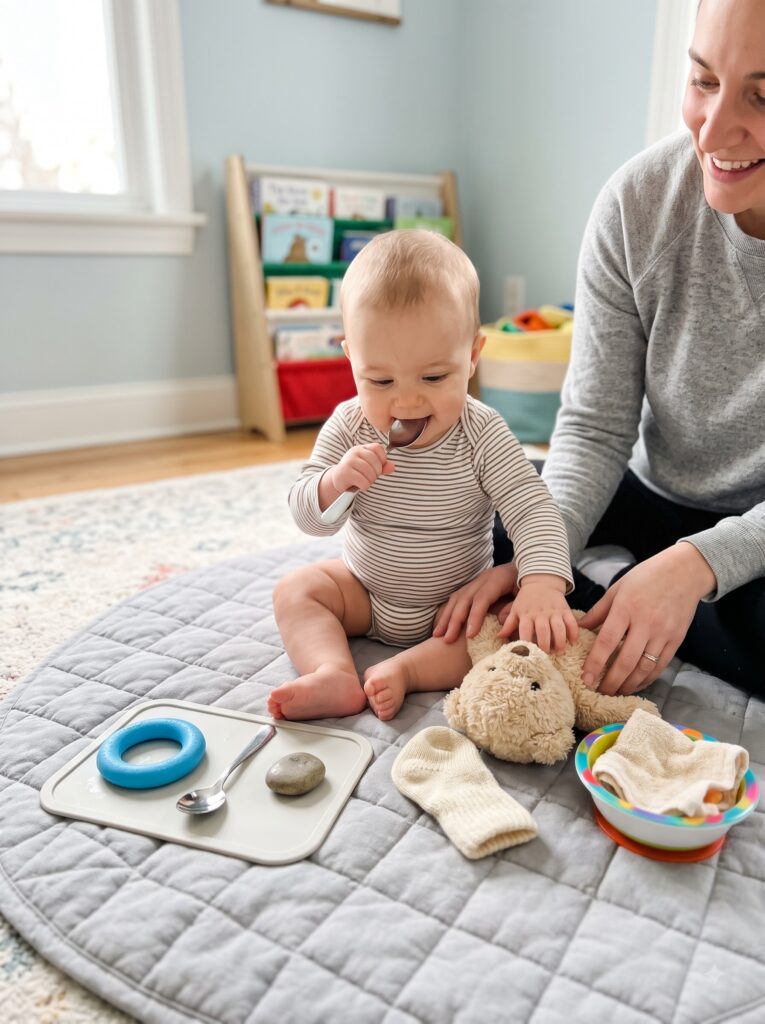
Offer baby two similar objects at different temperatures — a room-temperature toy and one that’s been briefly chilled (not frozen) in the fridge — to compare.
This introduces temperature as a distinct sensory category, building on the ice cube concept in a gentler, more controlled way.
Keep the temperature difference mild; nothing should be cold enough to feel uncomfortable against skin. Test the object against your own inner wrist first.
Common Mistake: Using anything freezer-cold directly against skin, which can be uncomfortable or even mildly harmful for sensitive baby skin.
47. DIY Drum Kit from Kitchenware
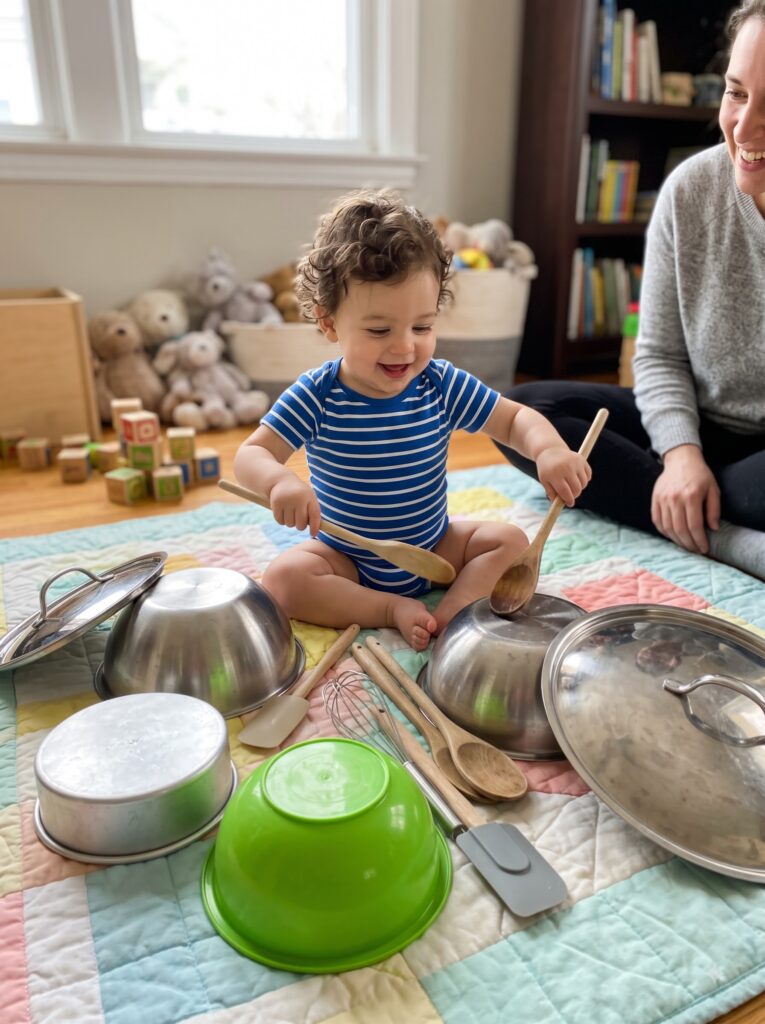
Line up a few overturned pots, bowls, and a wooden spoon “drumstick” for baby to bang and experiment with different pitches and sounds.
This activity is a reliable favorite because it’s loud, cause-and-effect driven, and endlessly available using things already in your cupboard.
Choose lightweight bowls that won’t hurt if accidentally dropped on little feet. This costs nothing and can be set up in under a minute.
Quick Tip: Sit nearby and take turns “drumming” — babies love a call-and-response rhythm game.
48. Sensory Walk with Textured Socks
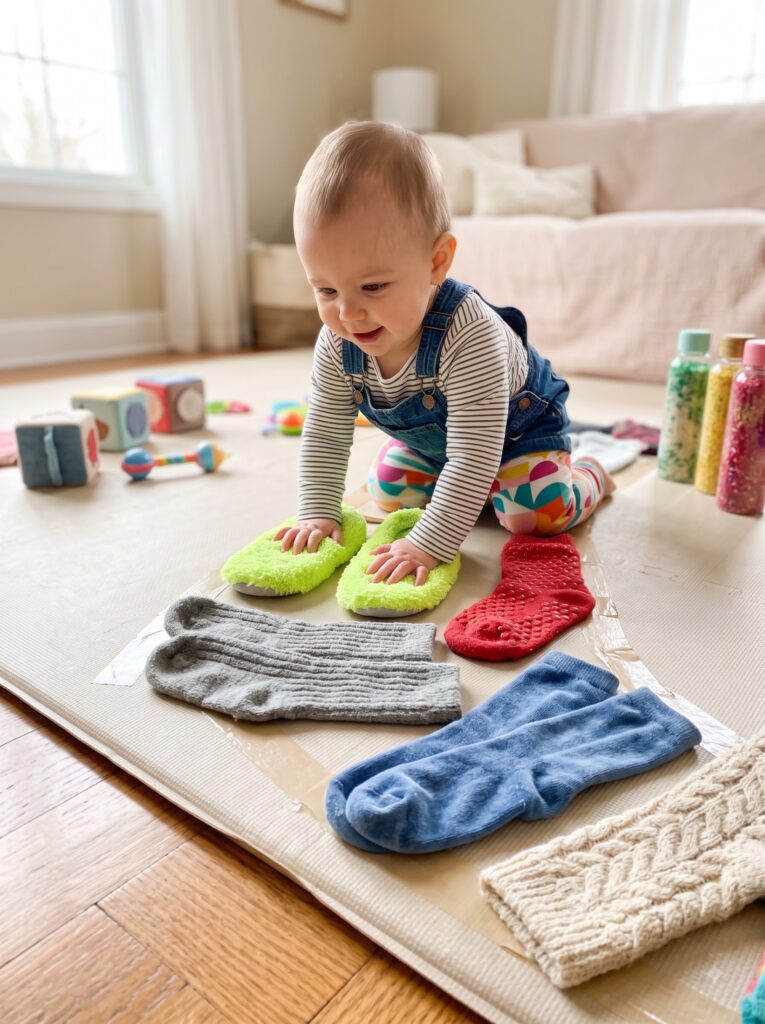
Slip baby’s feet into textured grip socks or let them go barefoot across a few different indoor surfaces — carpet, tile, a bath mat — while cruising or crawling.
This builds foot sensory awareness, which plays a surprisingly important role in balance and early walking development.
Keep floors clean and free of small debris during barefoot exploration. This requires no purchase at all if you simply use existing flooring in your home.
Why You’ll Love It: It’s an activity that happens naturally throughout the day without any dedicated “sensory time” required.
49. Gentle Face Painting with Pudding
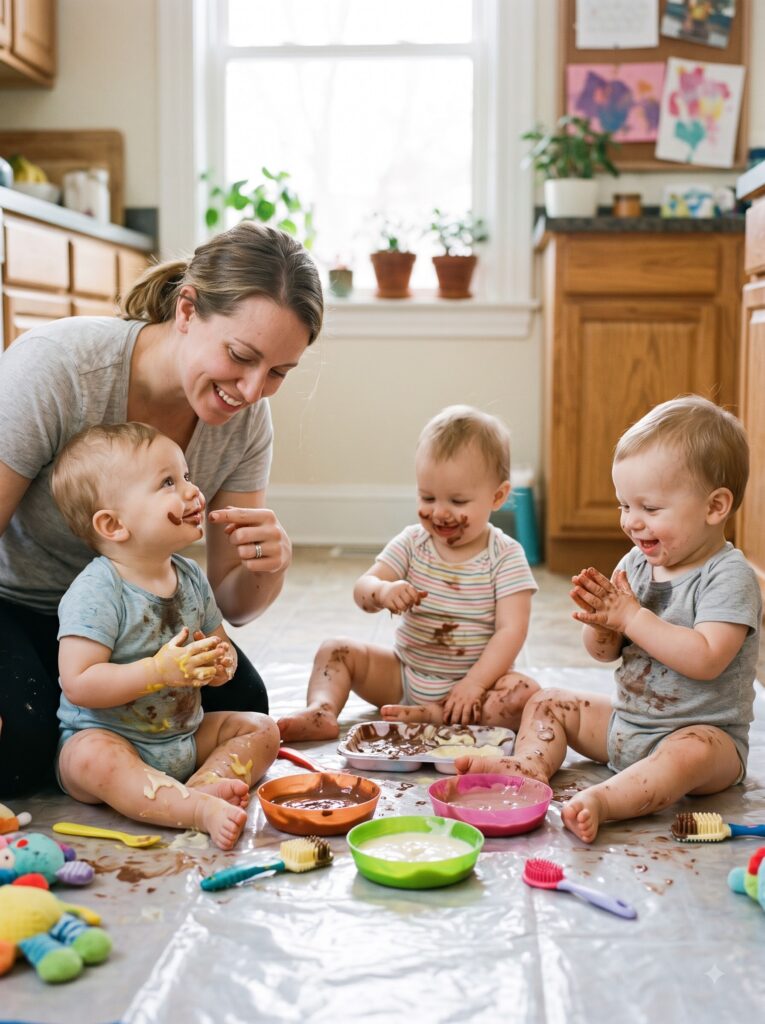
Let an older baby (10+ months, no allergies) explore a small dab of pudding or yogurt on a high chair tray, smearing it across the surface or even their own hands and face.
This is a favorite low-stakes way to build tolerance for messy textures, which can sometimes translate to less resistance around messy eating too.
Keep a warm washcloth on standby, and stick to plain, allergen-checked ingredients. This is essentially free using pantry staples you likely already have.
Common Mistake: Introducing this before checking for known allergies to dairy or specific flavorings used in the pudding.
50. Nature Sound Listening Time
Play recordings of rain, ocean waves, or birdsong softly in the background during quiet play, and pause occasionally to point out and name each sound.
This builds early auditory discrimination and often has a calming effect that makes it a solid addition to wind-down or nap routines.
Keep volume gentle — a soft background level rather than anything startling or overly loud. This is free using any streaming service or a simple sound machine you likely already own.
Pro Tip: Pair sounds with matching picture books (rain, ocean, forest) to reinforce the connection between sound and image.
Frequently Asked Questions
What age can babies start sensory activities?
You can begin gentle sensory activities from birth — high-contrast visuals, soft textures, and calm sounds are all appropriate for newborns. More hands-on, exploratory activities generally work best from around 3–4 months onward, once head control improves.
How often should I do sensory play with my baby?
There’s no strict rule, but even 10–15 minutes of dedicated sensory play a few times a day is plenty. Babies also get significant sensory input from everyday routines like bath time and meals.
Are sensory bins safe for babies who still put everything in their mouth?
Loose-material sensory bins (rice, beans, water beads) should wait until your baby has largely outgrown the intense mouthing phase, typically closer to 10–12 months, and should always be closely supervised.
What if my baby seems overwhelmed or cries during sensory play?
Some babies are more sensitive to certain textures, sounds, or movements, and that’s completely normal. Pull back, offer comfort, and try a gentler version of the activity another day rather than pushing through distress.
Do I need to buy special sensory toys?
Not at all. Many of the most effective sensory activities for babies use household items like kitchenware, fabric scraps, and cardboard boxes rather than store-bought toys.
Can sensory play help with fussy eating later on?
Some occupational therapists suggest that early comfort with varied textures — through touch and smell exploration — may support more flexible eating habits down the line, though every child is different.
Is messy play really necessary, or can I stick to “clean” sensory activities?
Messy play isn’t required, but it does offer unique tactile benefits. If mess is a genuine barrier for you, sealed sensory bags and mirror or sound-based activities offer plenty of value without the cleanup.
How do I know if my baby has sensory processing differences?
If your baby consistently shows extreme distress with common textures, sounds, or movements well beyond typical fussiness, it’s worth mentioning to your pediatrician, who can refer you to an occupational therapist if needed.
Can twins or multiple babies do sensory activities together?
Yes, most of these activities adapt well to siblings or twins with just a bit more supervision and, ideally, duplicate materials to reduce grabbing and frustration.
What’s the single easiest sensory activity to start with today?
A texture basket or a simple foil ball takes under a minute to set up and requires nothing you don’t already have at home, making it a great starting point for sensory-play beginners.
Final Thoughts
With 50 options on this list, you’ve got more than enough sensory activities for babies to fill weeks of play without ever feeling repetitive. Some of the standout favorites — the texture basket, edible finger paint, sensory bottles, and bubble blowing — are worth keeping in regular rotation simply because they’re low-effort and consistently well-loved.
Remember, there’s no need to do all 50, or even most of them. Pick a handful that fit your baby’s age, your household’s mess tolerance, and your own energy level, and build from there.
At the end of the day, sensory play doesn’t need to be elaborate to be meaningful. Whether it’s a frozen fruit feeder during a teething afternoon or five quiet minutes with a crinkly foil ball, you’re giving your baby exactly what their growing brain needs — and giving yourself a little breathing room too.
Read More: 10 Activities to Do with Your Infant (0-6 Months) for Early Development and Bonding