
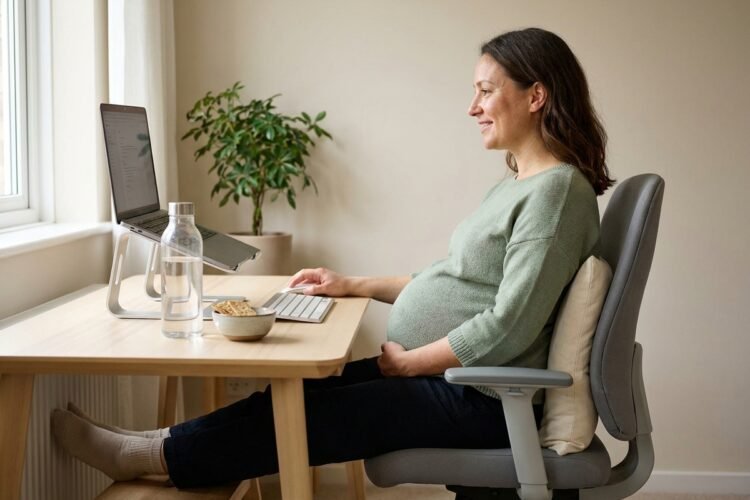
Sitting at a desk sounds easy until you’re pregnant. Your back aches by lunch. Your feet swell by three o’clock. Your chair suddenly feels like it was built for someone else. The good news is that small changes to your setup and routine can make a big difference. This guide walks you through each one, from chair height to break habits to asking your employer for help.
Quick answer: To stay comfortable at a desk job while pregnant, support your lower back, keep your feet flat or on a footrest and raise your screen to eye level. Stand up and move often. Keep water and snacks within reach. Adjust your setup as your belly grows, and ask your employer for changes if you need them.
Why a Desk Job Gets Harder During Pregnancy
A desk job gets harder during pregnancy because your body changes while your workstation stays the same. As your uterus grows, your center of gravity shifts forward. Your abdominal muscles stretch and weaken. That puts extra strain on your lower back.
The American College of Obstetricians and Gynecologists explains that back pain during pregnancy often worsens as the day goes on. Extra weight adds work for your muscles and joints. Sitting still for hours can make that strain feel even stronger.
Other common desk job complaints include:
- Swollen feet and ankles after long periods of sitting
- Needing the bathroom more often
- Fatigue, especially in the first and third trimesters
- Nausea that makes a long meeting feel endless
- A growing belly that pushes you farther from your keyboard
None of these mean you’re doing anything wrong. They’re signs your desk needs to change along with you.
How to Set Up Your Office Chair During Pregnancy
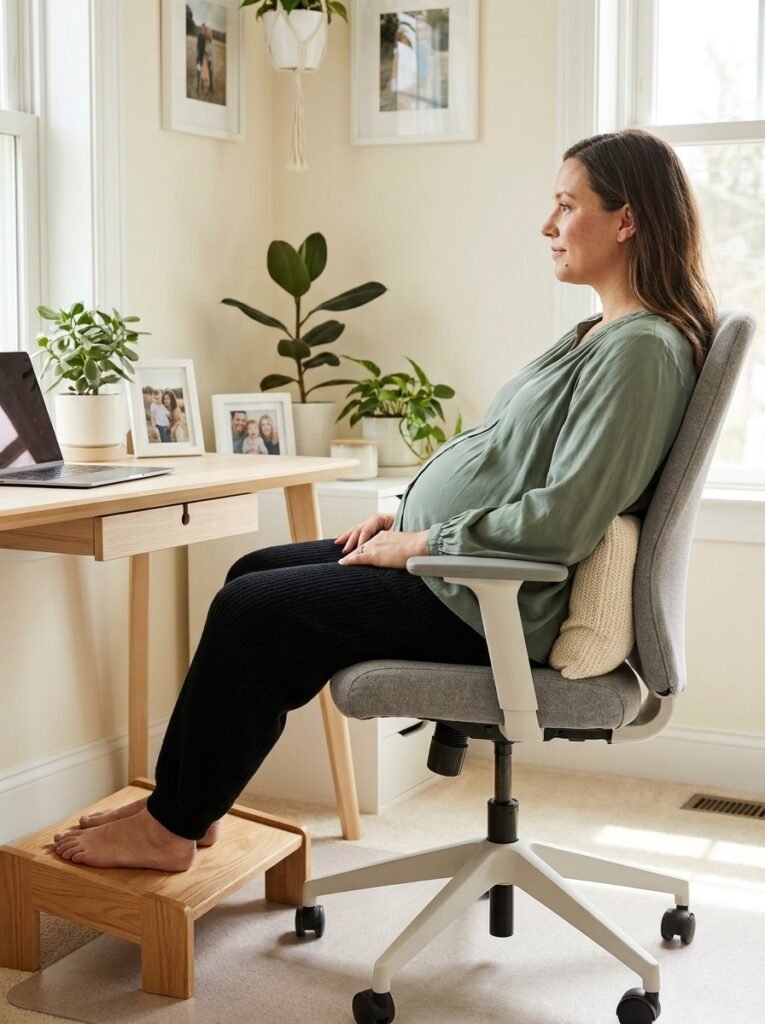
The best chair setup during pregnancy supports your lower back and keeps your hips and knees at a comfortable angle. You don’t need an expensive new chair. Most standard office chairs can work well with a few adjustments.
Support Your Lower Back
Lower back support is the most helpful chair change during pregnancy. ACOG suggests using a chair with good lumbar support or placing a small pillow behind your lower back. A rolled towel works too.
Sit all the way back in the seat so the backrest can do its job. If you perch on the front edge, your back muscles do all the work. Many pregnant people also find a slight recline more comfortable than sitting bolt upright. OSHA describes a reclined sitting posture where the torso leans back slightly from the thighs while the neck stays straight.
Get Your Feet and Knees Right
Your feet should rest flat on the floor or on a footrest. Your knees should sit at about the same level as your hips or a little lower. If your chair is too high, your feet dangle and pressure builds behind your thighs.
A footrest helps if you’re shorter or your desk is fixed at a high height. A sturdy box or a stack of thick books works fine. Try to avoid crossing your legs for long stretches, since that can feel uncomfortable as swelling increases.
Make Room for Your Belly
Your belly will eventually push you away from the desk. That makes you lean forward and reach for the keyboard, which strains your shoulders and upper back. Lowering your chair armrests or removing them can let you scoot closer. You can also widen your knees slightly to give your belly more room.
Where to Place Your Screen and Keyboard
Place your monitor so the top of the screen sits at or just below eye level. Keep your keyboard close enough that your elbows stay near your sides. This setup helps your head, neck and shoulders stay relaxed.
The OSHA computer workstation positions guide describes a neutral posture. Your head is balanced over your torso. Your shoulders are relaxed. Your wrists stay in line with your forearms. That advice applies to everyone, but it matters more when your posture is already shifting.
Working From a Laptop or at Home
Laptops are tough during pregnancy because the screen and keyboard are attached. If you look down at the screen, your neck bends forward. If you raise the laptop, your arms reach up.
The fix is to separate them:
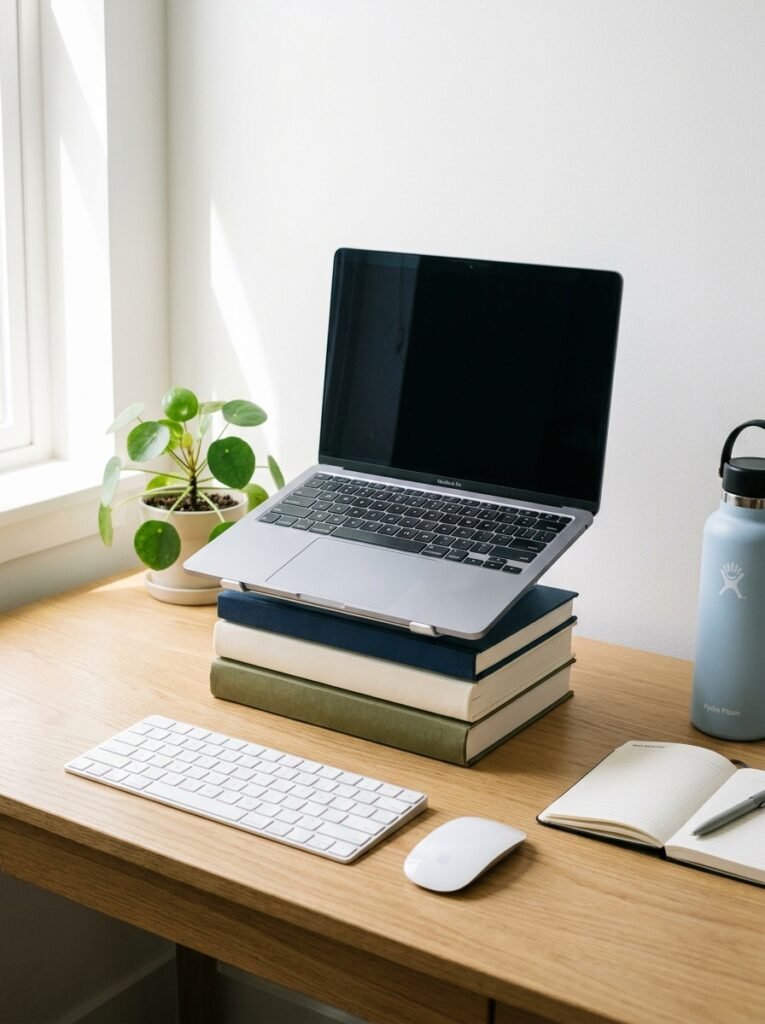
- Raise the laptop on a stand or a stack of books so the screen is near eye level.
- Use a separate keyboard and mouse at elbow height.
- Avoid working from the couch or bed for long periods.
- Pick a chair with a backrest instead of a stool or kitchen bench.
Remote workers often have more freedom here. You can switch between a desk, a counter for standing and a supportive chair throughout the day.
How Often to Get Up and Move at Work
Getting up and moving regularly is one of the easiest ways to feel better at a desk job while pregnant. OSHA notes that sitting still in the same posture for long periods isn’t healthy. It recommends standing up and walking around for a few minutes periodically.
One simple habit is to set a reminder every 30 to 60 minutes. When it goes off, stand, stretch or take a short walk. Bathroom trips and water refills count too. Your provider can tell you if anything about your pregnancy changes this advice.
A Simple Desk Movement Routine
These gentle moves fit into a short break. Skip anything that causes pain, and check with your provider if you have activity restrictions.
- Ankle circles: Lift one foot and draw slow circles in each direction. This keeps blood moving in your lower legs.
- Seated shoulder rolls: Roll your shoulders up, back and down several times.
- Standing calf raises: Hold the desk for balance and rise slowly onto your toes.
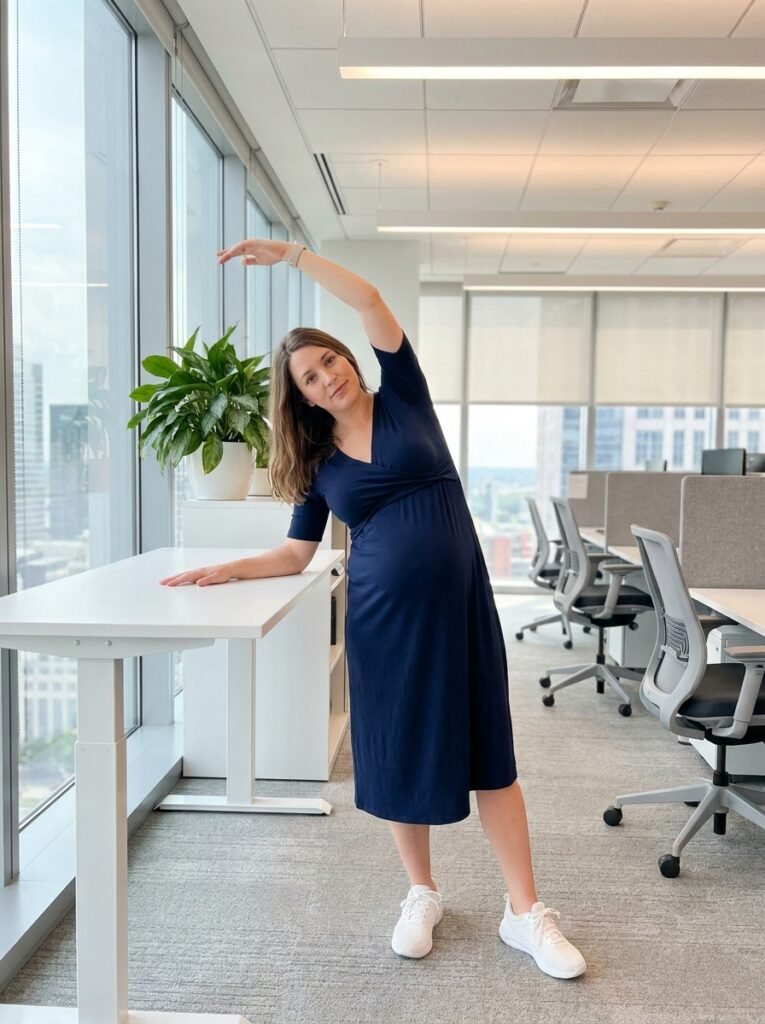
- Gentle side stretch: Stand tall and reach one arm overhead, then switch sides.
- Short walk: Walk to the water cooler, the restroom or around your home.
You can also move more without extra breaks. Stand during phone calls. Walk to a coworker’s desk instead of sending a message. Take some video meetings standing at a counter.
Desk Job Comfort Tips by Trimester
Each trimester brings different challenges at work. Adjusting your routine as you go keeps small problems from building up.
First Trimester: Nausea and Fatigue
The first trimester at a desk job is often about managing nausea and tiredness. Your belly may not show yet, but you might feel exhausted by midafternoon.
- Keep plain snacks like crackers or pretzels in your drawer.
- Eat small amounts often rather than waiting for lunch.
- Keep a water bottle on your desk and sip through the day.
- Schedule demanding tasks for the time of day you usually feel best.
- Know the quickest route to the restroom.
Second Trimester: Growing Belly and Shifting Posture
The second trimester is the best time to set up your workstation for the months ahead. Many people have a bit more energy now. Your belly is growing, so posture changes start to show.
- Add lumbar support if you haven’t yet.
- Lower or remove armrests so you can sit closer.
- Raise your screen if you notice yourself looking down.
- Start your movement breaks now so they become a habit.
Third Trimester: Swelling and Getting Up
The third trimester at a desk job usually brings swelling, back pain and more trouble standing up. Getting out of a chair can take real effort.
- Use a footrest and shift your feet often to help with swelling.
- Choose a chair with a firm seat over a deep, soft one.
- Scoot to the front edge of the seat before standing up.
- Wear low heeled, supportive shoes. ACOG recommends shoes with good arch support over high heels.
- Keep frequently used items within arm’s reach so you don’t twist or bend.
If you need to pick something up, squat down with your knees bent and your back straight. Avoid bending at the waist.
Pregnancy Desk Kit Checklist
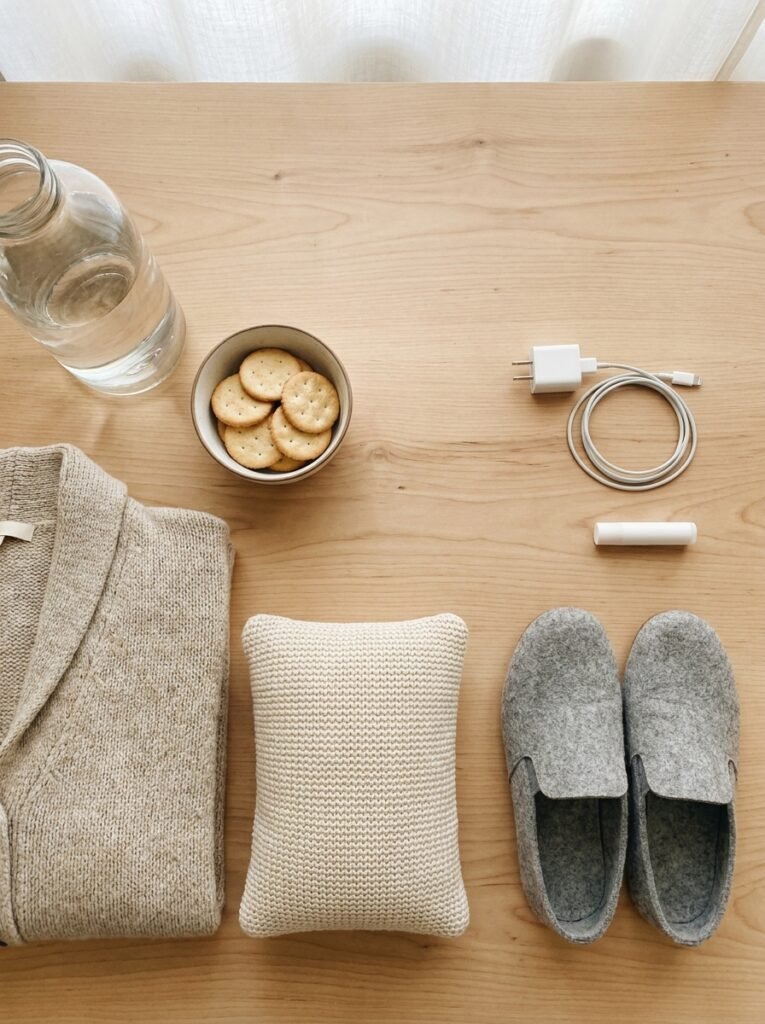
A pregnancy desk kit keeps your comfort items in one place. Pack it once and refill it each week.
Comfort items
- Small pillow or rolled towel for lower back support
- Footrest, box or sturdy stack of books
- Cardigan or light layer, since body temperature can change
- Comfortable shoes to swap into at your desk
Food and drink
- Large reusable water bottle
- Plain crackers or pretzels
- Protein snacks you tolerate well
- Peppermint tea or ginger candies if they help your nausea
Practical items
- Phone charger
- Hand lotion and lip balm
- A spare top in case of spills
- Your provider’s phone number saved in your phone
If you like printable lists, the Planners & Checklists section on Happy Parenting Life has more organizing ideas for busy families.
Budget Desk Fixes Using Things You Already Own
You don’t need to buy special pregnancy furniture to get comfortable. Many helpful fixes use things you already have at home.
| Problem | Budget fix |
|---|---|
| Lower back ache | Rolled bath towel or throw pillow behind your back |
| Feet don’t reach the floor | Sturdy shoebox, step stool or stack of books |
| Screen too low | Laptop on a stack of hardcover books |
| Sitting too far from the desk | Remove or lower chair armrests |
| Seat feels too hard | Folded blanket on the seat |
| Swollen feet | Slip on shoes and a footrest to shift your position |
Test each change for a day or two. If something makes you less comfortable, take it away and try another option.
How to Ask Your Employer for Changes at Work
You can ask your employer for workplace changes related to pregnancy. In the United States, the Pregnant Workers Fairness Act applies to many employers with 15 or more employees. It requires them to provide reasonable accommodations for known pregnancy limitations unless doing so causes undue hardship.
The U.S. Equal Employment Opportunity Commission lists examples in its guide to the Pregnant Workers Fairness Act. These include:
- More frequent or longer breaks to drink water, eat, rest or use the restroom
- A stool, a different chair or a way to work while standing
- Changes to your schedule or a later start time
- Time off for prenatal appointments
- Telework when it fits the job
Tips for making the request:
- Write down the specific changes you need and why.
- Start with your manager or human resources, whichever your workplace prefers.
- Put your request in writing, even a short email, so there’s a record.
- Ask your provider for a note if your employer asks for documentation.
This is general information, not legal advice. Your state may also have its own pregnancy accommodation laws.
Some coworkers love to celebrate a growing family. If your team wants to plan something, these baby shower ideas can adapt well to an office setting.
Common Desk Job Mistakes During Pregnancy
Small habits can add up to a lot of discomfort. Watch for these common mistakes.
- Sitting for hours without a break. Long stretches of stillness can make swelling and stiffness worse.
- Perching on the edge of the chair. Your backrest can’t support you if you don’t use it.
- Skipping water to avoid bathroom trips. Staying hydrated matters more than saving a few minutes.
- Waiting until the third trimester to adjust. Setting up early is easier than fixing pain later.
- Working from the couch. Soft cushions and low screens strain your neck and back.
- Pushing through pain. Discomfort is a signal to change something, not to ignore it.
When to Call Your Provider
Some symptoms need prompt medical attention, even if they first show up at your desk. The CDC’s list of urgent maternal warning signs includes these:
- Extreme swelling of your hands or face
- Swelling, pain or redness in one leg, often in the calf
- A headache that won’t go away or gets worse
- Vision changes, such as flashes of light or blind spots
- Trouble breathing or chest pain
- Severe belly pain
Call your provider right away if you notice any of these. For chest pain, trouble breathing or another emergency, call 911. Trust your instincts. If something doesn’t feel right, it’s worth a call.
Frequently Asked Questions
Is it bad to sit at a desk all day while pregnant?
Sitting at a desk all day isn’t harmful by itself, but long periods without moving can increase back pain, stiffness and swelling. Breaking up sitting time with short walks, stretches and standing tasks usually helps. A supportive chair and a footrest also reduce strain. If your provider has given you activity restrictions, follow that guidance first.
What is the best way to sit at a desk when pregnant?
The best way to sit at a desk when pregnant is with your lower back supported and your feet flat on the floor or a footrest. Keep your knees about level with your hips. Raise your screen to eye level, and keep your keyboard close so you don’t reach forward. A slight recline may feel more comfortable than sitting straight up.
Should I use a standing desk while pregnant?
A standing desk can help, but switching between sitting and standing usually works better than standing all day. Standing for long periods can also cause tired legs and swelling. If you stand, rest one foot on a low box or footrest and change feet often. Wear supportive shoes and sit down when you feel tired.
Is it safe to use a yoga ball as a desk chair during pregnancy?
A yoga ball can be fine for short periods, but it shouldn’t replace a supportive chair for a full workday. A ball has no backrest, so your back muscles tire quickly. Balance can also feel less steady later in pregnancy. If you want to use one, keep sessions short and ask your provider whether it suits you.
How can I reduce swollen feet at my desk while pregnant?
To reduce swollen feet at your desk, change position often and avoid sitting still for long stretches. Use a footrest, do ankle circles and take short walks. Comfortable shoes help too. Mild swelling is common in pregnancy. Sudden or severe swelling, especially in your face, hands or one leg, needs a call to your provider.
Make Your Desk Work for Your Body
A desk job during pregnancy doesn’t have to mean daily aches. Support your back, raise your screen and keep your feet supported. Move often and keep your kit stocked. Revisit your setup every few weeks as your body changes, and speak up when you need workplace changes.
Pick one fix from this guide and try it at your desk tomorrow. Then save this page so you can come back to the checklist as each trimester arrives.