
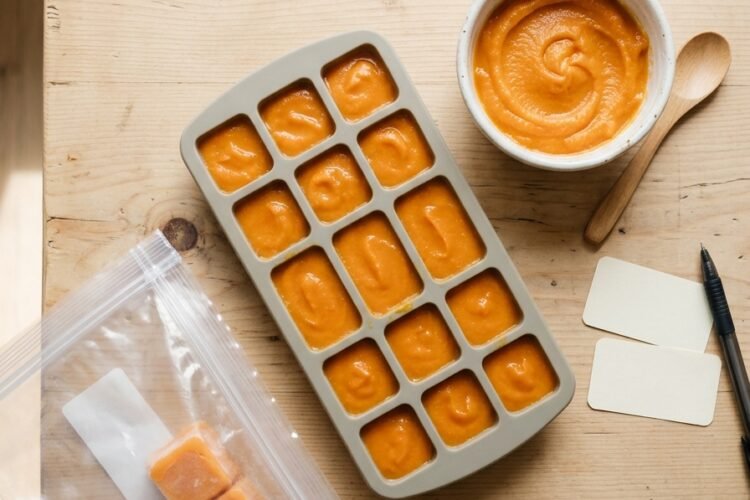
Making baby food at home saves money and gives you control over every ingredient. The harder part comes after the blender stops. Homemade purees contain no preservatives and are not processed like jarred food. They spoil faster, so storage rules matter.
This guide explains how to store homemade baby food safely. You will find a storage time chart, a step-by-step freezing method and clear thawing rules. You will also learn which containers work well, how to label your freezer and which mistakes to avoid.
Homemade Baby Food Storage Times at a Glance
Cooked fruit and vegetable purees keep for two days in the refrigerator and about one month in the freezer. Meat, egg yolk and mixed meat dishes keep for only one day in the refrigerator. The chart below follows guidance from NDSU Extension, which draws on FoodSafety.gov.
| Type of homemade baby food | Refrigerator | Freezer |
|---|---|---|
| Cooked fruit and vegetable purees | 2 days | 1 month |
| Cooked meat or egg yolk purees | 1 day | 1 month |
| Meat and vegetable mixtures | 1 day | 1 month |
| Thawed food that was frozen | 1 day | Do not refreeze |
Start counting on the day you make the puree. Write that date on every container. A label removes the guesswork when the week gets busy.
Some websites list longer freezer times, such as two or three months. Guidance varies from source to source. This article uses the one month window from NDSU Extension because it is the more cautious choice for a baby.
Why Homemade Baby Food Needs Extra Care
Homemade baby food spoils faster than store-bought jars because it has no preservatives and is not commercially processed. Bacteria can grow quickly in moist, soft foods. Good habits lower that risk.
Three habits matter most. Keep your hands, counters and equipment clean. Cool and refrigerate food promptly. Throw away any puree that has sat out for more than two hours. Michigan State University Extension advises discarding baby food that is not eaten within that time.
How to Prepare Baby Food for Storage
Safe storage starts in the kitchen. Cook ingredients thoroughly, puree them smooth and cool them before you portion. Then refrigerate or freeze the portions right away.
- Clean first. Wash your hands. Wash counters and equipment with soap and water, then sanitize them as the NDSU guide describes.
- Cook fully. Cook vegetables and hard fruits such as apples until soft. Cook meat to a safe temperature. NDSU lists 165°F for chicken and 160°F for beef.
- Puree smooth. Thin the food with water, breast milk or formula if needed. Skip salt, sugar and other seasonings.
- Cool and divide. Split the puree into small portions. Refrigerate unused portions right away, or freeze them once they have cooled.
Need something to practice on? Try our recipe for homemade pumpkin puree for babies. If you want a protein and iron focus, see these iron-packed puree recipes. Always match the storage times in any recipe to the chart above, even when a recipe suggests longer.
How to Freeze Homemade Baby Food in Ice Cube Trays
Freezing in ice cube trays gives you small, single-serving portions that thaw quickly. Pour cooled puree into clean trays, cover them and freeze until solid. Then move the cubes into a labeled freezer container.
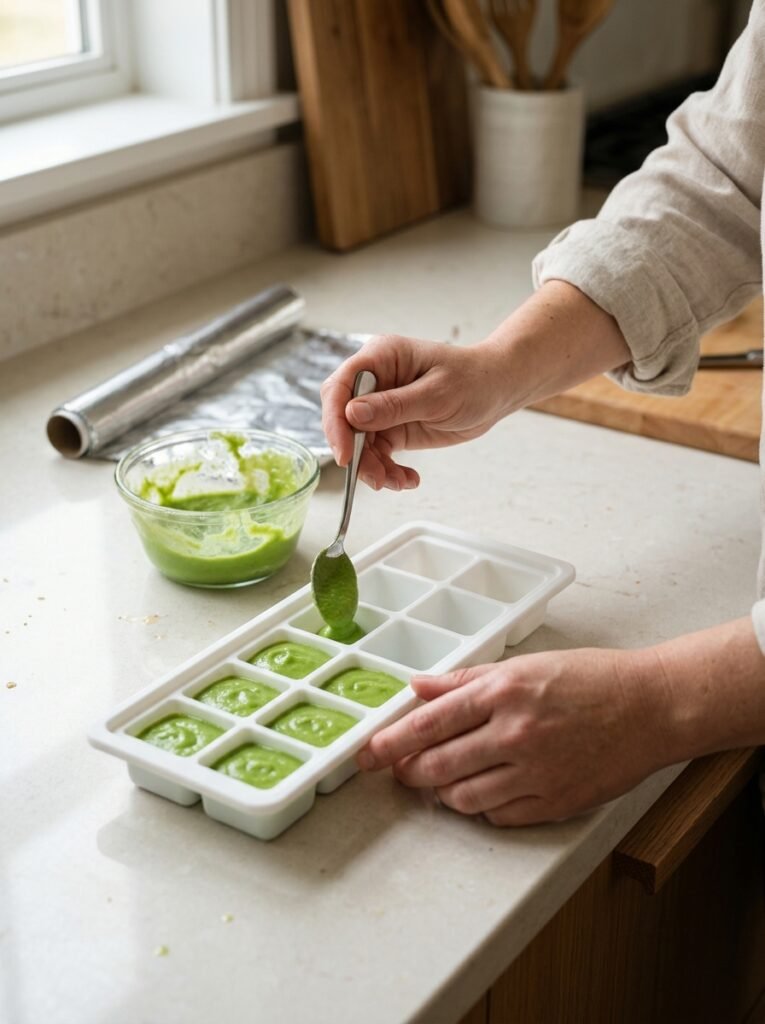
- Fill the tray. Spoon cooled puree into clean ice cube trays. Many trays hold about one ounce per cube. To check yours, fill one well with water and pour it into a measuring cup.
- Cover it. Use foil, plastic wrap or a tight-fitting lid.
- Freeze until solid. Leave the tray flat and level.
- Transfer the cubes. Pop them out and move them into a food-grade freezer container or freezer bag.
- Label the container. Write the food name and the date.
No tray? Use a cookie sheet instead. Cover the sheet with plastic wrap or foil, then drop small spoonfuls of puree onto it. Freeze until solid and move the portions to a freezer container. Both NDSU and Michigan State describe this method.
Keep each food in its own bag. That way you can grab exactly what you need without digging through a mixed pile.
Which Containers Work Best for Storing Baby Food?
The best container is clean, airtight, freezer safe and sized for one or two servings. A Mississippi State University Extension guide suggests shallow, thin containers because they thaw and warm more easily. The same guide warns against reusing store-bought baby food containers for homemade food.
| Container | Works well for | Notes |
|---|---|---|
| Covered ice cube trays | Freezing single portions | Cover tightly. Move cubes to a bag once solid. |
| Freezer bags | Storing frozen cubes long term | Use food-grade freezer bags. Press out extra air. |
| Small lidded containers or glass jars | Refrigerator storage | Choose sizes for one meal. Leave a little room at the top if freezing, because food expands. |
| Reusable pouches | Thawed puree for outings | Follow the maker’s freezer and cleaning instructions. |
Whatever you choose, wash containers well between batches. Cover everything so odors from other freezer foods stay out.
How to Label and Organize Your Baby Food Freezer
A good label shows two things: the food name and a use by date. Write the use by date, not just the date you made the food. With a one month window, a puree made on October 28 should be used by November 28.
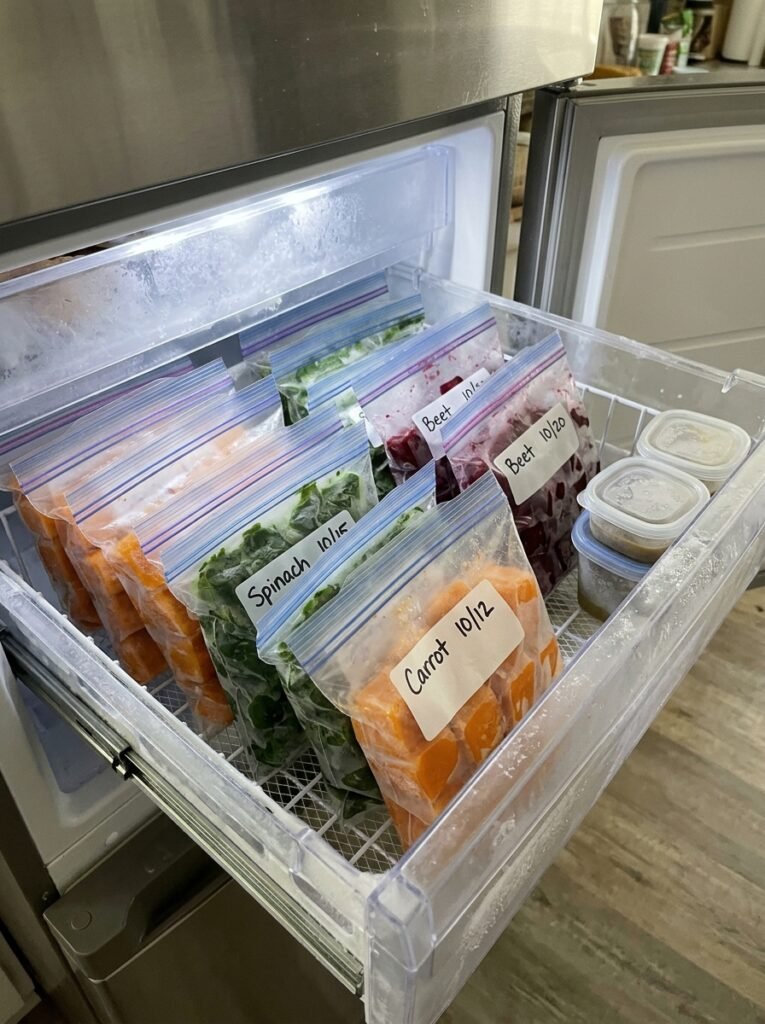
A few simple habits keep the freezer easy to use.
- Place the newest bags at the back and the oldest at the front.
- Keep one bag per food so cubes do not mix.
- Tape a short list of what you have inside a cabinet or on the freezer door.
- Cook smaller batches every two weeks instead of one large batch. This keeps every cube inside the one month window.
A simple two-week batch might include two vegetable purees, one fruit puree and one protein puree. Freeze each one as soon as it cools.
How to Thaw Frozen Baby Food Safely
The refrigerator is the safest place to thaw frozen baby food. Move the portion you need from the freezer to the refrigerator the night before. Michigan State University Extension also lists stove top and microwave thawing, and the Mississippi State guide adds a cold running water method. Never thaw baby food on the counter.
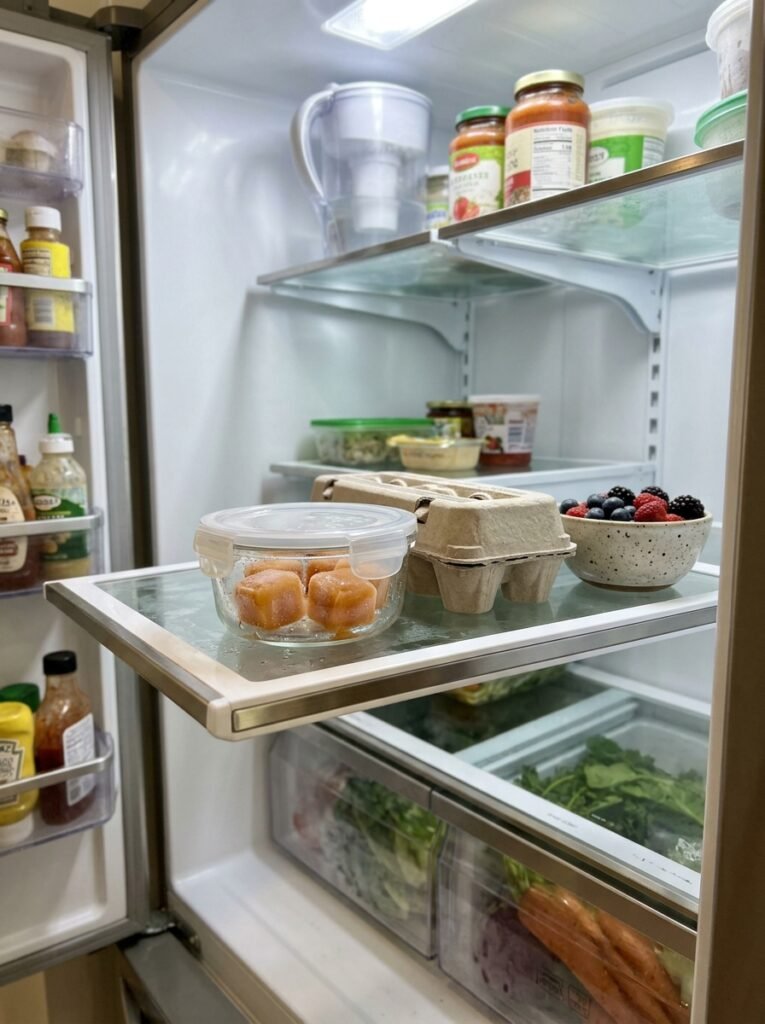
Follow these rules every time:
- Take out only what your baby will eat at one meal.
- Use thawed food within one day.
- Never refreeze baby food.
- Plan ahead. Moving cubes to the refrigerator about 24 hours before serving works well.
How to Reheat and Serve Stored Baby Food
Stir the food well and check the temperature before serving. Warm it gently until it is just warm, not hot. Uneven heating can leave hot spots, so stir again before the first spoonful.
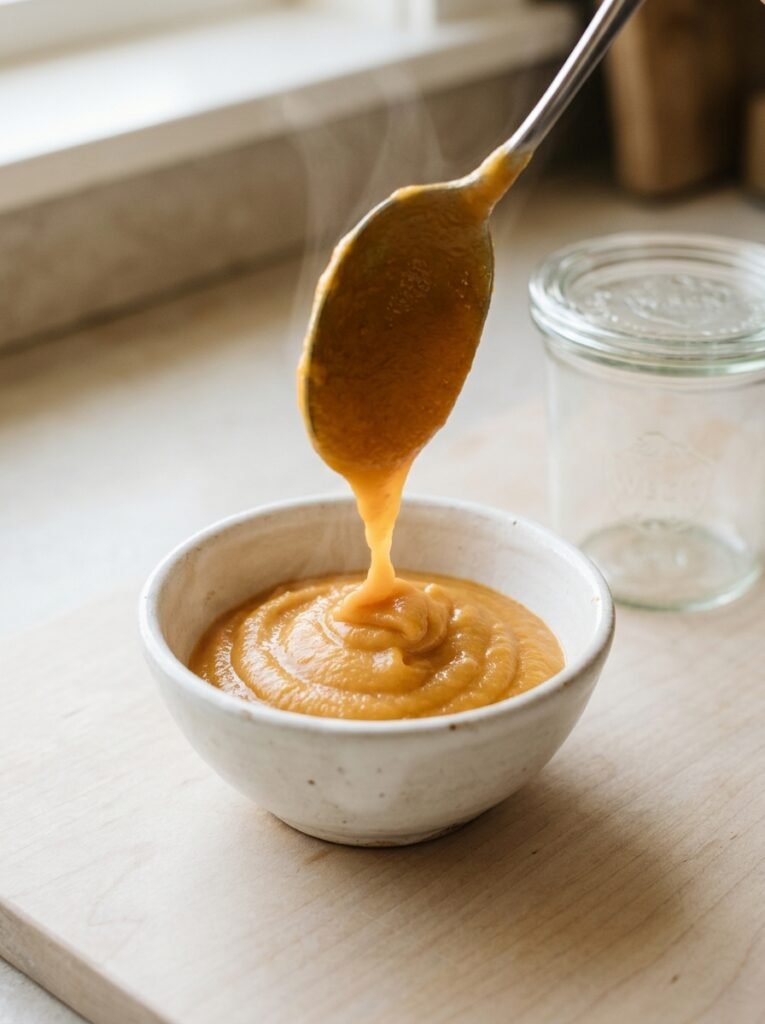
Spoon one portion into a clean bowl and feed from the bowl. The rest of the food stays untouched in its container. Throw away anything left in the bowl after the meal.
Ripe bananas and avocados are best mashed right before serving, as NDSU notes. For outings, keep items such as yogurt and diced fruit in a cooler with ice.
Common Baby Food Storage Mistakes
The most common mistakes involve time, temperature and refreezing. Each one is easy to fix.
- Leaving puree out too long. Discard any food that has sat out for more than two hours.
- Freezing large blocks. Big portions thaw slowly and lead to waste. Freeze small cubes.
- Thawing on the counter. Use the refrigerator or another safe method.
- Refreezing thawed food. Plan portions so you never need to.
- Reusing store-bought jars. Use clean containers made for storing food.
- Skipping labels. Without dates, you cannot trust the freezer.
- Adding salt or sugar. Extension guidance says to leave seasonings out of baby food.
- Trusting smell alone. Bacteria that cause illness do not always change how food looks or smells.
Quick Storage Notes by Food Type
Meat purees keep for one day in the refrigerator, while cooked vegetable and fruit purees keep for two. The table below applies the NDSU times to common homemade purees.
| Food | Refrigerator | Freezer | Note |
|---|---|---|---|
| Cooked sweet potato, carrot or pea puree | 2 days | 1 month | Cook until soft before pureeing. |
| Cooked apple puree | 2 days | 1 month | Hard fruits such as apples need cooking. |
| Chicken or beef puree | 1 day | 1 month | Cook to a safe temperature first. |
| Chicken and vegetable blend | 1 day | 1 month | Mixtures follow the shorter meat window. |
| Banana or avocado | Mash fresh | Not covered here | Mash right before serving. |
Whole egg dishes, grains, beans and dairy are not covered by the sources used here. For those foods, check a university extension guide or ask your pediatrician.
Storage Tips for Small Freezers and Busy Weeks
You can store baby food safely even with little freezer space. A few small changes make the biggest difference.
- Use the cookie sheet method. Freeze portions flat, then stack them in one bag.
- Rotate your batches. Cook half of your supply now and half in two weeks so nothing ages past the one month window.
- Go fridge only. If you have no freezer space, cook two small batches a week instead of one large batch. That fits the two day refrigerator limit.
- Plan for the next stage. As your baby moves from purees to soft pieces, storage needs change. Our guide to healthy finger foods for babies covers what comes next.