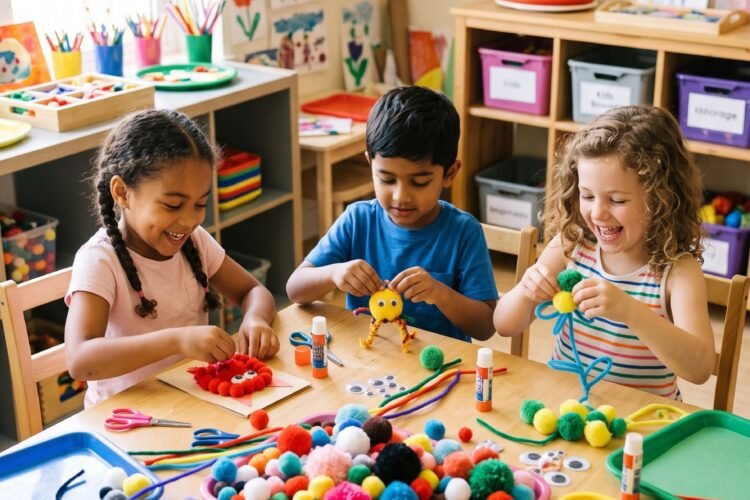
Why Pom Pom Crafts Are Magic for Kids
Few craft supplies feel like a tiny party in a bag. Pom poms are fuzzy, bright, soft, and a little ridiculous — everything small kids already love crammed into one bouncy ball. They roll, they stick, they line up, and they make everything cuter just by being nearby.
Beyond the charm, pom poms are deeply educational. Picking them up builds fine motor grip. Sorting them by color introduces early math. Stacking, gluing, and arranging them builds patience. A simple pom pom craft quietly covers hand strength, color recognition, sequencing, and creative problem solving — all in a 15-minute window.
They also stretch across ages. Toddlers can squish them into a sensory bin. Preschoolers can count, glue, and string them. Big kids can build sculptures and wrapped yarn characters. The same bag of pom poms earns its keep from age 2 to age 10.
And finally — pom poms forgive imperfect crafters. A crooked glue line disappears under fuzz. A mismatched color looks intentional. That’s exactly the kind of grace new crafters need to stay motivated. You’ll see your kid’s confidence jump with every finished piece.
Before You Start: Quick Safety Notes
A few moments of prep keeps your child’s pom pom session genuinely safe. Save this checklist near your craft kit.
Choking Risk
Small pom poms are a choking hazard for kids under 3. Always supervise craft time. Consider larger pom poms (1 inch / 2.5 cm or bigger) for toddlers. If your child still mouths objects, save the small sizes for school-age crafters only.
Googly Eyes and Small Embellishments
Googly eyes, beads, sequins, and buttons can also become choking hazards. Stick with pom poms, felt sheets, pipe cleaners, stickers, and child-safe paint for the youngest crafters. If you do use googly eyes, glue them on the day you craft, then keep them off-limits during independent play.
Hot Glue
Hot glue guns stay hot enough to burn small fingers for minutes. Use school glue, tacky glue, or fabric glue for kid-applied sticking. Reserve hot glue for adult finishing only — on wreaths, photo props, and hanging pieces.
Scissors and Tools
Kid-safe scissors only. Keep craft knives, fabric scissors, and wire cutters in the adult kit. Pom poms don’t need blades; the few projects that do can be cut ahead of time by an adult.
Workspace
Cover the table with a washable mat or kraft paper. Keep damp cloths nearby. Pom poms roll, glitter flies, and glue drips — that’s fine, but only if the floor underneath is ready.
Allergies
Most craft pom poms are made of acrylic yarn. If your child reacts to wool or acrylic, swap in cotton pom poms or felted wool balls.
Skill Tiers Explained (Toddler, Preschool, Big Kid)
To help you pick the right project, every craft below is labeled with a tier.
🌱 Toddler Tier (Ages 2–3)
Few steps, big pom poms (1.5–2 inches), and no scissors or glue required. Most of these are sensory-led: scooping, sorting, dropping. Always supervised, even with “safe” supplies.
🌷 Preschool Tier (Ages 3–5)
Some gluing with tacky glue or glue sticks. Kid-safe scissors. Counting, sorting, patterning woven in. Pom poms 0.5–1.5 inches, supervised craft time.
🌳 Big Kid Tier (Ages 5+)
Hot-glue finishing allowed (adult-applied), more design decisions, multi-step builds. Includes sculptural crafts, gift-able projects, and items suitable for friends.
25 Pom Pom Crafts for Kids (Grouped by Age and Skill)
Toddler Tier (Ages 2–3)
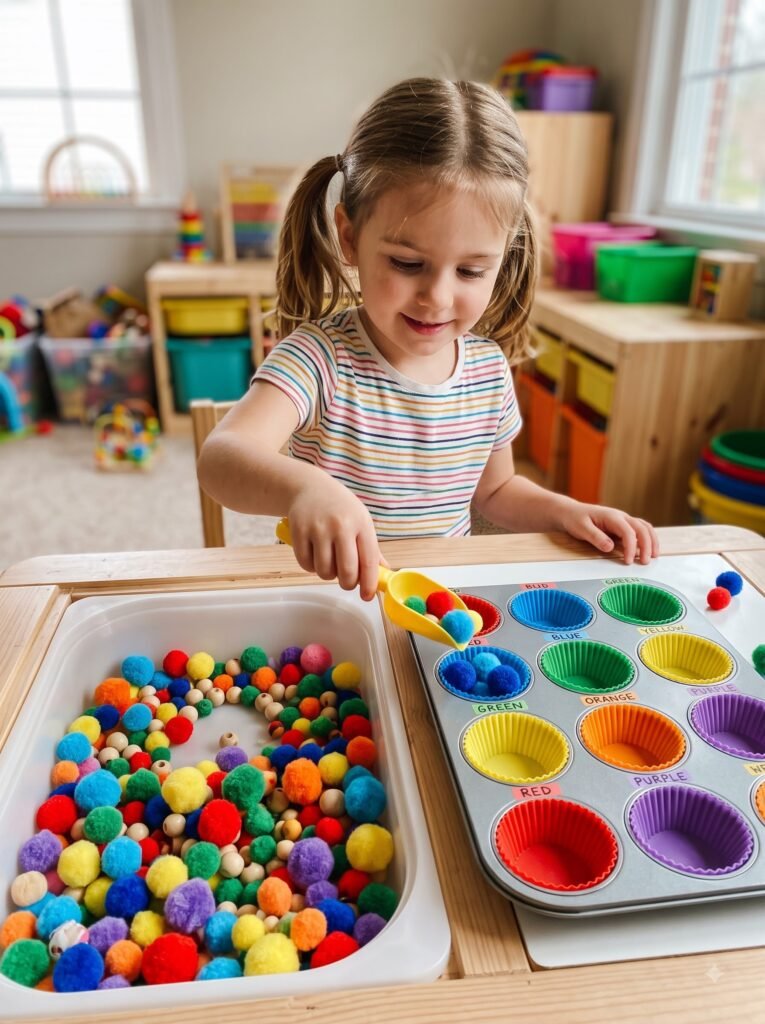
1. Pom Pom Scoop-and-Sort Bin
- Why it works: Sorting by color is an early math skill that feels like play.
- Materials: Large bin, oversized pom poms, kid cups, plastic tongs (optional).
- Steps: Drop pom poms into the bin. Hand your toddler one cup per color. They scoop, count, and drop them in.
- Skill learned: Color recognition, hand strength.
- Variation: Add a kitchen timer for a 2-minute “speed sort” challenge.
2. Pom Pom Ice Cream Tower
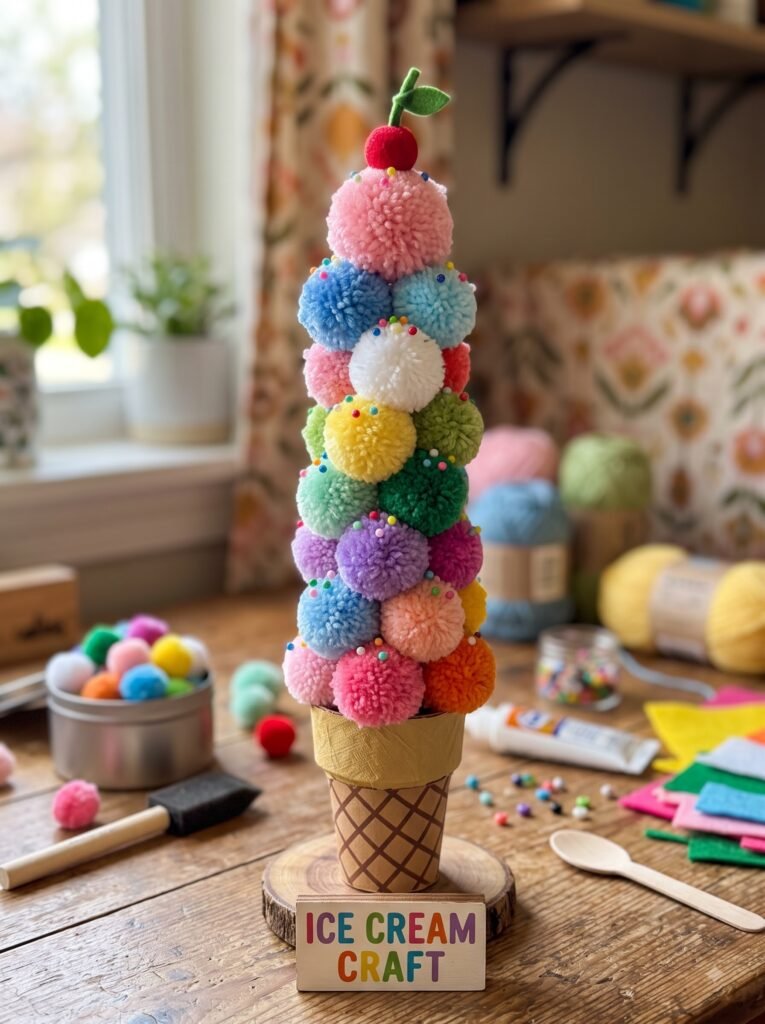
- Why it works: Stacking pom poms to look like scoops feels like dessert without the sugar.
- Materials: Brown paper cones (pre-cut), large pom poms in pastel colors, a small paper-tray base.
- Steps: Hand your toddler one cone per “order.” They scoop pom poms into the top.
- Skill learned: Hand-eye coordination.
- Variation: Glitter glue “sprinkles” on a separate cone (you apply; they choose the colors).
3. Pom Pom Hungry Puppy
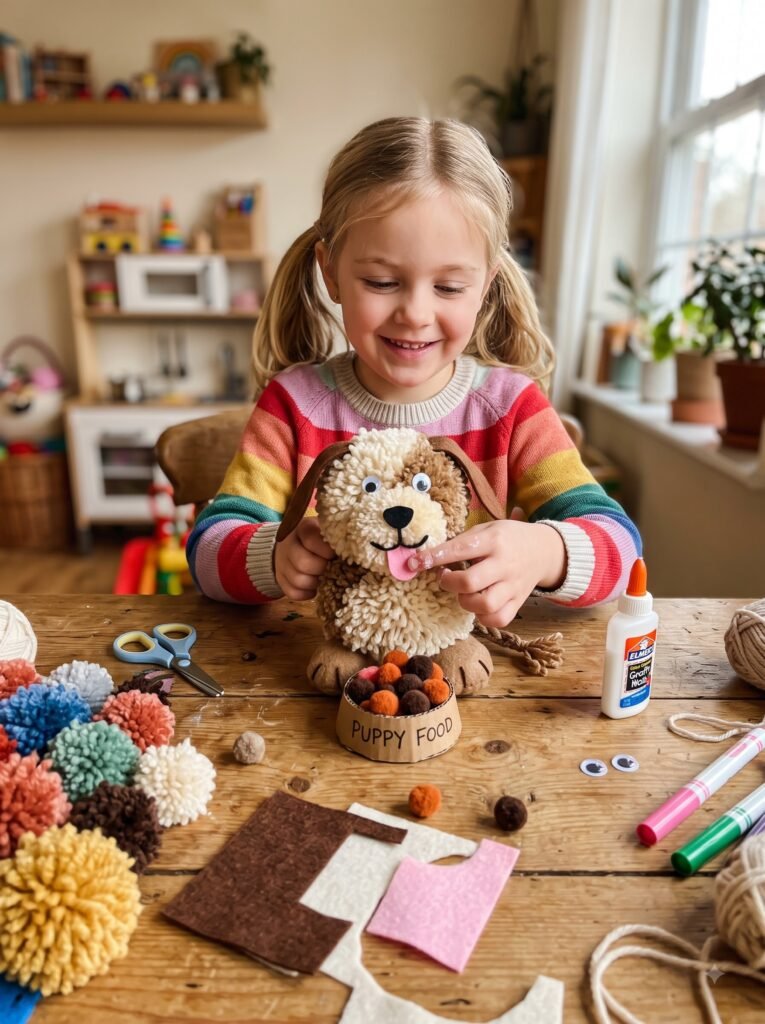
- Why it works: Dropping pom poms into a soft puppet’s mouth builds precision.
- Materials: A dog sock puppet or felt plush dog with a wide mouth opening.
- Steps: Set a bowl of medium pom poms in front of the puppy. Your toddler feeds them through the mouth.
- Skill learned: Pincer grip.
- Variation: Count how many “treats” the puppy ate (1–5).
4. Pom Pom Color Bath
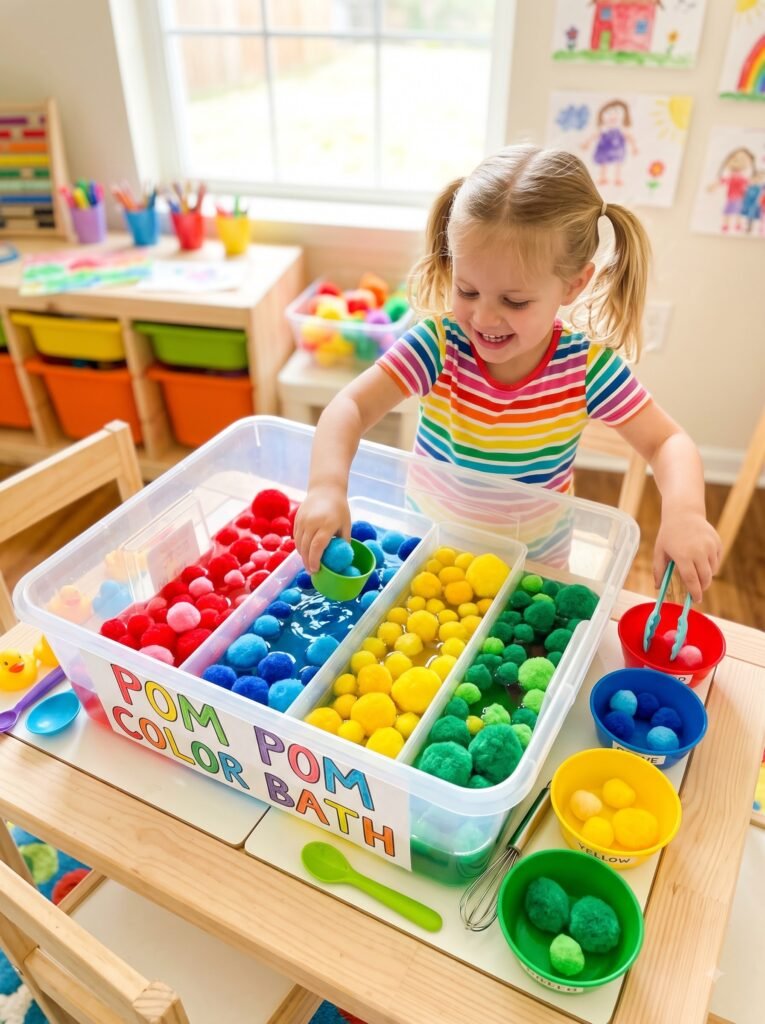
- Why it works: Water play plus pom poms equals bucket-of-fun.
- Materials: A shallow plastic bin, water, large waterproof pom poms, plastic cups.
- Steps: Fill the bin 2 inches deep. Drop in pom poms. Hand your toddler a cup for scooping.
- Skill learned: Cause and effect, fine motor.
- Variation: Add a drop of food coloring to teach color mixing.
5. Pom Pom Picture Stamps
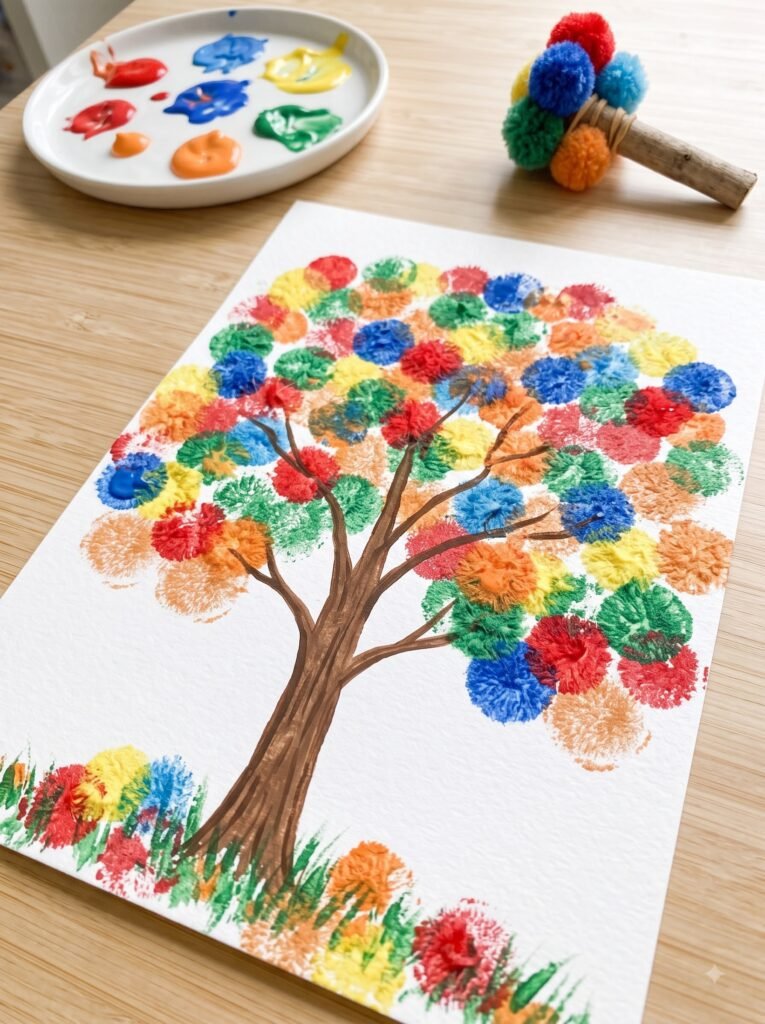
- Why it works: Pom poms dipped in paint make unexpected textures.
- Materials: Large pom poms, paper plates of washable paint, paper.
- Steps: Show your toddler how to press a paint-dipped pom pom onto paper. Repeat with different colors.
- Skill learned: Cause and effect, color exploration.
- Variation: Press pom poms of different sizes for “big” and “small” shapes.
6. Pom Pom Color Wheel
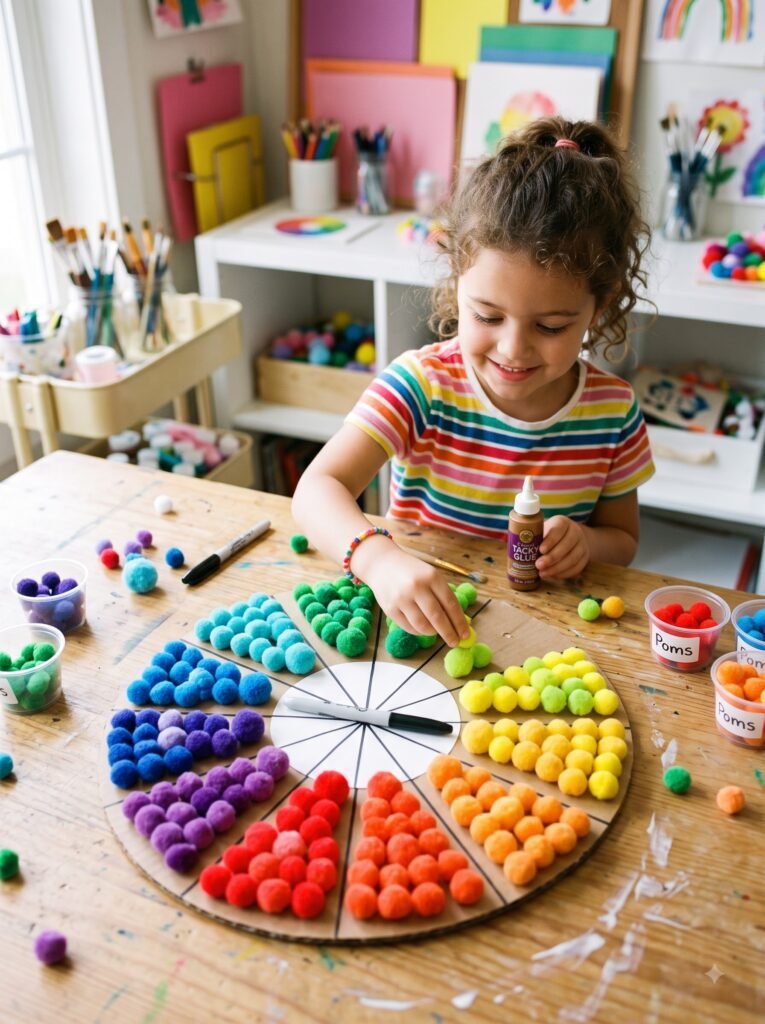
- Why it works: Arranging pom poms in a circle teaches pattern awareness early.
- Materials: A printed or hand-drawn color wheel with empty sections.
- Steps: Place the wheel on the table. Hand your toddler pom poms in matching colors. They stick them onto glue dots you’ve pre-placed.
- Skill learned: Color matching.
- Variation: Switch pom poms around after to make a “rainbow wheel.”
Preschool Tier (Ages 3–5)
7. Pom Pom Caterpillar
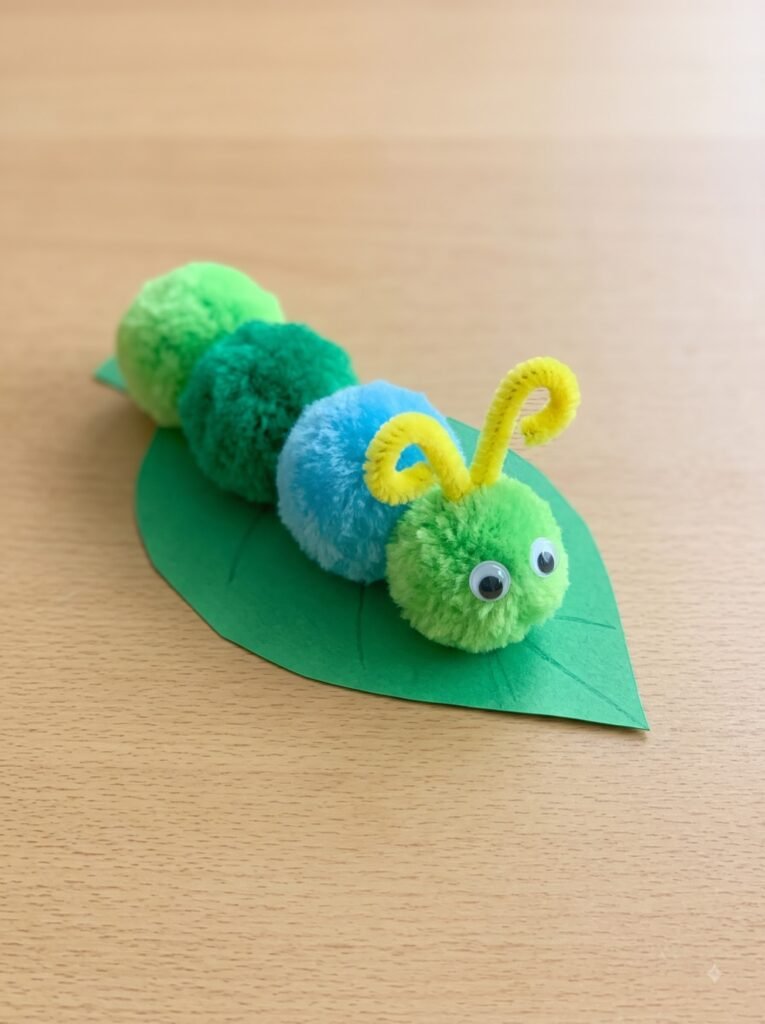
- Why it works: A row of same-color pom poms becomes an instantly recognizable caterpillar.
- Materials: Cardstock, green paint, eight small green pom poms, glue, googly eyes (optional).
- Steps: Paint a leaf on the cardstock. Glue pom poms in a row along the leaf. Add googly eyes at the front (adult applies).
- Skill learned: Sequencing, counting.
- Variation: Add a rainbow pom pom butterfly nearby.
8. Pom Pom Rainbow
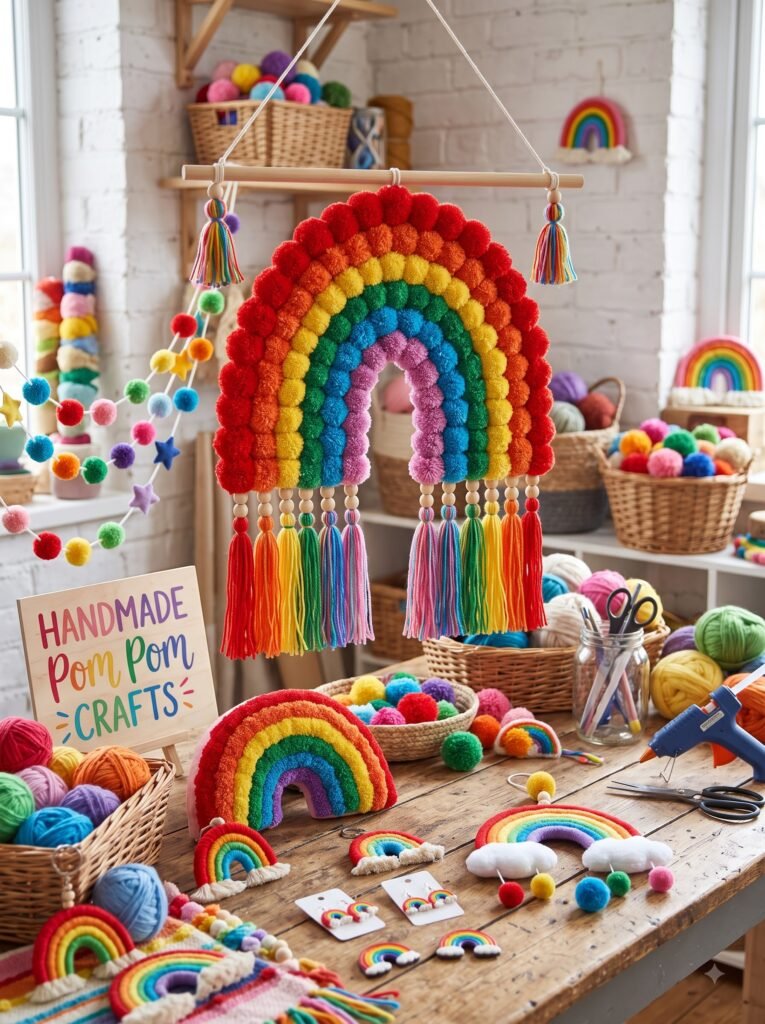
- Why it works: Color order is a foundational skill, and pom poms make it tangible.
- Materials: Cardstock, glue, red, orange, yellow, green, blue, purple pom poms.
- Steps: Draw a rainbow outline on cardstock. Kids glue pom poms in color order along each arc.
- Skill learned: Color order, pattern recognition.
- Variation: Add cotton-ball clouds at each end.
9. Pom Pom Counting Trees
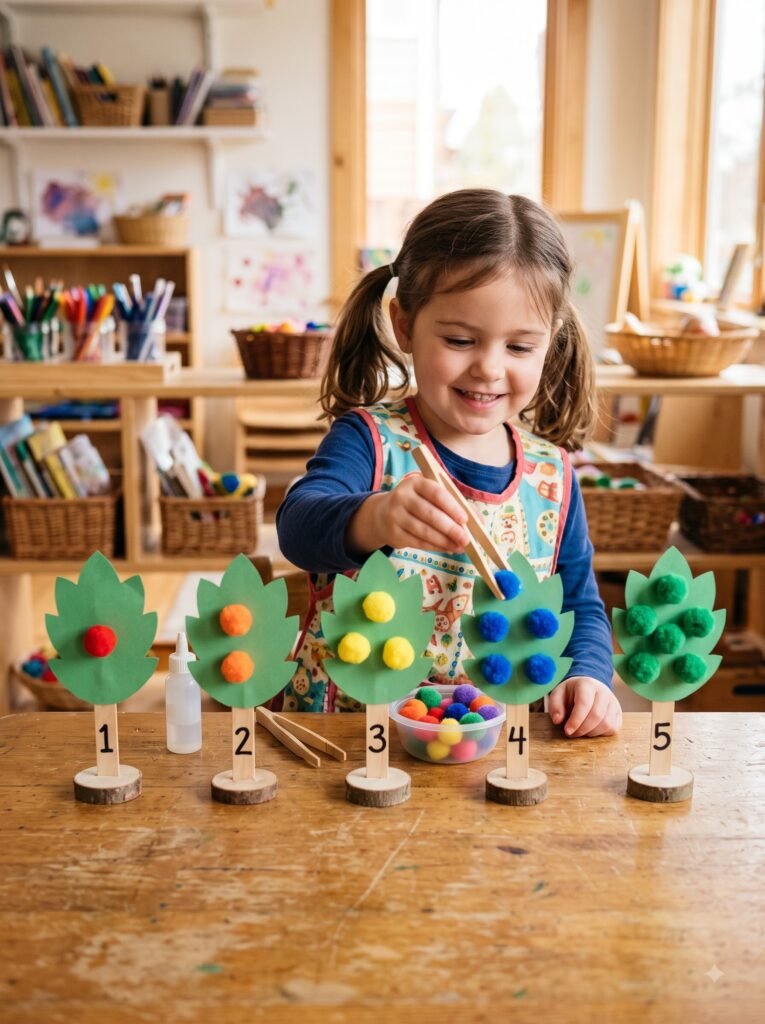
- Why it works: Each tree “grows” pom pom “fruit” — a playful way to count.
- Materials: Brown construction paper tree trunks, pre-cut glue dots, pom poms in red, orange, yellow.
- Steps: Stick the trunk to paper. Kids count and stick pom poms onto the branches (one through ten).
- Skill learned: Counting to 10.
- Variation: Add a number card to each tree.
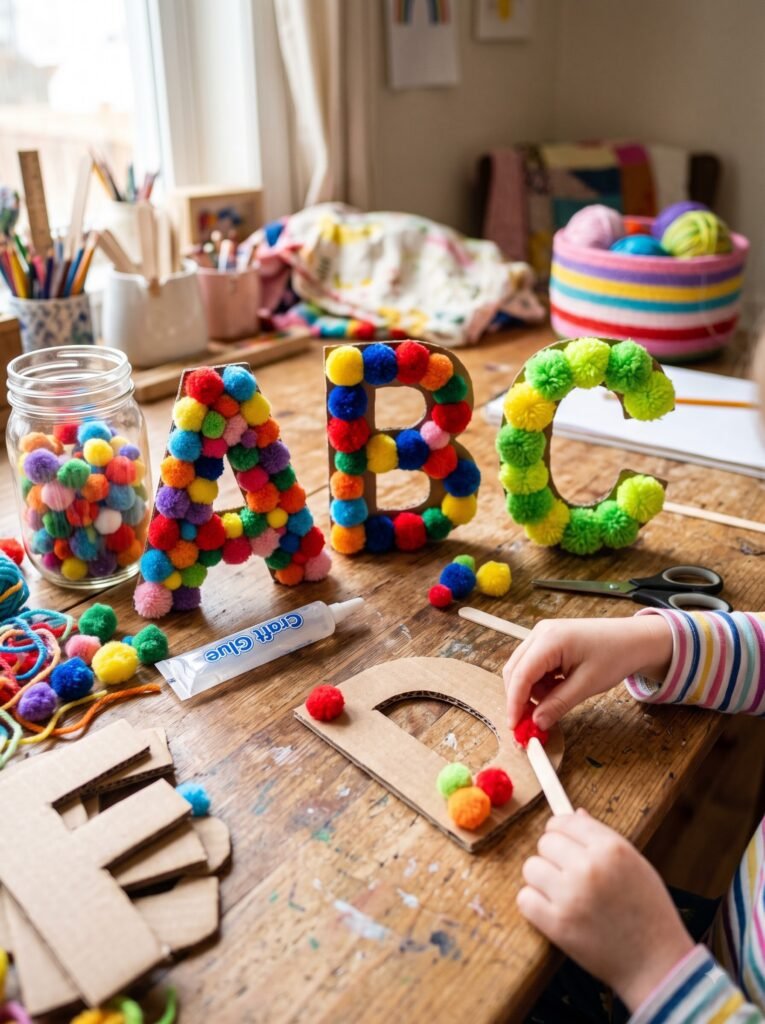
10. Pom Pom Name Practice
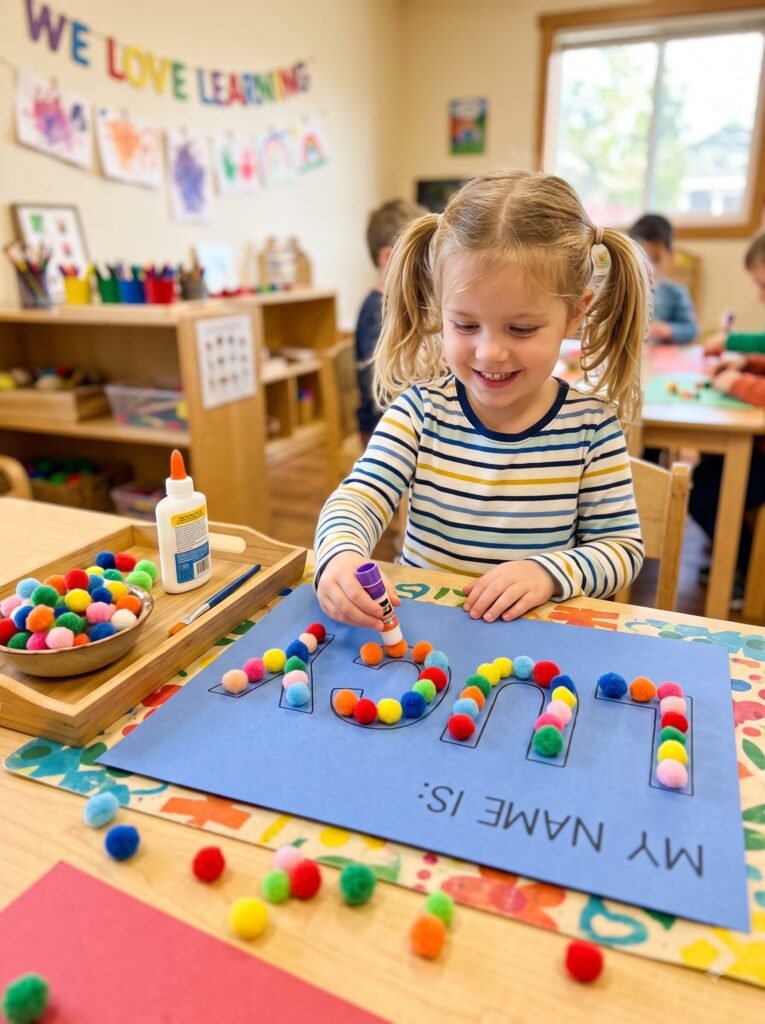
- Why it works: Forming letters with pom poms gives spelling a sensory layer.
- Materials: Heavy cardstock, glue, multi-color pom poms.
- Steps: Write your child’s name in large block letters on cardstock. Kids glue pom poms on top of the lines.
- Skill learned: Letter recognition, fine motor control.
- Variation: Use this for the names of family members on a wall banner.
11. Pom Pom Ice Cream Sundae
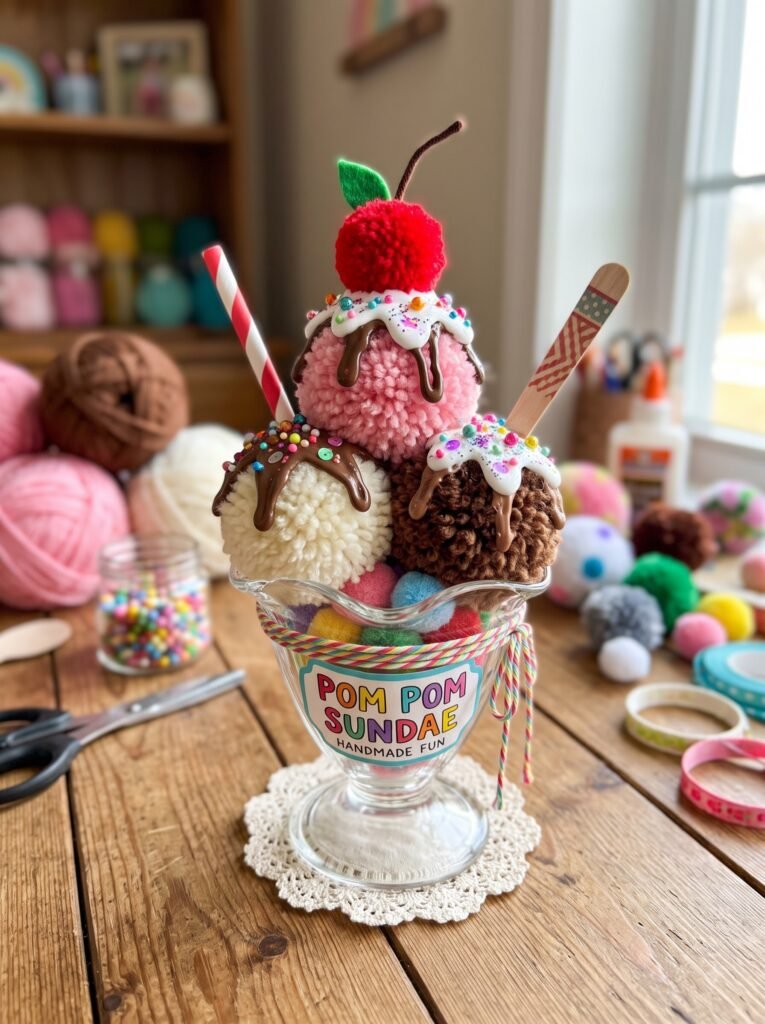
- Why it works: A pretend dessert with very real fine-motor practice.
- Materials: A pre-cut sundae glass on cardstock, mini pom poms in three colors, glitter glue “sprinkles.”
- Steps: Kids stack pom poms into the cut-out sundae glass. Adult applies a sprinkle line on top.
- Skill learned: Stacking, sequencing.
- Variation: Make a menu of “orders” with the kids.
12. Pom Pom Bird Nest
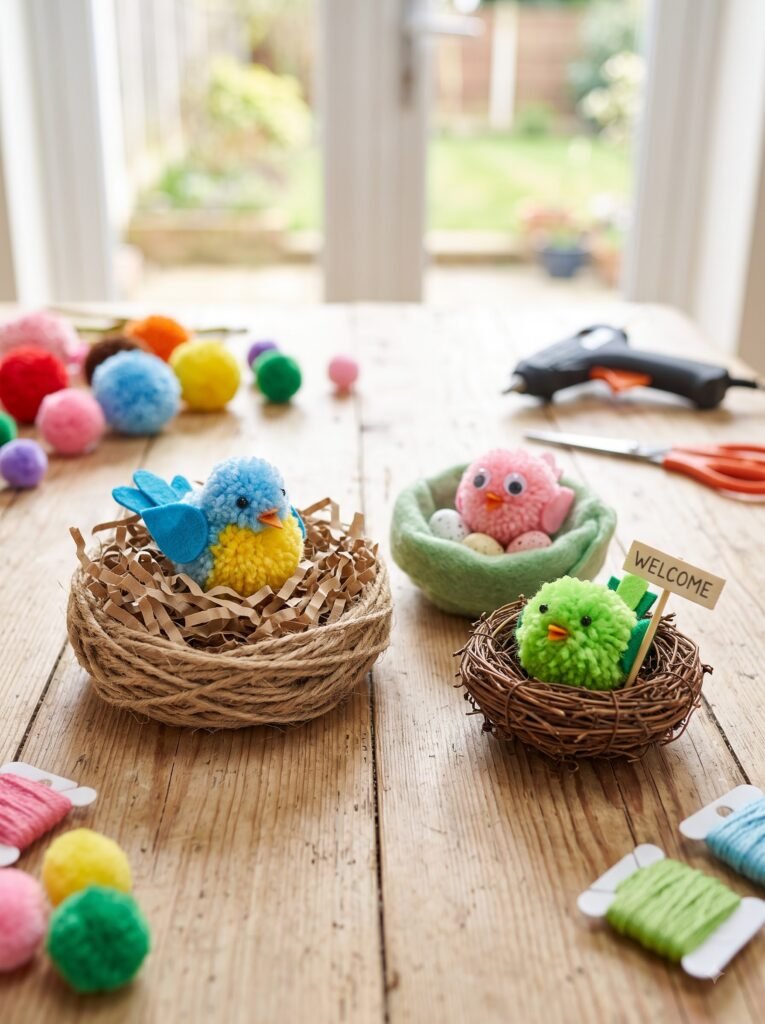
- Why it works: Building a nest around pom pom “eggs” teaches gentle handling.
- Materials: Brown yarn pre-cut, pom poms in soft pastel colors, small paper bowl.
- Steps: Kids weave brown yarn into a “nest.” Place pastel pom poms in the center.
- Skill learned: Gentle handling, nest-making basics.
- Variation: Tell a tree-to-tree story with each nest for birdwatching.
13. Pom Pom Alphabet Soup
- Why it works: Dropping alphabet-letter cards into a “bowl” of pom poms makes letter play tactile.
- Materials: Large bowl, large pom poms, foam or paper alphabet letters.
- Steps: Hide letters in a pom pom bowl. Kids dig out and call out each letter.
- Skill learned: Letter recognition.
- Variation: Sort letters by color next.
14. Pom Pom Flower Garden
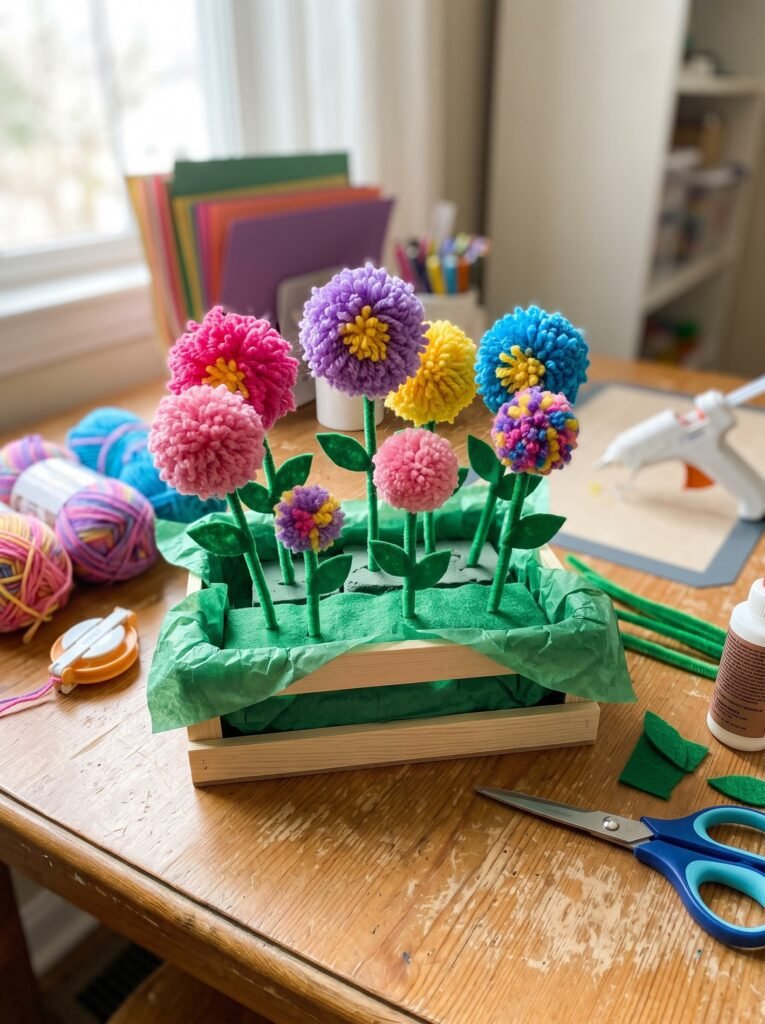
- Why it works: A simple pom pom on a green pipe-cleaner stem becomes a flower in seconds.
- Materials: Green pipe cleaners, multi-color pom poms, small paper bag “garden plot.”
- Steps: Twist a pipe cleaner around a pom pom. Repeat for the whole garden.
- Skill learned: One-to-one matching.
- Variation: Add felt butterflies on scraps of paper.
15. Pom Pom Counting Caterpillar
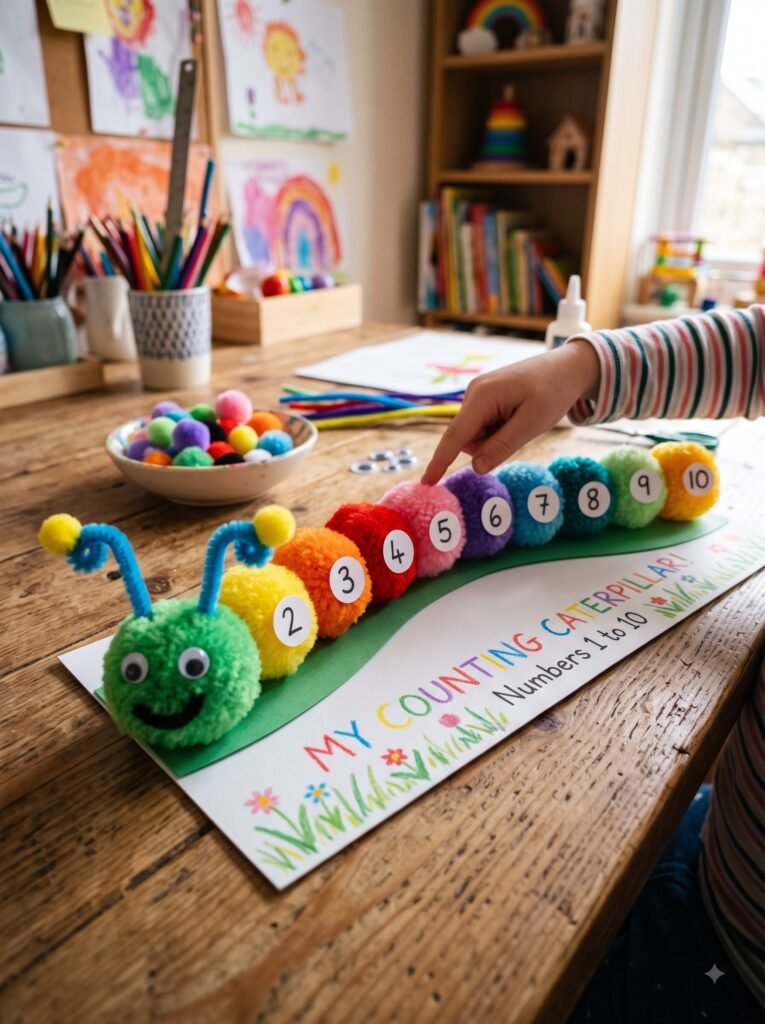
- Why it works: Each inch of caterpillar body becomes a counting opportunity.
- Materials: Numbered circles (1–10) on paper, pom poms in rainbow colors.
- Steps: Place numbered circles in a row. Kids glue one pom pom per first circle, two for the second, ten for the last.
- Skill learned: Counting 1–10.
- Variation: Repeat with the alphabet (A=1 pom pom, B=2, etc.).
16. Pom Pom Friendship Bracelet
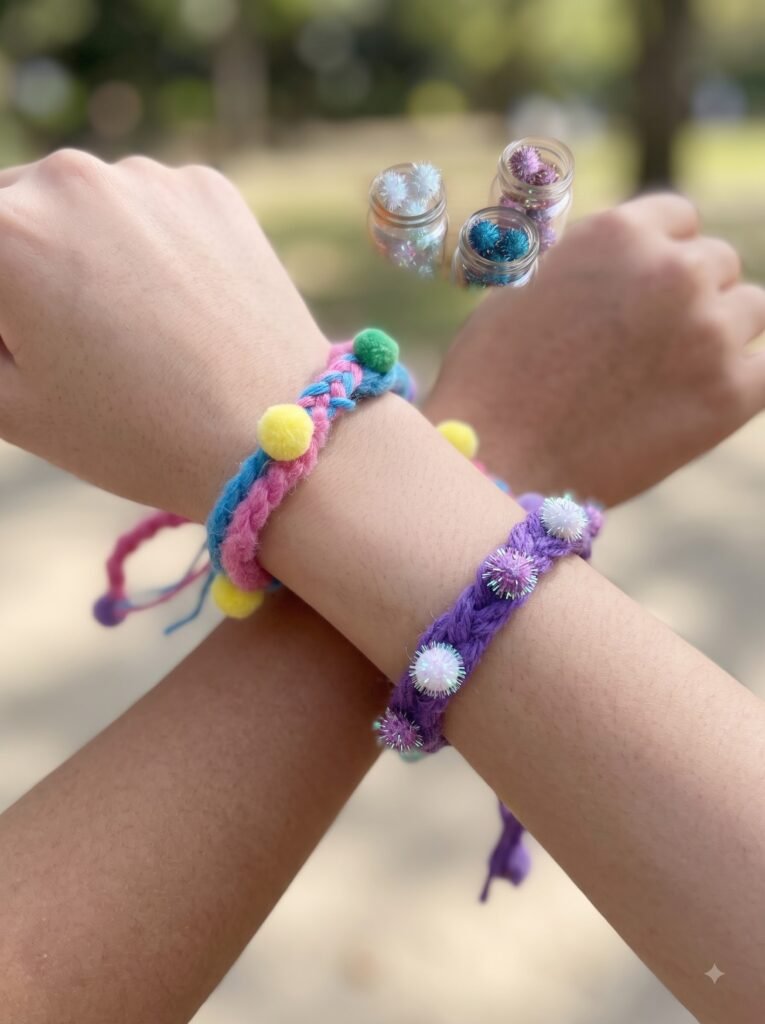
- Why it works: A pom pom strand on elastic makes a wearable gift.
- Materials: Elastic string or thick yarn, multi-color pom poms.
- Steps: Thread pom poms onto elastic. Adult ties off the ends, sized to a small wrist.
- Skill learned: Patterning.
- Variation: Make one for a parent or grandparent for Mother’s Day.
17. Pom Pom Foam Mosaic
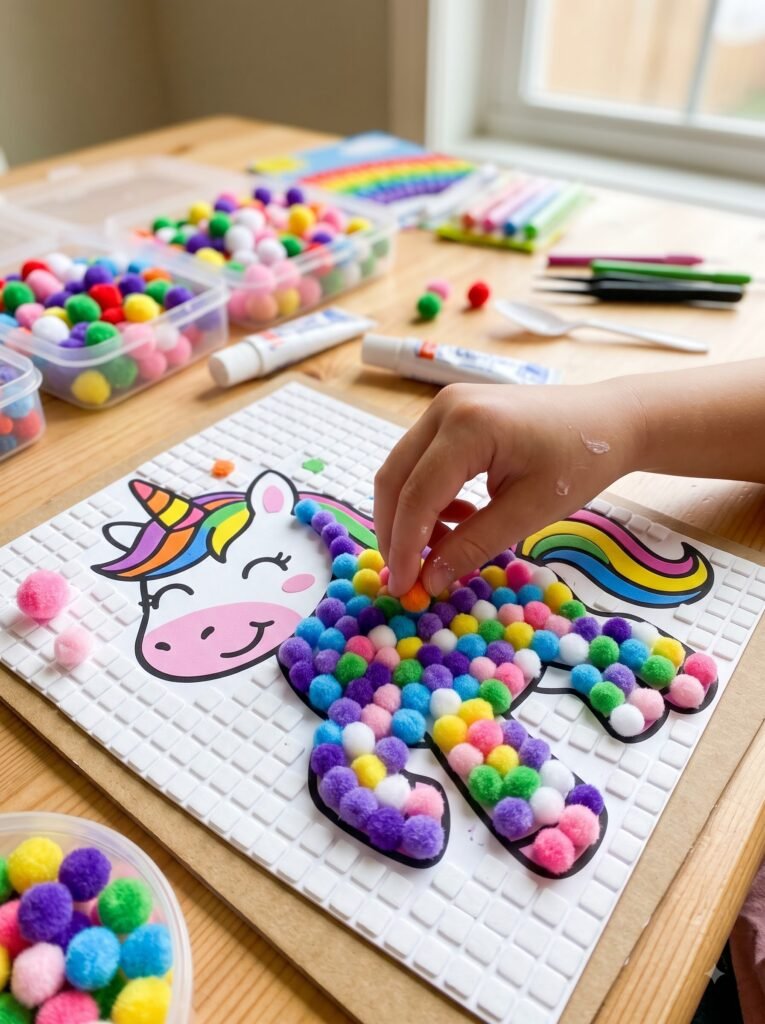
- Why it works: Filling outlined shapes with pom poms is satisfying and easy.
- Materials: Foam sheet, glue, pom poms.
- Steps: Draw simple shapes on the foam (heart, star, fish). Kids fill each shape with pom poms.
- Skill learned: Shape recognition, gluing control.
- Variation: Tack it up on the fridge as finished “fine art.”
Big Kid Tier (Ages 5+)
18. Pom Pom Wreath
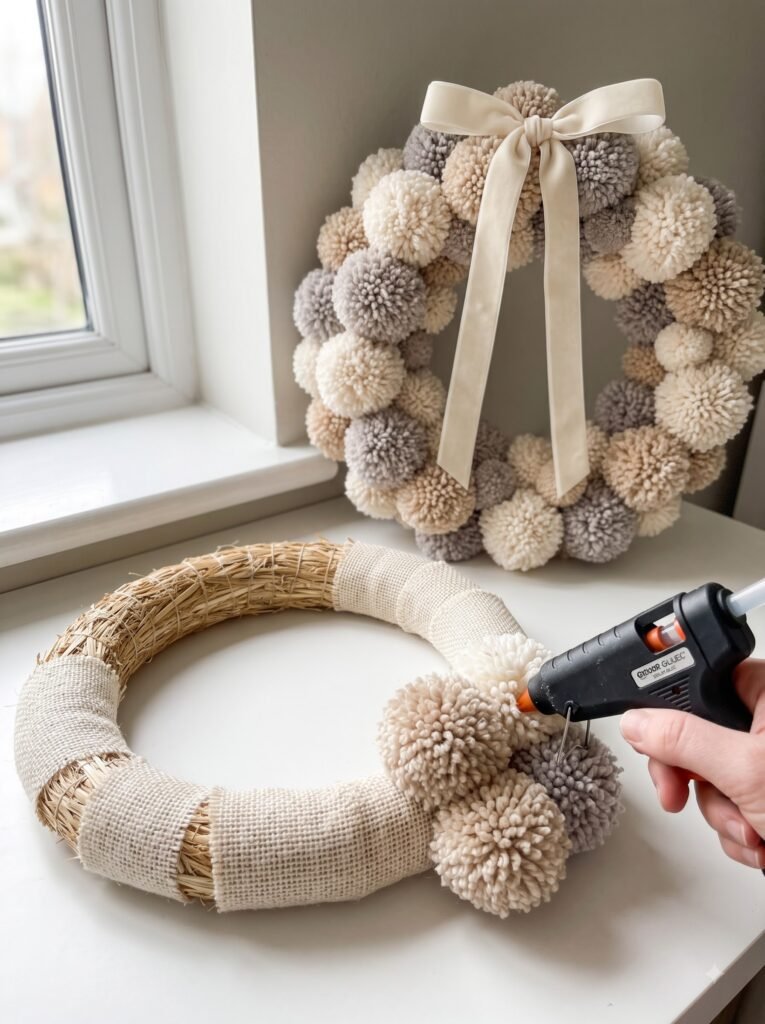
- Why it works: A finished wreath makes a thoughtful gift and looks gorgeous hung on a door.
- Materials: Foam wreath form, pom poms in three colors, hot glue (adult step).
- Steps: Pre-plan your color pattern with your child. Hot-glue pom poms onto the foam form section by section (adult applies glue).
- Skill learned: Patterning, project planning.
- Variation: Add a felt bow at the bottom for seasonal swaps.
19. Pom Pom Yarn-Wrapped Critter
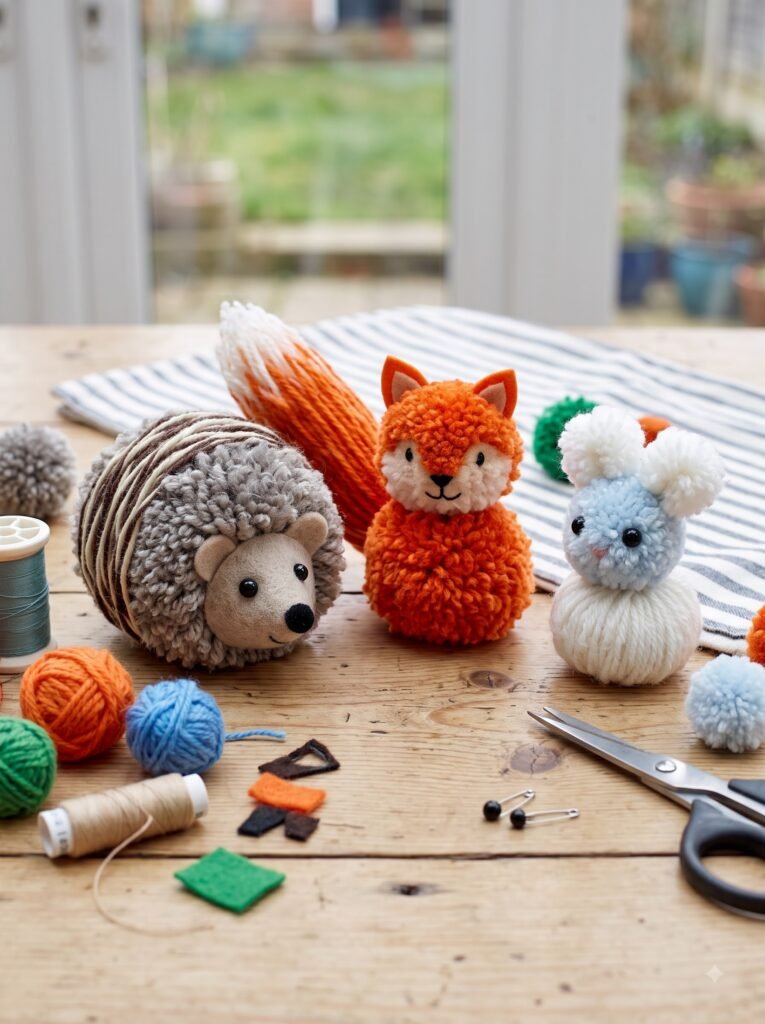
- Why it works: Yarn-wrapped cardboard becomes a fuzzy creature when pom poms are added.
- Materials: Cardboard circle, yarn scraps, two pom poms for ears, black marker.
- Steps: Wrap cardboard with yarn, glue on pom poms for ears and nose, draw the face.
- Skill learned: Fine motor wrapping, character design.
- Variation: Make a whole menagerie — bunny, fox, hedgehog — different ear shapes.
20. Pom Pom Photo Booth Props
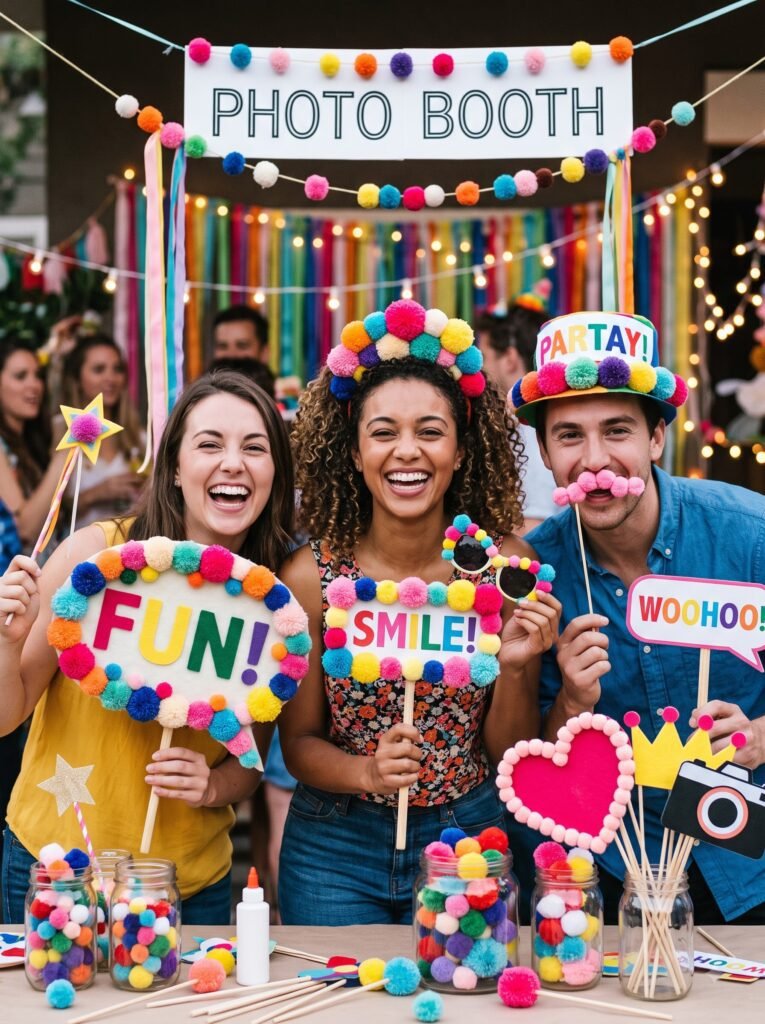
- Why it works: Oversized pom poms on craft sticks make charming party photo props.
- Materials: Craft sticks, large pom poms, hot glue (adult step).
- Steps: Hot-glue pom poms onto craft sticks (adult). Kids choose color combos.
- Skill learned: Choice-making, color play.
- Variation: Pair them with felt mustaches for silly portraits.
21. Pom Pom Birthday Crown
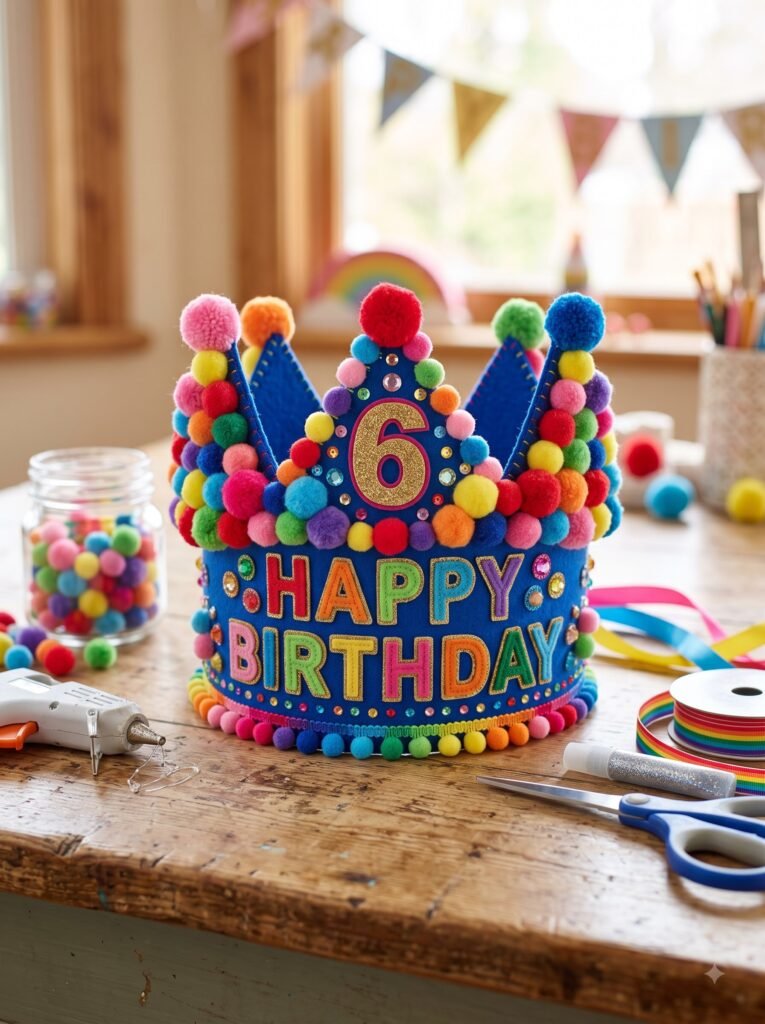
- Why it works: A handmade crown makes any birthday child feel crowned.
- Materials: Felt crown template, hot glue (adult step), pom poms in favorite colors.
- Steps: Cut felt crown shapes ahead. Kids lay out pom poms where they want them. Adult hot-glues them down.
- Skill learned: Symbolic celebration, choice-making.
- Variation: Number it with the child’s age (felt number glued on).
22. Pom Pom Party Garland
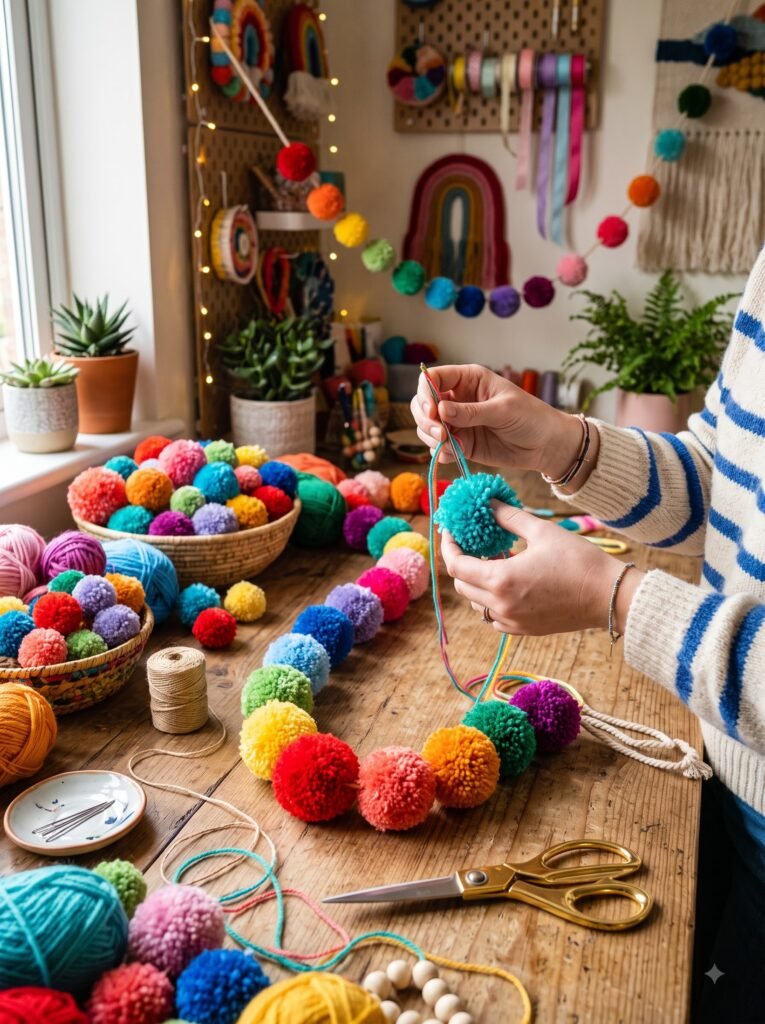
- Why it works: A long fuzzy strand across a mantle or doorway is iconic party decor.
- Materials: Yarn or twine, pom poms (varied sizes), large yarn needle (adult step).
- Steps: Plan your color order. Adult threads pom poms onto yarn with a needle (kids assist with color choices).
- Skill learned: Patterning, sequencing.
- Variation: Add felt stars between pom poms.
23. Pom Pom Name Banner
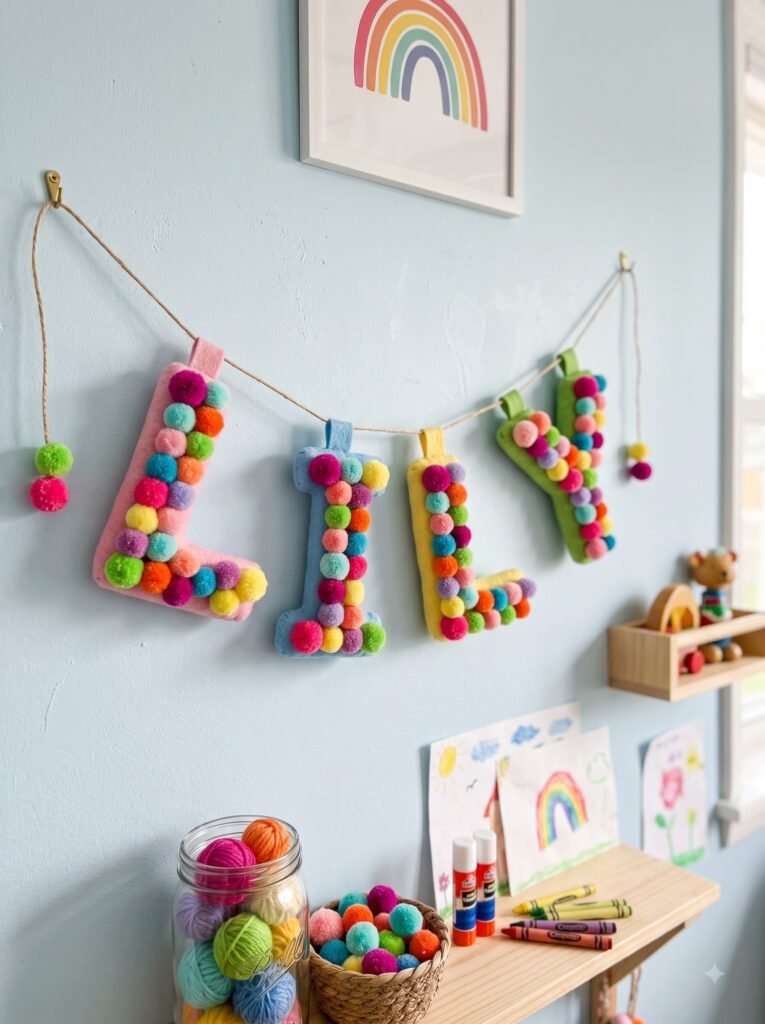
- Why it works: A pom pom-traced name makes any kid’s room feel designed by them.
- Materials: Thick cardstock, pom poms in favorite colors, glue.
- Steps: Write your child’s name in thick letters. Kids glue pom poms along each letter’s outline.
- Skill learned: Letter formation confidence.
- Variation: Frame and gift as a keepsake.
24. Pom Pom Dream Catcher
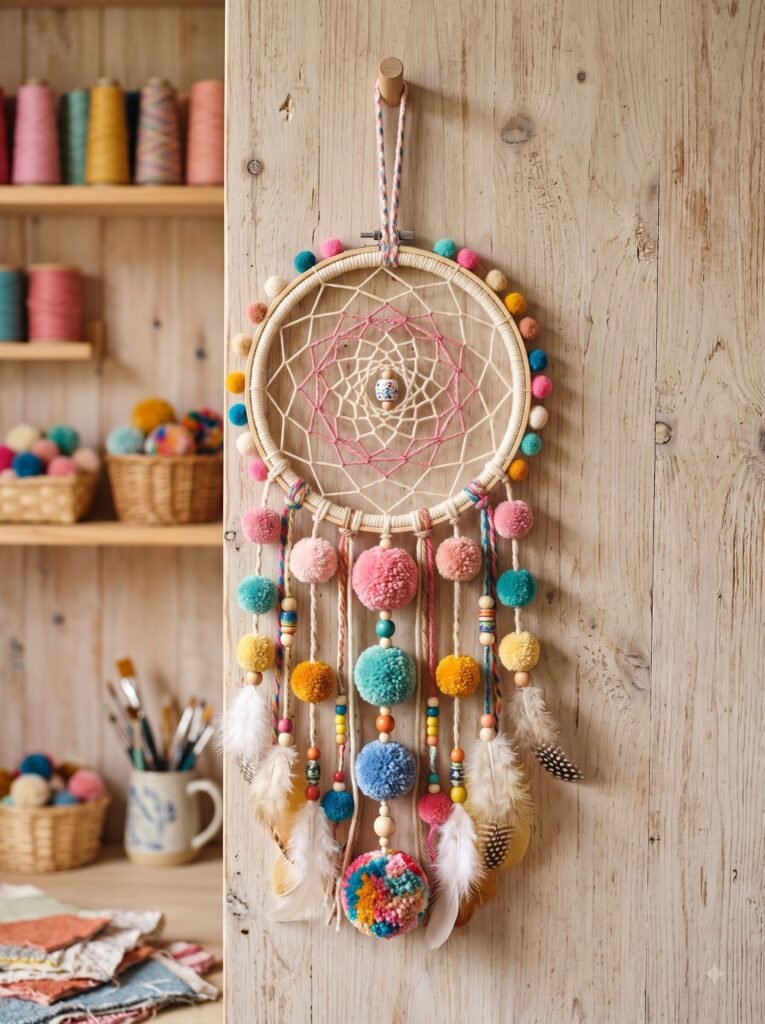
- Why it works: A small yarn hoop with hanging pom poms makes a beautiful bedroom decoration.
- Materials: Embroidery hoop or cardboard ring, yarn, pom poms, felt feathers (optional).
- Steps: Wrap hoop with yarn. String pom poms and felt feathers from the bottom (adult ties).
- Skill learned: Spatial planning.
- Variation: Add favorite sports team colors.
25. Pom Pom Pet Portrait Frame
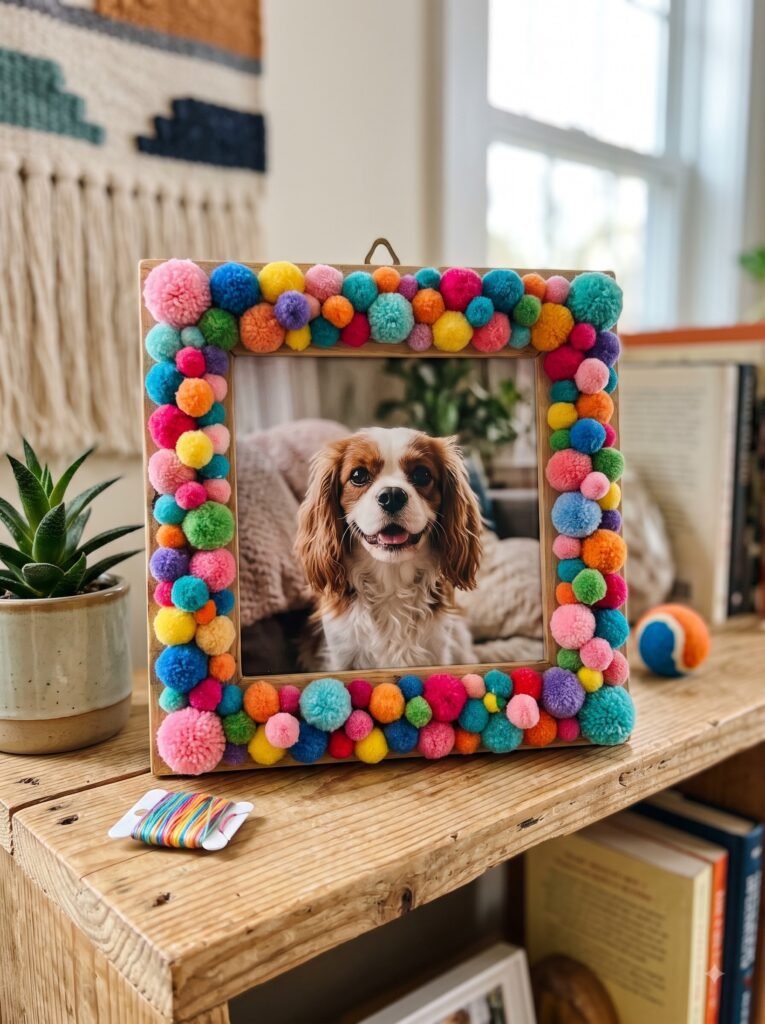
- Why it works: A frame made of pom poms turns a simple photo into a memorable gift.
- Materials: Plain wood frame, pom poms in seasonal colors, hot glue (adult step).
- Steps: Plan a color layout. Adults hot-glue pom poms around the frame edges.
- Skill learned: Design choice, gift-giving.
- Variation: Use one pom pom color per child’s name for a family photo wall.
Pom Pom Craft Supply Checklist (Printable)
Pom Poms
- One bulk bag of assorted colors and sizes
- One bag of large (1.5–2 inch) pom poms for toddlers
- One bag of medium (0.5–1 inch) for preschoolers
- Specialty sizes (1 inch) for big-kid craft details
Glues
- White school glue
- Tacky glue for fabric and pom pom pieces
- Glue sticks for paper crafts
- Hot glue gun (adult use only)
Base Materials
- Cardstock and construction paper
- Foam sheets
- Felt sheets
- Brown craft paper
- Cardboard scraps
- Embroidery hoops (small)
Tools
- Kid-safe scissors
- Plastic cups for sorting
- Plastic tongs for sensory bins
- Washable paint trays
- Damp cloths
- A small broom and dustpan
Yarn and Twine
- Yarn scraps for wrapping
- Elastic string for bracelets
- Twine for garland hanging
Embellishments (Big Kid Crafts)
- Googly eyes (only under direct supervision)
- Felt shapes
- Sequins (supervised only)
- Craft sticks
Cleanup Kit
- Smocks or old t-shirts
- Washable table mat
- Bowl of warm soapy water
Calm-Craft Setup Tips for Less Stress
Pick a Spot
A single chair at a small table beats the kitchen counter. A consistent build spot reduces setup time over weeks.
Pre-Portion by Tier
Before craft time, sort pom poms into small trays by size or color. One tray per child, one tray per project. Less rummaging, more crafting.
Set a Visual Timer
Use a sand timer or a phone countdown visible to the child. A 15-minute window keeps craft focused without burnout.
Use Smocks, Always
Pom poms roll onto toddler tummies faster than you’d think. Smocks save loads of laundry.
Build a “Finished” Tray
A simple tray for finished crafts turns clutter into a gallery. Kids start taking pride in stacking their work.
Quit on a High Note
Stop when the child is still happily concentrating. End-of-energy crafts end in tears and pom pom confetti. Save the project and wrap it up warmly next session.
Common Mistakes Parents (and Teachers) Make
- Using small pom poms with toddlers. Tiny pom poms are a choking risk. Use big ones and reset your craft map accordingly.
- Handing a child a hot glue gun. Hot glue = adult-only. Always. Tacky glue and glue sticks do the same job with far less risk.
- Skipping the sample run. Kids finish faster when they see the steps once. Do a quick demo yourself before turning them loose.
- Overstuffing the project. More pom poms ≠ better craft. Negative space makes the colors sing.
- Expecting museum-quality results. Pom pom crafts are joyful chaos. Celebrate the fuzzy dome, not the perfect dome.
- Letting pom poms roll away forever. A pom pom escape is part of the ritual. Plan for it with a small bin to corral them.
- Mixing pom pom sizes without intent. Three sizes layered together reads as polished; five random sizes reads as cluttered.
- Using too much glue. Squeeze-bottle glue is your friend. A thin line beats a puddle every time.
- Forgetting clean-up under the furniture. Pom poms hide in couch cushions for months. Sweep before you finish.
- Skipping the photo. The craft ends up in a landfill or a memory box, but a quick photo preserves the time and hands behind it. Snap it first.
- Bringing out pom poms on fussy days. Save them for calm, alert craft time. Tired toddlers don’t craft; they crunch.
- Adult-built crafts given to kids as if solo. Even big-kid pom pom wreaths need adult hot glue steps. Let kids pick colors and plan layout; you execute the glue.
Frequently Asked Questions
1. Are pom poms safe for kids under 3?
Small pom poms are a choking hazard for kids under 3, especially those who still mouth objects. Use oversized pom poms (1.5 inches or larger) and always supervise craft time. Skip pom pom crafts entirely if your child is still putting small objects in their mouth, and choose sensory-bin alternatives without small parts instead.
2. What’s the best glue for pom pom crafts?
For kids applying glue, white school glue or tacky glue is ideal. Tacky glue grips fuzzy surfaces better than standard white glue. Hot glue is a finishing-only step for adults on big-kid projects. Glue sticks work for paper-based crafts but don’t bond to fuzzy pom poms well.
3. Where can I buy pom poms in bulk?
Most craft stores sell pom poms in mixed-color bags. Dollar stores and online craft retailers often have the best bulk pricing. Look for assorted sizes so you have toddler-safe and preschool-friendly options in one bag.
4. How long do pom pom crafts last?
Pom pom crafts stored out of direct sunlight and away from moisture can last for years. Garlands and wreaths benefit from being handled gently. Laminated or contact-paper pom pom crafts hold up best long-term.
5. What ages are pom pom crafts good for?
Pom pom crafts work for toddlers through age 10, with project tweaks by tier. Toddlers should only use oversized pom poms and need close supervision. Preschoolers (3–5) handle most glue-sticking and patterning projects. Big kids (5+) can plan, build, and gift pom pom projects.
6. How do I store pom poms so they don’t roll everywhere?
Clear plastic jars with snap lids work beautifully. A divided organizer tray fits perfectly inside a craft drawer. Pom pom sorting cups are also a sweet kid-friendly storage solution that doubles as sorting play.
7. Are there non-yarn pom pom options?
Yes. Felt balls, fabric scraps rolled into balls, and tissue paper “puffs” all act as pom pom substitutes. They’re great for kids with yarn allergies or for crafts where a smoother surface is preferred.
8. Can pom pom crafts boost fine motor skills?
Absolutely. Picking up, sorting, pinching, and placing pom poms strengthens fine motor control. Pom poms are a favorite tool of pediatric occupational therapists because they motivate kids to grip, lift, and position tiny objects.
9. What should I do if a pom pom gets in my child’s mouth?
For a small pom pom, calmly retrieve it if you can see and reach it safely. If your child chokes, gags, or shows signs of distress, follow your pediatrician’s choking guidance and seek urgent care. For larger pom poms, the same applies. Always supervise pom pom crafts.
10. Are pom pom crafts good for parties?
Pom pom crafts are ideal for parties because each child can work at their own pace. Pre-portion one tray of supplies per child. Pom pom wreaths, garlands, crowns, and photo props make especially popular party crafts.
11. What’s a quick 10-minute pom pom craft?
A pom pom rainbow on cardstock takes ten minutes flat. A pom pom caterpillar on a leaf shape is similar. A pom pom photo prop with a craft stick is also one of the quickest. Pom poms are the perfect “I need a craft NOW” supply.
12. Can I use pom poms for sensory play beyond crafts?
Pom poms are wonderful sensory tools. Scoop them, sort them, hide small toys in them, freeze them in ice, or float them in water bins. Many sensory play recipes use pom poms as the centerpiece material because they are reusable, washable, and silent — perfect for sensory-sensitive kids.
Final Thoughts
A bag of pom poms is more than a craft supply. It’s a tiny permission slip.
Permission to slow down. Permission to make something imperfectly. Permission to sort, scoot, and play with color. Your child will probably forget which pom pom went where, but they’ll remember that you sat with them at the table, no phone in hand, while chaos turned into a fuzzy little caterpillar.
That’s the whole point. Not the wreath on the door, not the garland on the mantle — though both are lovely. The point is the small, warm ritual of making something together.
So grab a bag, lay out your smocks, and start with one of the easier projects. The pom poms will roll. The glue will drip. The photos will turn out slightly off-center. And the morning will be sweet.
You don’t need a vision board for craft time. You just need a fuzzy ball and the willingness to begin.