

The holidays pull families together, and that often means a long drive or a crowded flight. When you’re pregnant, the trip takes a little more planning. You need to think about your due date, airline rules, comfort on the road and what happens if you need care far from home. This guide breaks it all into simple steps, from the first call to your provider to the moment you walk through the door.
Quick answer: Holiday travel while pregnant is usually fine for healthy pregnancies, but talk to your provider first. The second trimester is often the most comfortable time to travel. Many airlines allow flying until about 36 weeks. Move every hour or two, wear your seat belt correctly, pack your prenatal records and know where to find care.
Is Holiday Travel Safe During Pregnancy?
For most healthy pregnancies, holiday travel is considered safe with good planning. The CDC guidance for pregnant travelers recommends talking with your healthcare provider before a trip. That conversation lets your provider look at your health, your due date and where you’re going.
Your provider may advise against travel in some situations. These can include a high risk pregnancy, certain complications or being close to your due date. Every pregnancy is different, so your provider’s advice comes first. This guide covers general planning, not medical advice for your situation.
Holiday trips add their own challenges. Airports and roads are busier. Weather can cause delays. Family gatherings mean late nights and unfamiliar food. Planning for these details ahead of time makes the trip easier on your body.
Holiday Travel Tips by Trimester
The right travel plan depends on how far along you’ll be on the day you leave. Count forward from today to your travel dates before you book anything.
First Trimester Travel (Weeks 1 to 13)
Holiday travel in the first trimester is often more about comfort than restrictions. Nausea and fatigue can make long days feel much harder.
- Pack plain snacks like crackers for the car or plane.
- Choose travel times that avoid your worst nausea hours if you can.
- Plan quiet breaks during busy family days.
- Keep a bag handy in case of motion sickness.
Many people haven’t shared their news yet at this stage. If you’re keeping it private, think ahead about how you’ll handle questions at the table.
Second Trimester Travel (Weeks 14 to 27)
The second trimester is often the most comfortable time for holiday travel. Johns Hopkins Medicine notes that ACOG considers weeks 14 to 28 the safest window for most travelers. Nausea often eases and energy returns for many people.
This is a good time for the longest trip of the season. You can still book flights with fewer airline limits. You’ll also likely find it easier to sit for long stretches than you will later.
Third Trimester Travel (Weeks 28 to 40)
Holiday travel in the third trimester needs the most planning. Comfort drops and airline rules get stricter. You also need a plan in case labor starts away from home.
- Check your airline’s pregnancy policy before booking.
- Ask your provider whether a note confirming your due date is a good idea.
- Keep trips shorter and closer to home when you can.
- Find the nearest hospital with a labor and delivery unit at your destination.
Your Holiday Trip Planning Timeline
A planning timeline keeps you from scrambling the week before you leave. Use this as a simple countdown.
| When | What to do |
|---|---|
| 6 or more weeks before | Talk to your provider about your plans. Confirm how far along you’ll be. Check airline pregnancy policies. |
| 4 weeks before | Book flights or plan driving stops. Check that your health insurance covers care at your destination. |
| 2 weeks before | Request a copy of your prenatal records. Look up hospitals and urgent care near where you’re staying. |
| 1 week before | Pack your comfort kit. Refill any prescriptions. Share your plans with a partner or family member. |
| Travel day | Wear comfortable layers and supportive shoes. Eat a real meal before you leave. Keep water within reach. |
The CDC suggests seeing your provider at least 4 to 6 weeks before an international trip. Starting early for domestic travel gives you the same time to adjust plans.
Flying for the Holidays While Pregnant
Flying for the holidays while pregnant is usually possible, but airlines set their own rules. The CDC notes that some airlines let you fly until 36 weeks, while others have an earlier cutoff. Rules for international flights are often stricter.
Check Airline Pregnancy Policies
Every airline has its own pregnancy policy, so check before you book. Some ask for a note from your provider late in pregnancy. Others restrict travel after a certain week. Remember to check the policy for your return flight date too, since you’ll be further along by then.
Make the Flight More Comfortable
Small choices make a big difference on a holiday flight.
- Book an aisle seat so you can get up easily.
- Walk the aisle when it’s safe to do so.
- Drink water throughout the flight.
- Wear loose layers and comfortable shoes.
- Buckle your seat belt below your belly, across your hips.
Lower Your Risk of Blood Clots
Long trips can raise the risk of blood clots, and pregnancy adds to that risk. The CDC page on travel and blood clots explains that trips of more than 4 hours by air, car or bus can increase risk. It recommends moving your legs often and walking around every 1 to 2 hours.
Ask your provider whether compression stockings make sense for you. The CDC’s pregnant traveler guidance mentions them as one option for long flights.
Driving Home for the Holidays While Pregnant
Driving for the holidays gives you more control over stops and timing. It also means hours in a seat, so comfort and safety planning matter.
Wear Your Seat Belt Correctly
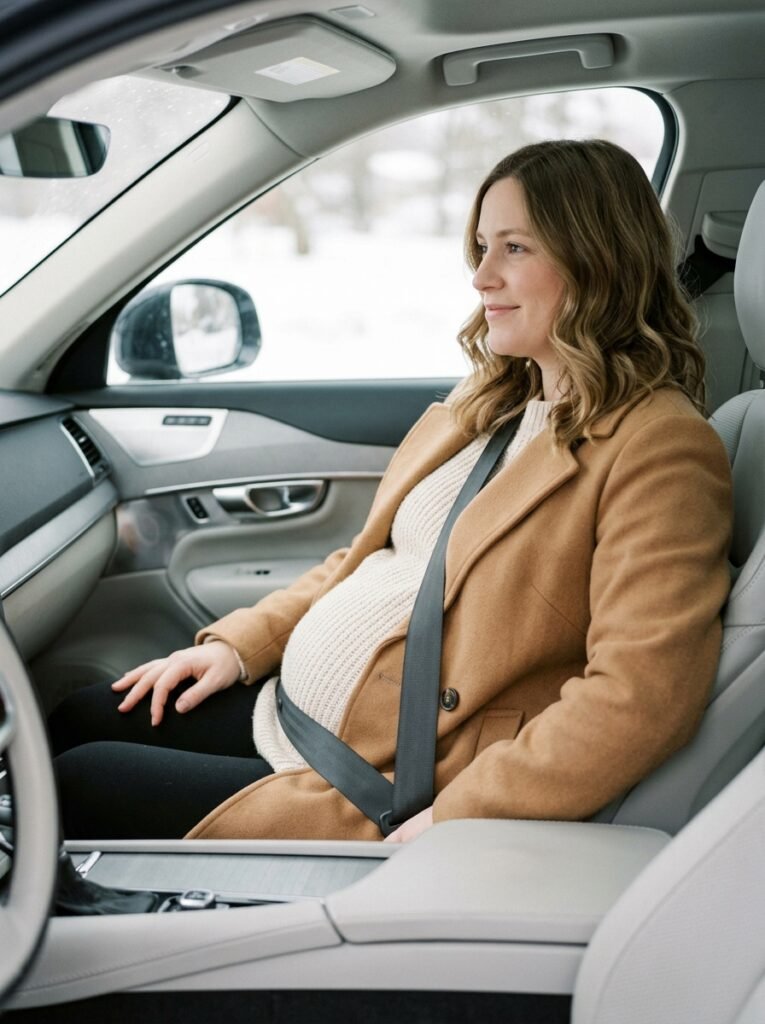
A properly worn seat belt protects you and your baby. Children’s Hospital of Philadelphia explains how to wear a seat belt during pregnancy. The lap belt goes below your belly, low and snug on your hip bones. The shoulder belt crosses the center of your chest and shoulder.
If you’re driving, CHOP advises keeping your breastbone at least 10 inches from the steering wheel. Move your seat back as your belly grows. Never tuck the shoulder belt behind you or under your arm.
Plan Regular Stops
Plan to stop every 1 to 2 hours on a long drive. Get out, stretch and walk for a few minutes. Use the restroom even if you don’t feel you need to. Stops also give you a chance to refill water and eat a snack.
Build extra time into your route for these breaks. Holiday traffic is unpredictable, and a relaxed schedule helps you take breaks instead of skipping them.
Holiday Travel Comfort Kit Checklist
A holiday travel comfort kit keeps the essentials close, whether you’re in a car seat or a plane seat. Pack it in a bag you can reach without getting up.
Health and paperwork
- Copy of your prenatal records
- Insurance card and your provider’s phone number
- Any prescriptions in their original containers
- A note about your due date if your airline asks for one
Comfort items
- Reusable water bottle
- Neck pillow or small lumbar pillow
- Warm socks and a light blanket or scarf
- Slip on shoes for security lines and swelling
- Compression stockings if your provider recommends them
Snacks and extras
- Crackers, nuts or other snacks you tolerate well
- Hand sanitizer and tissues
- Phone charger and headphones
- Gum or mints for nausea
If you like to plan with lists, the Planners & Checklists section on Happy Parenting Life has more organizing ideas for busy families.
Staying Healthy at Holiday Gatherings
Holiday gatherings bring rich food, late nights and plenty of germs. A few habits help you enjoy the celebration without wearing yourself out.
Watch for Holiday Food Safety
Some classic holiday foods need extra care during pregnancy. The FDA advises pregnant people to avoid eggnog and other drinks with raw or lightly cooked eggs unless they are thoroughly cooked. It also warns about unpasteurized milk and cheeses.
Simple ways to stay safe at the table:
- Choose store bought, pasteurized eggnog instead of homemade versions.
- Skip cookie dough and cake batter with raw eggs.
- Make sure turkey and stuffing are fully cooked and hot.
- Ask the host about soft cheeses on the appetizer board.
Protect Your Rest and Energy
Holiday schedules can be tiring even without a pregnancy. Plan downtime the same way you plan meals and gifts. Step away for a nap or a quiet walk when you need one. You don’t have to attend every event.
Ask About Seasonal Vaccines
Flu season overlaps with holiday travel. Ask your provider which seasonal vaccines are recommended for you before you travel. Washing your hands often in airports and crowded rooms also helps.
Handling Family Questions and Boundaries
Holiday visits often come with questions, advice and belly touching you didn’t ask for. Having a few simple responses ready can make conversations easier.
If you’re not ready to share your news:
“We’re just enjoying the holidays right now.”
If someone reaches for your belly:
“I’d rather people didn’t touch my belly, but thanks for being excited.”
If you need to rest:
“I’m going to lie down for a bit. Save me a plate.”
If someone questions your travel or food choices:
“My provider and I already talked it through. I’m all set.”
If you’re planning to share the big news while everyone is together, these grandparent announcement gift ideas can make the moment special.

Warning Signs to Watch for While Traveling
Some symptoms need prompt medical care, even when you’re far from home. The CDC’s pregnant traveler guidance lists warning signs to know before you go. These include:
- Pain in your belly or pelvis
- Vaginal bleeding
- Contractions
- Signs of preeclampsia, such as a severe headache, vision changes or sudden swelling
- Signs of dehydration, such as dizziness or very little urine
Watch for signs of a blood clot too. These include swelling, pain, warmth or redness in one leg. Trouble breathing or chest pain needs emergency care right away.
Call your provider if something feels wrong. For an emergency, call 911 or go to the nearest emergency room. This is why it helps to know where the closest hospital is before you arrive.
Frequently Asked Questions
Can I fly home for Christmas when I’m 30 weeks pregnant?
Many people can fly at 30 weeks, but the answer depends on your health and your airline. Some airlines allow flights until about 36 weeks, while others set earlier limits or ask for a provider’s note. Check your airline’s policy for both flight dates. Talk with your provider before booking, especially if you have any pregnancy complications.
How often should I stop on a road trip while pregnant?
Plan to stop every 1 to 2 hours on a long road trip while pregnant. The CDC recommends moving your legs and walking around at that pace on trips over 4 hours to lower blood clot risk. Use each stop to stretch, use the restroom, refill water and eat a snack.
Do I need a doctor’s note to fly while pregnant?
You may need a provider’s note later in pregnancy, depending on your airline. Some airlines ask for a note that confirms your due date and fitness to fly after a certain week. Check the policy when you book. Ask your provider for a note in advance so you aren’t scrambling right before the trip.
Is it safe to go through airport security while pregnant?
Airport security screening is generally considered safe during pregnancy. If you have concerns about the body scanner, you can ask the security officer for a pat down instead. Wear slip on shoes and give yourself extra time. Holiday crowds can make security lines longer than usual.
What should I do if I go into labor while traveling?
If you think labor is starting while you’re traveling, call your provider and go to the nearest hospital with a labor and delivery unit. Bringing your prenatal records helps the care team understand your history quickly. Looking up nearby hospitals before you leave saves time if you ever need one.
Plan the Trip Around You
Holiday travel while pregnant works best when the trip fits your body, not the other way around. Talk to your provider early. Check airline rules and plan regular stops. Pack your records, keep snacks close and build in time to rest.
Start with the planning timeline above, and pick your travel dates based on how far along you’ll be. Then save this guide so your comfort kit checklist is ready when it’s time to pack.