
Sleep gets harder as your bump grows. You may also hear mixed advice about which position is safe. Some people say left side only. Others say never lie on your back. The truth is simpler than the internet makes it sound.
This guide explains pregnancy sleeping positions trimester by trimester. You will learn what research supports and how to set up your pillows. You will also find fixes for pain, heartburn and rolling onto your back. This article offers general education, not medical advice. Your doctor or midwife can tailor guidance to your health.
Quick answer: The safest pregnancy sleeping position is on your side, especially after 28 weeks. Early in pregnancy, most positions are fine, including your back and stomach. Research links going to sleep on your back in the third trimester with a higher risk of stillbirth. Either side appears acceptable. If you wake on your back, simply roll over.
What Are the Safest Pregnancy Sleeping Positions?
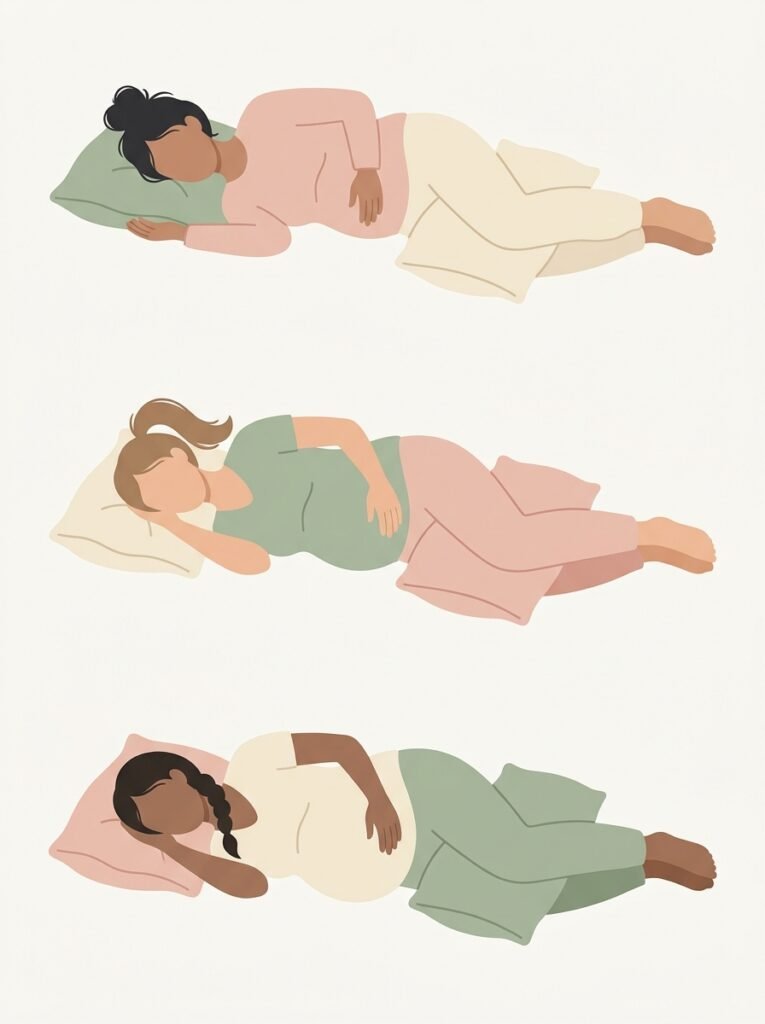
Side sleeping is the position most often recommended in pregnancy, especially in the third trimester. Many ob-gyns advise against sleeping on your back in the second and third trimesters. On your back, the weight of your uterus can press on the large vein that returns blood to your heart. Side sleeping avoids that pressure. upmc
Keep your knees bent and place a pillow between them. This keeps your hips level and feels more stable. You do not need a perfect position all night. You only need a good starting position.
Early pregnancy is more flexible. In the first trimester, you can sleep in any position that feels comfortable. Your bump is small, so position has little effect on comfort or blood flow.
Pregnancy Sleeping Positions by Trimester
Guidance changes as your pregnancy progresses. The table below gives a quick view. The sections after it explain each stage.
| Stage | Weeks | Position guidance |
|---|---|---|
| First trimester | 1 to 13 | Any comfortable position |
| Second trimester | 14 to 27 | Start building a side-sleeping habit |
| Third trimester | 28 to birth | Go to sleep on your side, including naps |
First Trimester (Weeks 1 to 13)
Any comfortable position works in the first trimester. UPMC reports that back sleeping is considered acceptable in early pregnancy. Most sleep trouble at this stage has other causes. Nausea, breast tenderness and frequent bathroom trips can all disrupt your night. upmc
Use this stage to practice. Try falling asleep on your side with a pillow between your knees. A habit built early is easier to keep when your bump gets bigger.
Second Trimester (Weeks 14 to 27)
Your bump grows, and lying on your back becomes less comfortable for many people. The strongest research focuses on later pregnancy, but timing advice varies. Some health publishers recommend side sleeping after about 20 weeks. Others focus on 28 weeks. Ask your provider which timing they prefer. hingehealth
In the meantime, build the habit now. Place one pillow between your knees and another behind your back. If you work at a desk, daytime posture matters too. Our guide on how to stay comfortable at a desk job while pregnant can help reduce aches before bedtime.
Third Trimester (Week 28 to Birth)
Side sleeping matters most now. Tommy’s advises going to sleep on your side for every sleep episode, including night sleep, returning to sleep after waking and daytime naps.
Combined data from six studies links going to sleep on your back with a 2.6 times higher risk of stillbirth. The absolute risk is still low. Tommy’s puts the baseline for uncomplicated pregnancies in the UK at around 3 in 1,000. Side sleeping lowers that risk further. You do not need to feel anxious. You only need to make side sleeping your default. tommystommys
Is It Safe to Sleep on Your Back While Pregnant?
Back sleeping is generally fine early in pregnancy. It becomes a concern in later pregnancy. After 28 weeks, UPMC advises aiming to be on your side when going to sleep at night or napping. upmc
The reason relates to blood flow. Lying on your back late in pregnancy can compress a large vein and lower blood flow to the uterus. Researchers do not know the exact cause of the stillbirth link. Reduced blood flow and oxygen to the baby is one possible explanation. upmctommys
The key detail is when the risk applies. The research looks at the position you go to sleep in, not where you end up overnight. That is why the focus is on your starting position.
What If You Wake Up on Your Back?
Roll onto your side and go back to sleep. You do not need to panic. Tommy’s explains that the position you fall asleep in is the one you tend to hold the longest. A large bump also makes back lying uncomfortable, so most people shift naturally.
A few tricks make it less likely:
- Put pillows behind your back as a barrier.
- Tie long hair in a low bun, so lying on your back feels uncomfortable.
- Check your position each time you wake, then settle back on your side.
Left Side or Right Side: Does It Matter?
Many US sources recommend the left side. The idea is that it may place the least pressure on your blood vessels. The evidence is less clear than most pages suggest.
UPMC notes that earlier advice favored the left side, but a study found no link between right-side sleeping and complications. Tommy’s says one small study found a difference, but three later studies did not. The practical takeaway is simple. Either side is a reasonable choice. If your provider recommends the left side, follow that advice. Otherwise, choose the side you can hold comfortably. upmctommys
Can You Sleep on Your Stomach While Pregnant?
Yes, in early pregnancy. Tommy’s says stomach sleeping is fine in the early days, because your bump probably will not show until the second trimester. As your belly grows, this position becomes uncomfortable on its own. If you wake up on your stomach, roll onto your side.
How to Set Up Pillows for Side Sleeping
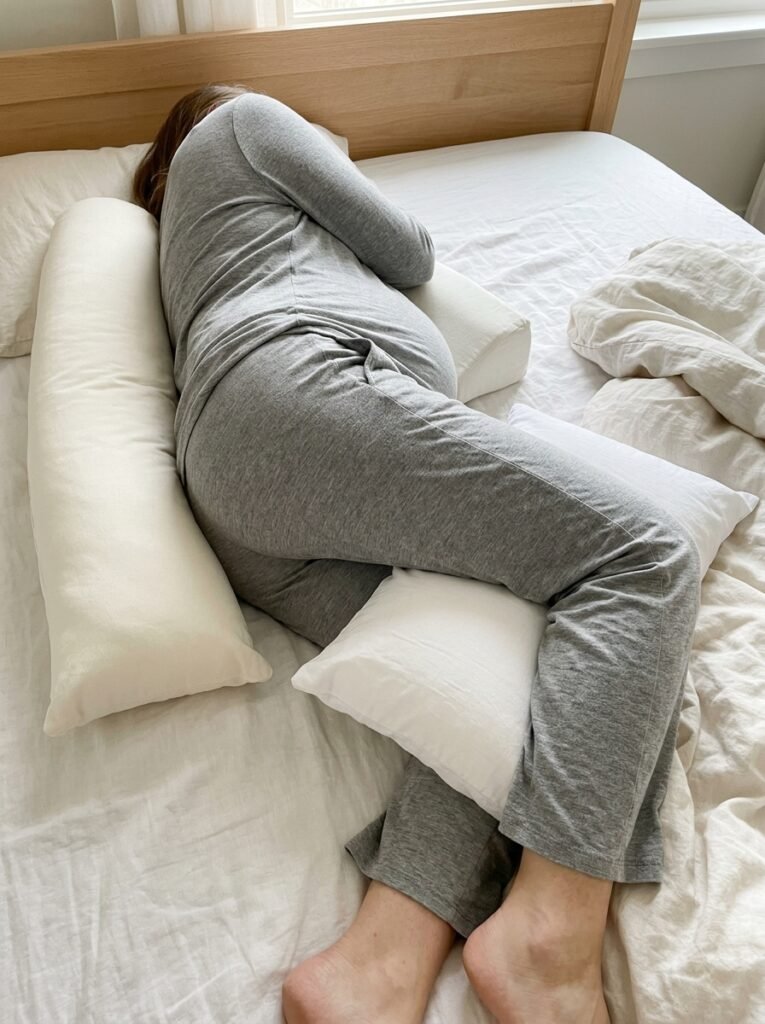
Pillows will not hold you in place all night. They do make a good starting position easier to keep. UPMC reports that ACOG suggests using more than one pillow for support. upmc
- Lie on your side with your knees bent.
- Place a pillow between your knees. This keeps your hips level and eases strain on your lower back.
- Add a small pillow under your belly for support.
- Put a pillow behind your back to discourage rolling.
- Adjust your head pillow so your neck stays in a neutral line.
- Or use one full-length body pillow to do steps two to four at once.
Tommy’s says regular pillows and pregnancy pillows are equally effective at keeping you off your back. UPMC adds that there is no single best pregnancy pillow. Try the pillows you already own before buying anything new. tommysupmc
Fixes for Common Pregnancy Sleep Problems
Position is only part of the picture. Pain, heartburn and bathroom trips can all keep you awake. Match the fix to the problem.
| Problem | What to try | Talk to your provider if |
|---|---|---|
| Back pain | Sleep on your side with a pillow between your legs. ACOG also suggests a firm mattress, or a board under the mattress. | The pain is severe, lasts more than two weeks or comes with symptoms like burning during urination. |
| Hip or pelvic pain | Put a pillow under your bump and between your legs. Keep your knees together when turning over. | Pain persists. Ask your midwife about a physiotherapy referral. |
| Heartburn | Prop your upper body a little higher with extra pillows. | Symptoms are severe or you want to know which remedies are safe |
| Rolling onto your back | Place pillows behind you and tie long hair in a low bun | Not usually needed |
| Frequent bathroom trips | Drink fluids through the day and avoid drinking too much late in the evening. | You have pain or burning when you urinate |
| Trouble falling asleep | Keep the bedroom cool, dark and quiet, and skip caffeine after 3 p.m. | Sleep trouble lasts for weeks Health Tip: Easing Back Pain During Pregnancy +6 |
For more ideas on easing late pregnancy aches, see our guide to staying comfortable during your third trimester.
Habits That Help You Sleep Better in Pregnancy
Small routines support better rest. They work alongside a good sleep position.
- Wind down early. A warm bath or a foot or shoulder massage may help you relax before bed. upmc
- Stay active. Regular exercise can improve sleep, and ACOG recommends 150 minutes of moderate activity such as walking each week. Check with your provider before starting anything new.
- Protect your sleep space. Keep screens away from the bed and the room dark.
- Plan your last drink. Finish most of your fluids earlier in the day.

Common Mistakes to Avoid
- Waiting too long to practice side sleeping. A habit is easier to build before your bump is large.
- Worrying about every overnight position change. Your starting position is what the research focuses on.
- Forgetting about naps. Advice for night sleep applies to daytime sleep too.
- Buying an expensive pillow first. Regular pillows can work just as well.
- Ignoring pain that does not improve. Ongoing pain deserves a conversation with your provider.
- Treating position as your only safety step. Prenatal visits and attention to warning signs matter just as much.
When to Call Your Provider or Get Urgent Care
Sleep position is only one part of a healthy pregnancy. Some symptoms need prompt medical care. The CDC’s Hear Her campaign raises awareness of urgent maternal warning signs during and after pregnancy.
Examples listed by UPMC from CDC guidance include a baby who moves less or stops moving, a headache that does not go away, vision changes, chest pain, trouble breathing and a fever of 100.4 F or higher. Vaginal bleeding or leaking fluid during pregnancy also needs prompt care. Contact your provider or seek emergency care right away if you notice any of these. upmcupmc
Also mention loud snoring, gasping at night or pain that keeps you from sleeping. Sleep-disordered breathing is a risk factor for pregnancy complications such as gestational diabetes and preeclampsia. Your provider can guide the next step.
Frequently Asked Questions
When should I stop sleeping on my back while pregnant?
Guidance varies. Research on stillbirth risk focuses on the third trimester, after 28 weeks. Some health publishers advise side sleeping from around 20 weeks. Early in pregnancy, back sleeping is generally considered fine. Ask your provider which timing they recommend for your situation, and start practicing side sleeping before your bump gets large.
Is it safe to nap on my back while pregnant?
In the third trimester, treat naps like night sleep. Tommy’s advises going to sleep on your side for any episode of sleep, including daytime naps. A couch or chair can make this harder, so use pillows behind your back. Earlier in pregnancy, back napping is generally fine.
Do I need a pregnancy pillow?
No. Tommy’s says regular pillows are as effective as pregnancy pillows at keeping you off your back. A full-length body pillow can be more convenient because it replaces several pillows at once. Try the pillows you have for a few nights first. Buy a specialty pillow only if you still struggle to get comfortable.
What if I cannot sleep on my side because of pain or heartburn?
Try adjusting your pillows first. A pillow under your belly and between your legs often helps pain. For heartburn, raise your upper body slightly. BayCare notes that a recliner can be an option if you cannot sleep on your side, as long as you avoid lying flat. Ask your provider before relying on this long term. baycare
Should I set an alarm to change positions at night?
No. You do not need to wake yourself to check your position. The research focuses on the position you go to sleep in, and most people shift naturally overnight. Simply check your position whenever you wake up on your own. If you are on your back, roll to your side and go back to sleep. tommys
Final Thoughts
You do not need a perfect sleep setup. You need a simple plan. Start with a side-lying position, a pillow between your knees and one behind your back. If you wake on your back, roll over and rest.
Tonight, try the pillow setup above and notice what feels best. If you are in your third trimester, add sleep setup to your third trimester checklist. Bring any questions about pain, snoring or sleep trouble to your next prenatal visit.
This article provides general educational information and does not replace advice from your doctor or midwife.