
Look, I get it. You’re stuck at home with the kids, they’re bouncing off the walls, and you’re desperately searching for something—anything—that’ll keep them entertained for more than five minutes. Been there, survived that. Music activities? They’re your secret weapon, and I’m about to share the ones that actually work without requiring a music degree or turning your living room into a concert hall gone wrong.
1. Make Your Own Shakers (Because Who Needs Expensive Toys?)
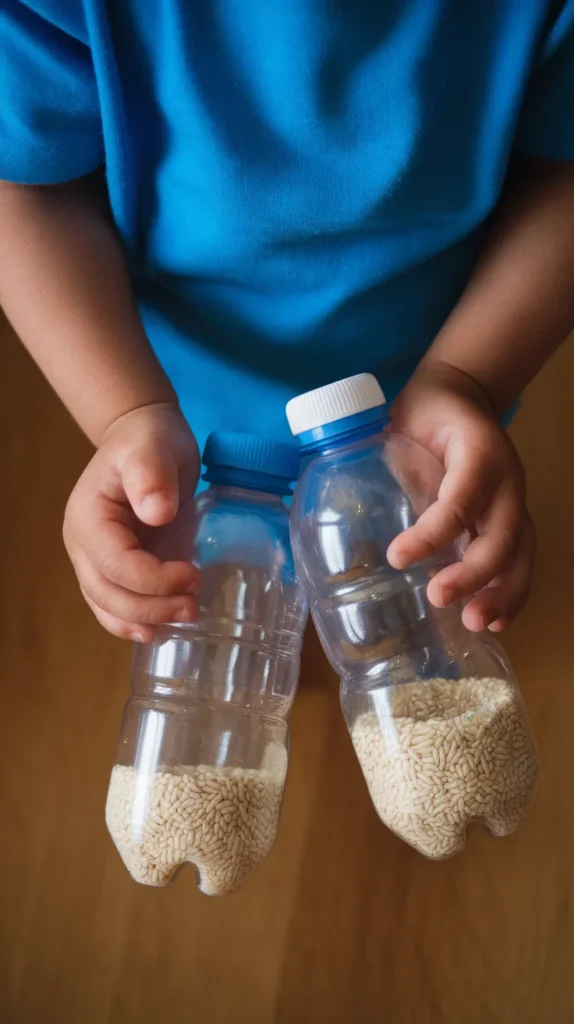
Grab some empty water bottles, rice, beans, or even old buttons. Seriously, raid your pantry. Your kids can decorate these bottles with stickers or markers, then fill them up and shake away. This activity kills two birds with one stone—craft time and music time rolled into one.
I did this with my nephew last summer, and he spent a solid hour just decorating the bottle. The actual shaking? Maybe ten minutes. But hey, I’ll take it. The best part? These DIY shakers help kids understand rhythm and tempo without feeling like they’re in some boring music lesson.
Benefits you’ll actually notice:
- Develops fine motor skills
- Teaches rhythm basics
- Zero cleanup stress (just seal those lids tight!)
2. Freeze Dance: The Ultimate Energy Burner
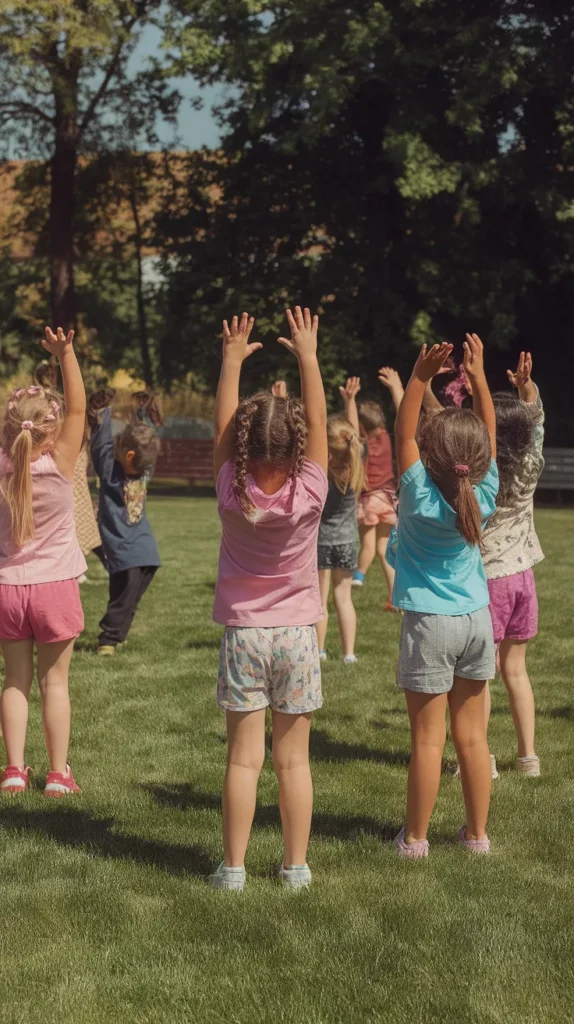
Ever wondered why freeze dance has survived generations? Because it works, plain and simple. Play music, kids dance like maniacs, pause the music, they freeze. Repeat until they’re tired enough for bedtime.
Here’s my twist—give them themes. “Dance like you’re walking through peanut butter” or “move like a robot running low on batteries.” Trust me, the creativity that comes out is hilarious. Plus, you’re teaching them musical awareness and self-control without them realizing they’re learning anything.
3. Kitchen Band Sessions (Yes, Really)
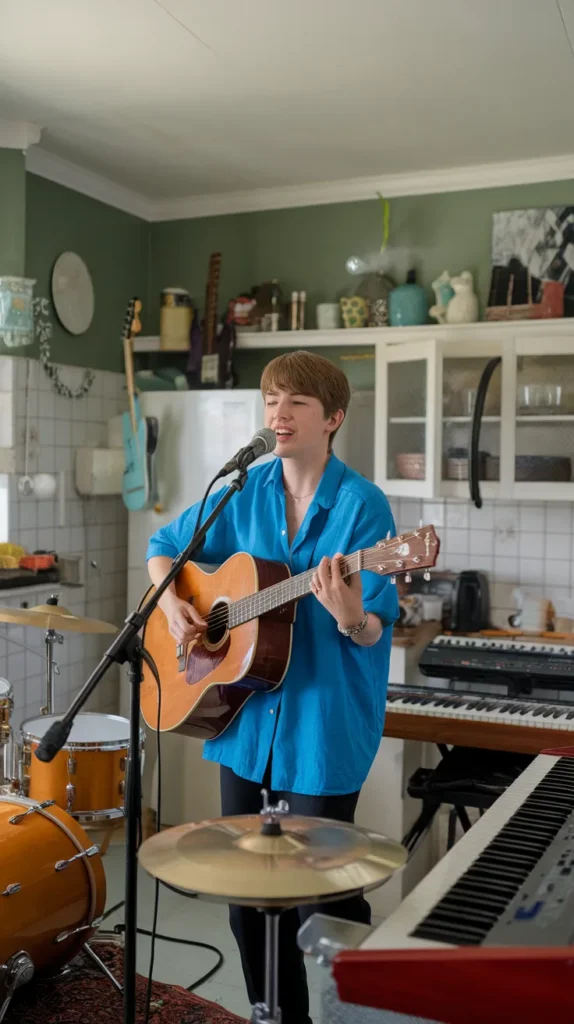
Your kitchen is basically a music store you haven’t discovered yet. Pots, pans, wooden spoons, tupperware containers—all instruments waiting to happen. Let your kids go wild creating their own kitchen orchestra. Fair warning: this one gets loud. Like, really loud.
But here’s what I love about it—kids learn about different sounds and tones. Metal pots sound different from plastic containers. A wooden spoon creates different sounds than a silicone spatula. They’re experimenting with acoustics without needing a physics textbook. FYI, noise-canceling headphones for you might not be a bad investment here 🙂
4. Musical Storytelling
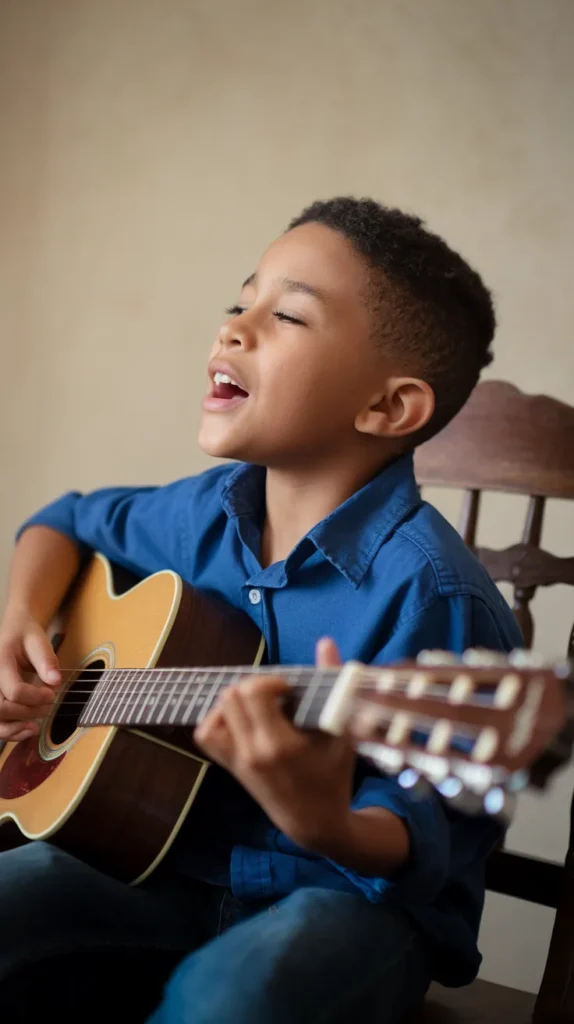
Pick a favorite book or make up a story together, then add sound effects using instruments or household items. Every time a character appears, they get their own sound. The dragon roars? Bang on that pot. The princess arrives? Jingle those keys.
This activity combines literacy with music, which IMO is genius-level multitasking. Your kids develop listening skills, creativity, and narrative understanding all at once. Plus, they’ll actually remember the story better because they’ve created a multi-sensory experience.
5. Create a Rhythm Train
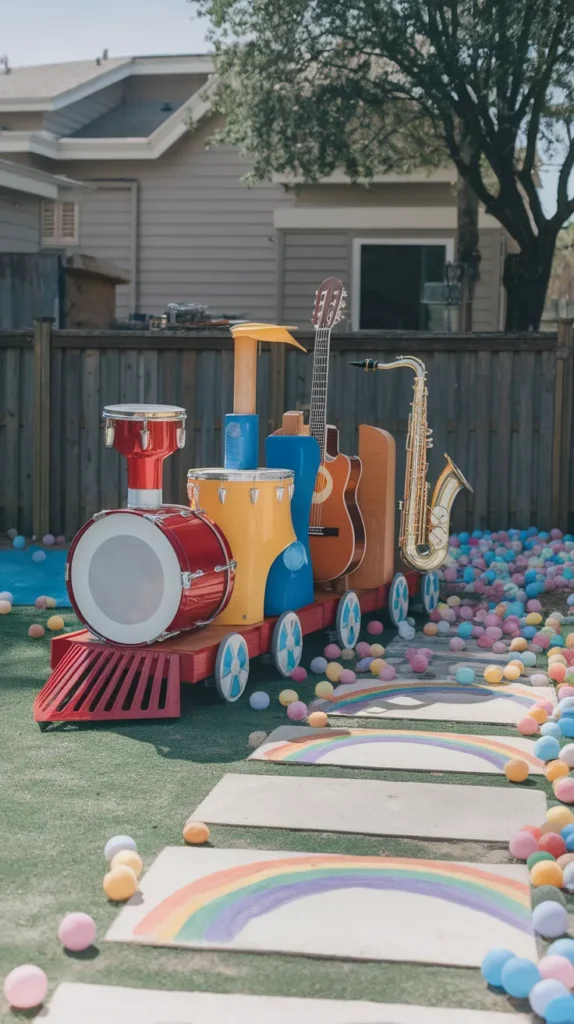
Everyone sits in a line (the train). The conductor (first person) starts a simple rhythm by clapping or tapping. Each person adds their own rhythm pattern, building on the last one. By the time you reach the caboose, you’ve got this amazing layered rhythm going.
Kids learn to listen carefully and understand how different rhythms work together. They’re basically learning about musical composition without realizing it. And when someone messes up? We laugh and start over. No pressure, just fun.
Why This Works So Well
The beauty here is in the cooperation. Kids aren’t competing—they’re collaborating. They’re learning that music is better when everyone contributes their unique part. Life lesson? Check. Music lesson? Double check.
6. Emotion DJ Challenge
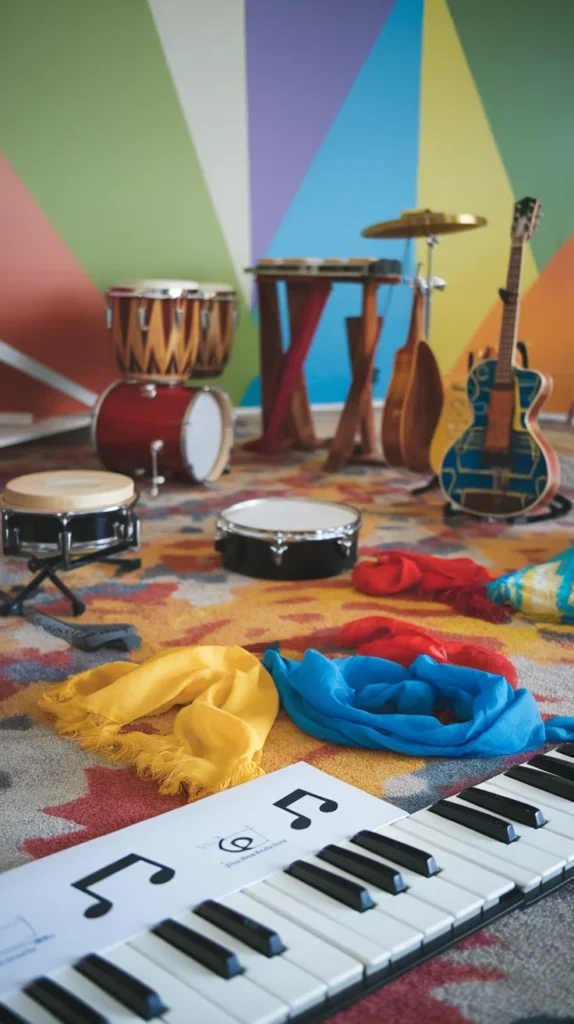
Here’s one that surprised me with how well it worked. Ask your kid to be the DJ and play songs that match different emotions. Happy, sad, angry, excited—they pick the music.
Then you guess what emotion they’re trying to convey. This teaches them that music isn’t just notes and rhythms; it’s a language for feelings. They start recognizing how tempo, volume, and melody create emotional responses. Pretty sophisticated stuff for a simple home activity, right?
7. Musical Scavenger Hunt
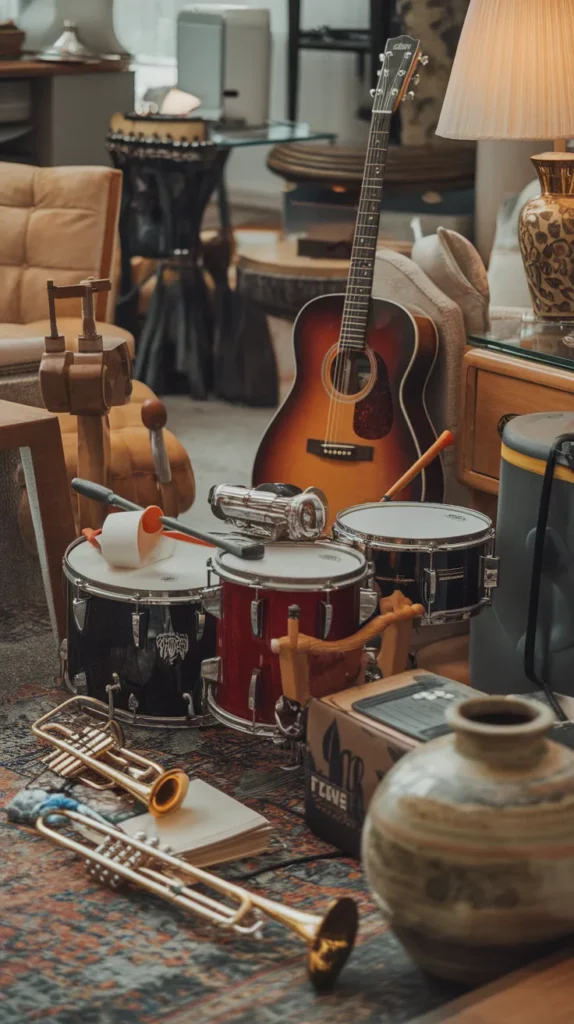
Create clues using rhythms or melodies instead of words. Clap a pattern that leads to the next clue, or hum a familiar tune that hints at the location. “Three short claps and one long clap means look under something that starts with ‘B.'”
Your kids develop pattern recognition, memory skills, and problem-solving abilities. And unlike regular scavenger hunts, this one engages their auditory processing in a completely different way. Plus, you can make it as easy or challenging as you want depending on their age.
8. Instrument Charades
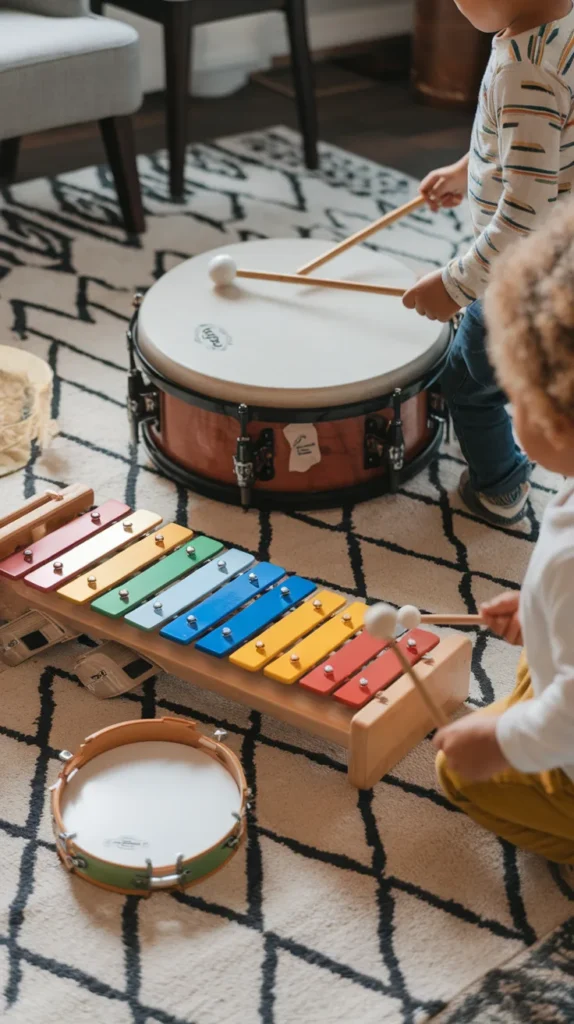
Just like regular charades, but everyone mimes playing different instruments. Violin? Air-bow that baby. Drums? Go full rock star. The others have to guess what instrument you’re playing.
This activity is hilarious and educational. Kids learn about different instruments, how they’re played, and the movements involved. They’re building body awareness and musical knowledge without sitting through a documentary about orchestra instruments. Win-win.
9. Dance Choreography Creation
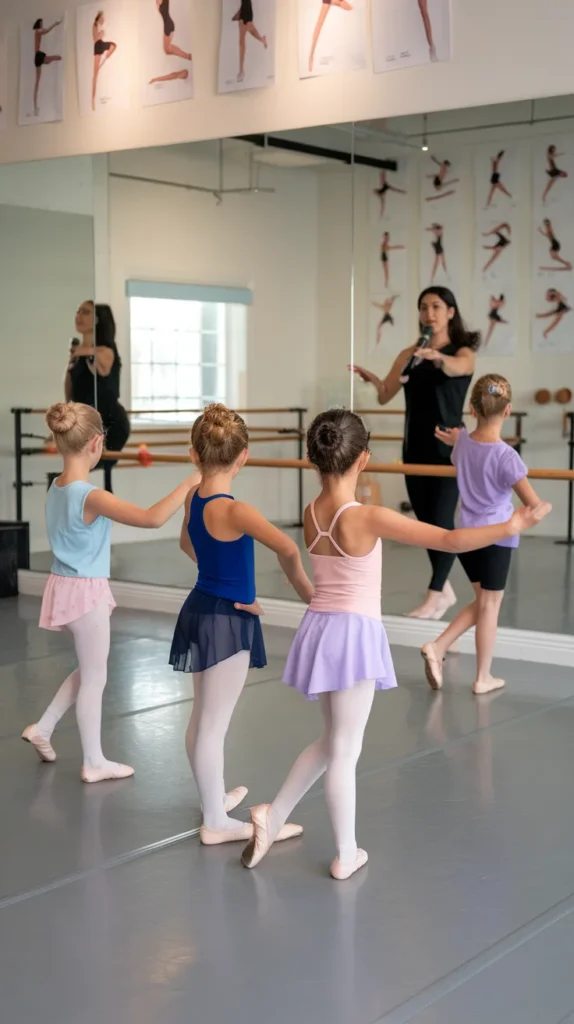
Let your kids choreograph their own dance to their favorite song. Give them creative control—they’re the directors here. Then perform it for the family (or the dog, who’s probably a more appreciative audience anyway).
I watched my friend’s daughter spend an entire afternoon creating a dance routine to some pop song. The concentration on her face? Priceless. She was counting beats, planning movements, and coordinating everything. That’s executive function skills in action, disguised as pure fun.
The Hidden Skills
Creating choreography teaches:
- Sequencing and planning
- Spatial awareness
- Beat counting and rhythm
- Confidence in performance
10. Vocal Warm-Up Games

Start with silly sounds—animal noises, car engines, robot voices. Then gradually shift into actual singing exercises. Make it playful. “Let’s see who can make the weirdest sound” naturally leads to exploring vocal range.
My kids think we’re just being goofy together. They don’t realize they’re learning breath control, pitch variation, and vocal projection. Sometimes the best teaching happens when nobody knows they’re being taught.
11. Song Rewrite Challenge
Take a familiar song (think “Twinkle Twinkle” or “Row Your Boat”) and rewrite the lyrics together. Make it about your day, your pets, or something completely ridiculous. “Twinkle twinkle little cat, why’d you puke upon the mat?”
This activity is sneakily brilliant. Kids learn song structure, rhyming patterns, and creative writing. They understand that songs follow certain patterns and rhythms. Plus, the sillier you get, the more they remember about how music works.
12. Sound Exploration Walks
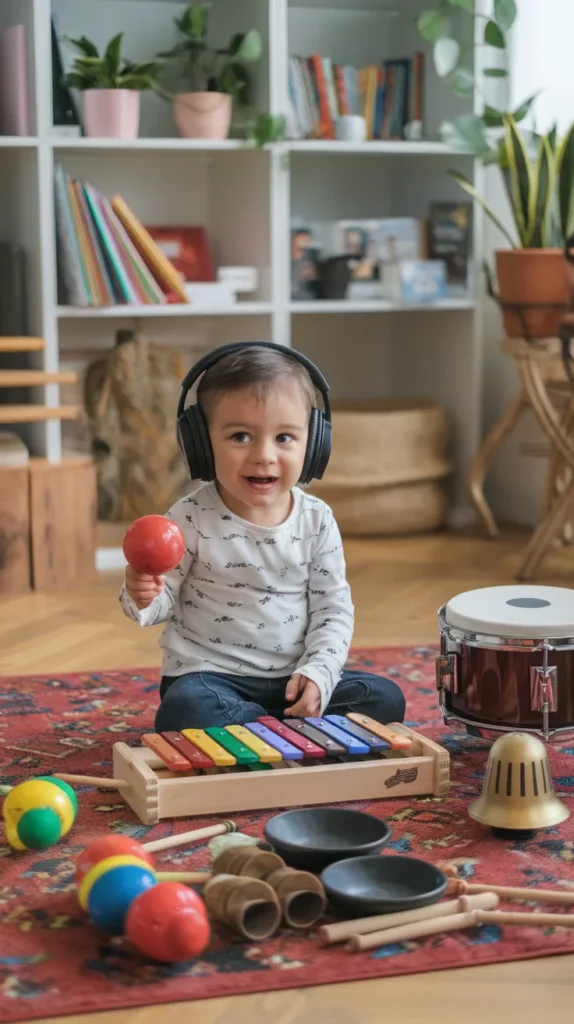
Take a walk (or just step outside) and listen. Really listen. How many different sounds can you identify? Birds, cars, wind, leaves crunching—it’s all music if you pay attention.
Come back home and try recreating those sounds with your voice or instruments. This trains kids to be active listeners instead of passive hearers. They start noticing the world’s natural soundtrack. Pretty cool life skill, if you ask me.
What Makes This Special
We live in such a visually-dominated world that auditory skills get neglected. This activity rebalances that. Kids become more aware of their sonic environment, which actually improves their overall sensory processing abilities.
The Real Secret
Here’s what nobody tells you about music activities for kids—they don’t need to be Pinterest-perfect or Instagram-worthy. They just need to be fun and consistent. Some days your kid will be totally into it. Other days? Not so much. That’s normal.
The activities I’ve shared work because they’re flexible, don’t require special equipment, and genuinely engage kids’ natural curiosity about sound and rhythm. They’re learning critical skills—rhythm, pitch, pattern recognition, emotional expression—but it feels like playtime.
Music isn’t just about creating future Mozart prodigies. It’s about giving kids another language to express themselves, another way to process the world, and honestly? Another tool in your parenting survival kit for those long afternoons at home.
Try one activity this week. Just one. See what happens. You might be surprised by how much your kid gets into it (and how much quieter they are afterward from all that energy they burned). And if nothing else, you’ll have some pretty funny videos for their future wedding slideshow 🙂